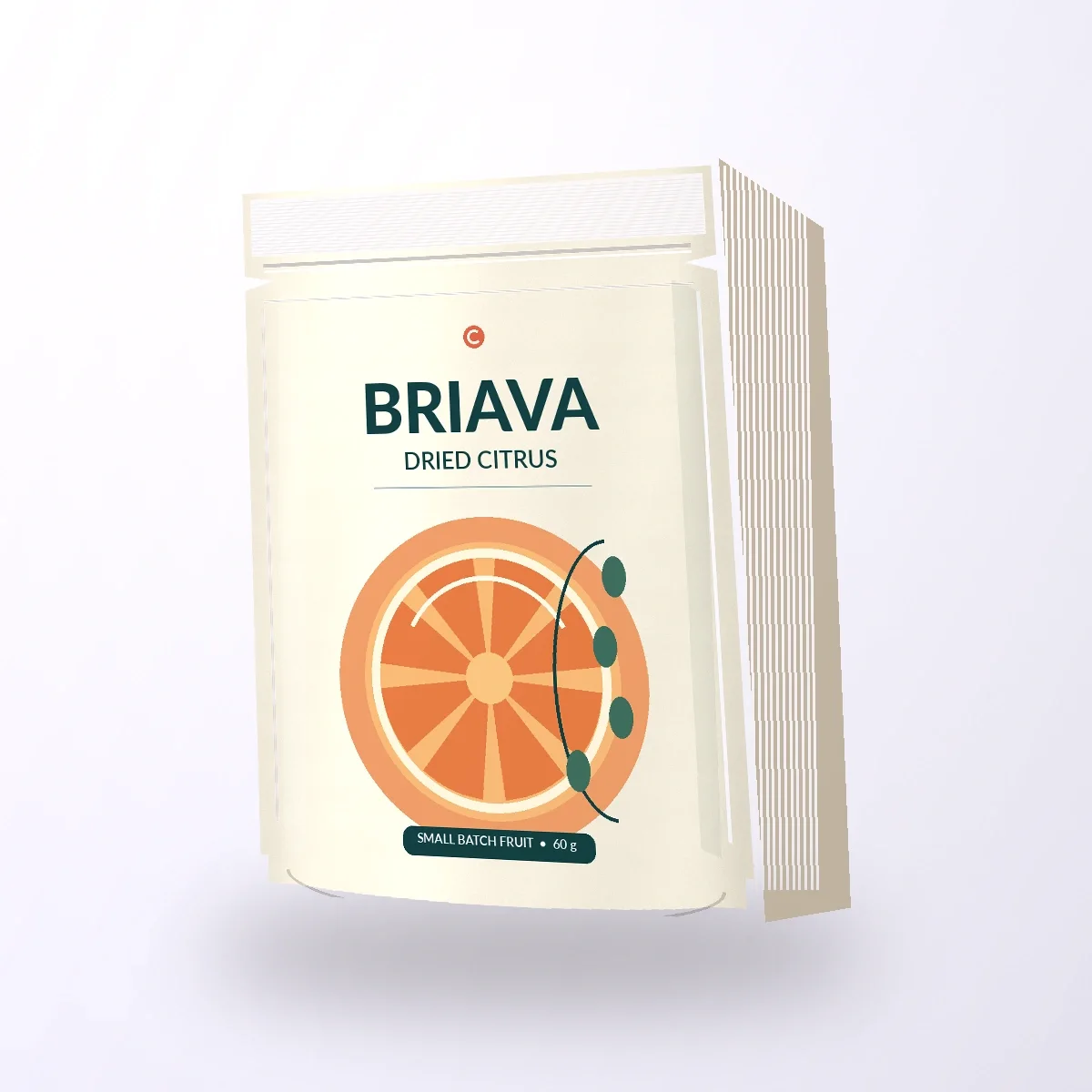
Easy-Open Pouches
★★★★★
4.7/5.0Custom Tear Notch Packaging
A tear notch gives sealed snack, powder, or refill pouches a clear opening point. Position it above a zipper and away from the usable product space.
Premium Quality
Fully Customizable
Low MOQ
Fast Turnaround
100% Eco-Friendly
Sustainable materials
Free Shipping
On every order
No Die & Plate Charges
Zero hidden costs
100% Satisfaction
Quality guaranteed
Expert Support
We're here to help
Designed for Various Industries
We design packaging that fits every industry
From small businesses to global brands, our custom packaging solutions are built to elevate your brand and leave a lasting impression.
Cosmetics & Beauty
Food & Beverages
E-commerce & Retail
Electronics
Apparel & Fashion
Health & Wellness
Pharmaceuticals
Cannabis & CBD
Pet Products
Baby & Kids
Jewelry & Accessories
Home & Lifestyle
Candles & Fragrance
Coffee & Tea
Confectionery
Cosmetics & Beauty
Food & Beverages
E-commerce & Retail
Electronics
Apparel & Fashion
Health & Wellness
Pharmaceuticals
Cannabis & CBD
Pet Products
Baby & Kids
Jewelry & Accessories
Home & Lifestyle
Candles & Fragrance
Coffee & Tea
Confectionery
Supplements
Skincare & Personal Care
Haircare
Automotive
Sports & Fitness
Toys & Games
Stationery & Gifts
Bakery & Desserts
Wine & Spirits
Tobacco & Vape
Medical Devices
Tech Accessories
Subscription Boxes
Organic & Natural
Luxury Retail
Supplements
Skincare & Personal Care
Haircare
Automotive
Sports & Fitness
Toys & Games
Stationery & Gifts
Bakery & Desserts
Wine & Spirits
Tobacco & Vape
Medical Devices
Tech Accessories
Subscription Boxes
Organic & Natural
Luxury Retail
Built for brands
that care about detail.
Premium packaging. Precise printing.
Fast turnaround. No hidden costs.
10K+
Happy Customers
98%
Satisfaction Rate
Trusted by Top Brands
We work with startups to enterprises. Our boxes make an impact.
Free Design Support
Get expert help in creating the perfect packaging for your brand.
Warehouse Across USA
Faster fulfilment with local production and warehouses.
Print & Design Lovers
Crafted with passion, just the way your brand deserves.
Custom Tear Notch Packaging for Easier First Opens
A customer reaches for a sealed snack pouch, looks for the small notch beside the top seam, and pulls. That one motion can leave a clean mouth for pouring or an awkward rip through the label. With custom tear notch packaging, the opening point is part of the pouch design from the first dieline—not a cut added after the artwork is complete.
Packopie helps brands plan easy-open flexible pouches around the contents, the filling process, and what customers do after the first tear. Each order is made to the agreed dimensions, film, and print design.
Put the First Tear Where Customers Expect It
A tear notch is a small cut at the edge of a heat-sealed pouch. It gives fingers a place to start opening the film. The notch may be V-shaped or rounded, depending on the tooling and material. Its position matters more than its appearance: an opening placed too close to the contents can waste usable space, while one too high can leave an awkward strip to grip.
The heat-sealed header is the area above the contents. It must leave enough room for the top seal and the intended tear line. On a custom printed tear notch pouch, that space is planned alongside the filled height, not guessed from an empty sample. A visible, intact top seal can also help customers notice whether the package has already been opened, though the full tamper-evident design requires separate review.
Keep the Zipper Ready After the Top Strip Comes Off
Some products are used in one sitting. Others need a pouch that can be opened, closed, and opened again. A press-to-close zipper sits below the tear-off strip when reclosure is part of the brief. After the initial heat-sealed header is removed, the zipper must remain easy to grip and press shut.
Zipper clearance affects both the height of the package and the placement of printed instructions. A tear that crosses the zipper can make a premium pouch frustrating to use. For brands comparing custom zipper pouches, we can review the opening position and top-header size together instead of choosing the closure in isolation.
A hang hole for peg display adds one more constraint. Its location cannot interfere with the heat seal, notch, or tear path. The final arrangement should be checked on a pouch at its intended size.
Choose a Pouch Structure That Suits the Way It Opens
A bottom-gusset stand-up pouch offers a broad printed face and a base for shelf display. A flat three-side-seal sachet suits smaller single-use portions; four-side-seal formats offer another compact option. Side-gusset and flat-bottom structures give different fill shapes, so the amount of film a customer holds during opening changes as well.
A powder refill needs enough mouth width for controlled pouring. Dried fruit and pet treats need space for hands to reach inside. A single-serving electrolyte sachet may only need a narrow edge opening. Packopie can size the pouch and notch around those tasks rather than treating every bag as the same cut-and-seal project.
For other printed flexible-bag constructions, explore Custom Poly Bags. If the product calls for a dedicated pouring fitment instead of a torn opening, Custom Spouted Pouches are a separate packaging approach.
Match the Film to the Contents and the Tear Path
The film controls how the pouch seals, bends, and tears. Printable PET/PE laminate is one option for custom bags; metallized PET, foil-based laminates, kraft-look laminates, and selected PE-family structures provide different appearances and protection needs. An opaque foil layer may help block light, but material suitability depends on what is packed and how it is stored.
Film gauge matters, too. A thicker structure may feel sturdier without becoming easier to tear in the intended direction. A notch begins the tear; it does not by itself guarantee a straight line across several laminate layers. For products needing a more guided opening, laser scoring can be reviewed with the chosen film and sealing method.
Brands comparing barrier-focused appearances can also browse Custom Mylar Bags. The correct barrier still needs product-specific review. Food-contact suitability and recycling statements likewise depend on the complete finished structure and intended use.
Keep Printed Branding Clear of the Tear-Off Header
A bold pouch front can lose its message if the first tear cuts across the product name, serving guidance, or required information. The print dieline should show the notch, tear path, seals, zipper, hang hole, and artwork safe area before graphics are approved. That protects the parts of the design people need after opening.
Full-color exterior printing can cover the front or both faces. Matte and gloss surfaces change how colors appear under store lighting. A clear window can show the contents, while selected spot finishes can focus attention on a small printed detail. Each added feature needs a practical place within the same pouch dimensions.
A proof checks layout and print placement. A physical sample goes further: it shows whether the chosen film, dimensions, seal, and artwork work together in the hand.
Test the Opening With the Real Fill Product
A pouch that tears neatly when empty may behave differently when filled. Fine powder can settle near a zipper; dense snacks can push against gussets; a heavy refill can change how customers grip the top. Filled-pouch checks can reveal a tear that runs off course, a mouth that is too narrow, or a seal area that needs more clearance.
Coffee, tea, dried snacks, supplements, candy, pet treats, and bath products do not all share the same needs. For food uses, the proposed contact layers must suit the specific food and intended conditions. Shelf-life, strength, and recyclability claims require evidence tied to the finished packaging, not a broad material label.
Turn Pouch Specifications Into a Clear Custom Quote
Useful pricing begins with the fill weight, approximate pouch width and height, gusset depth, quantity, and artwork coverage. From there, the choice of zipper, film thickness, finish, printing method, and possible laser score can be assessed. Production scheduling and freight depend on the approved design and delivery destination.
Packopie's custom tear notch bags are planned as made-to-order packaging, with the opening detail considered alongside the full package. When the product, filling process, and preferred look are defined, those details give the team a sound basis for reviewing a sample or preparing a tailored quotation. The result is a pouch designed for both the first impression and the first tear.
Frequently Asked Questions
The notch belongs between the top heat-sealed strip and the zipper. This lets customers remove the sealed strip while leaving the reclosable track intact. The exact distance depends on pouch height, zipper placement, and sealing equipment. Confirm the opening on a finished sample before production.
Film direction, laminate layers, thickness, and heat-seal stiffness all affect the tear path. The notch starts the opening but does not guarantee a straight line. If the film pulls off course, the pouch may need a different notch position, film construction, or guided scoring.
A properly positioned notch stays outside the sealed product compartment. It should not cut into the area holding the contents. However, overall strength also depends on the film and seal design. Filled-pouch handling and transit tests help confirm that the package stays intact before opening.
A hang hole uses space in the pouch's top header. That same area may contain the heat seal, tear notch, and zipper clearance. Plan these features together so the hole does not interrupt the opening path or leave too little material to grip and tear.
Opening width matters as much as the notch. The tear line should leave enough room to pour or scoop the powder without spilling. Check the filled height, pouch mouth, and zipper position. A trial with the actual powder can reveal clumping, trapped particles, or pouring problems.
No. A polyethylene-based film may be designed for certain film-recycling programs, but the complete pouch must be assessed. Zippers, coatings, barriers, inks, and local collection options affect eligibility. Confirm the finished structure and available recycling pathway before putting a recyclable claim on the artwork.
More Solutions
You May Also Like
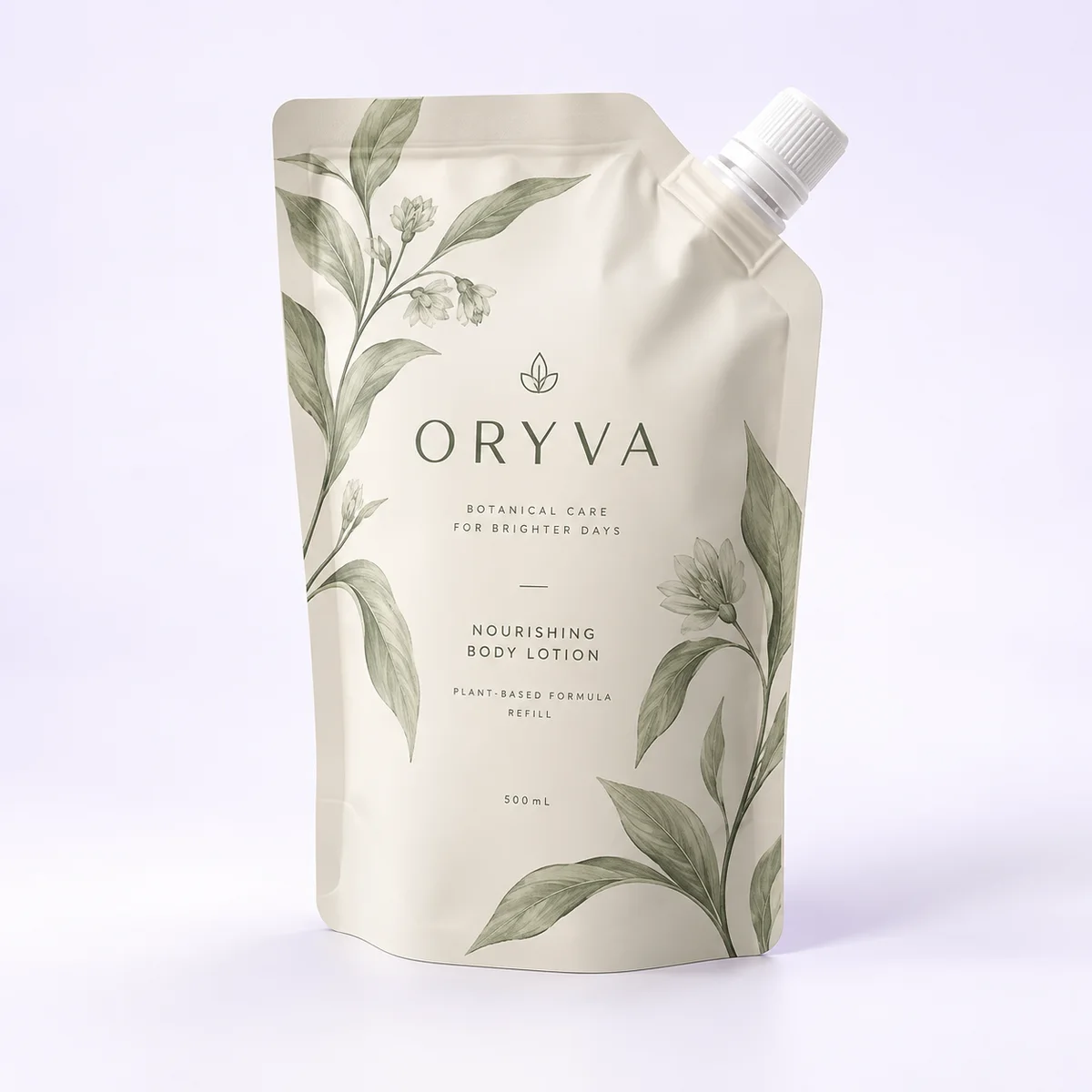
Custom Cosmetic Spout Pouch
Make shampoo, lotion, and cleanser refills easier to pour with a cosmetic spout pouch built around your formula, bottle opening, and filling process.
View product →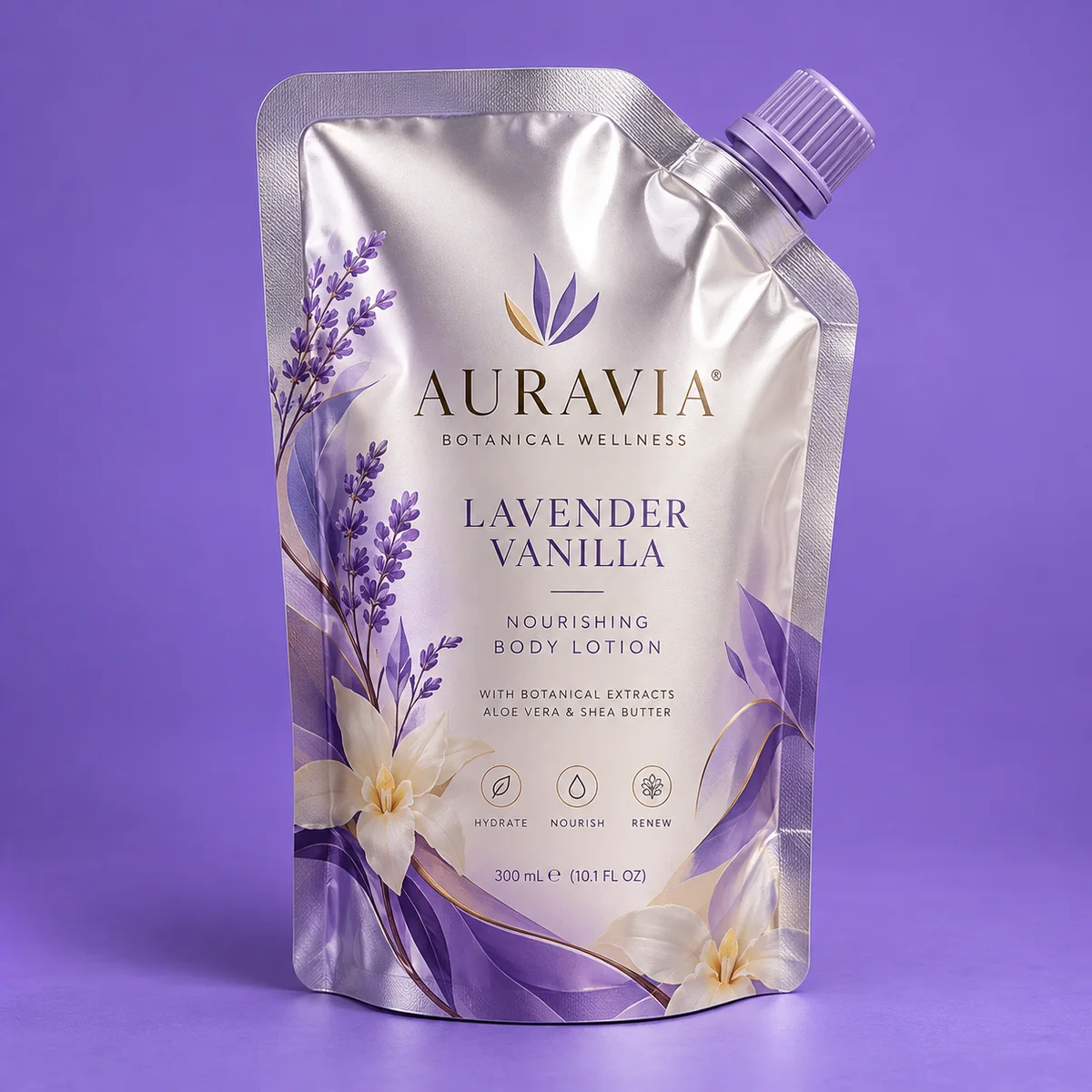
Custom Aluminum Foil Spout Pouch
Give light-sensitive liquids a foil barrier and a controlled pour. Configure the spout, sealant layer, and pouch shape for sauces, concentrates, or refills.
View product →Custom Cosmetic Spout Pouch
Make shampoo, lotion, and cleanser refills easier to pour with a cosmetic spout pouch built around your formula, bottle opening, and filling process.
View product →Custom Aluminum Foil Spout Pouch
Give light-sensitive liquids a foil barrier and a controlled pour. Configure the spout, sealant layer, and pouch shape for sauces, concentrates, or refills.
View product →✦ Upgrade Today
Ready to Upgrade Your Brand Packaging?
Get custom templates matching your custom dimensions. Instant 3D digital proof samples returned in hours.