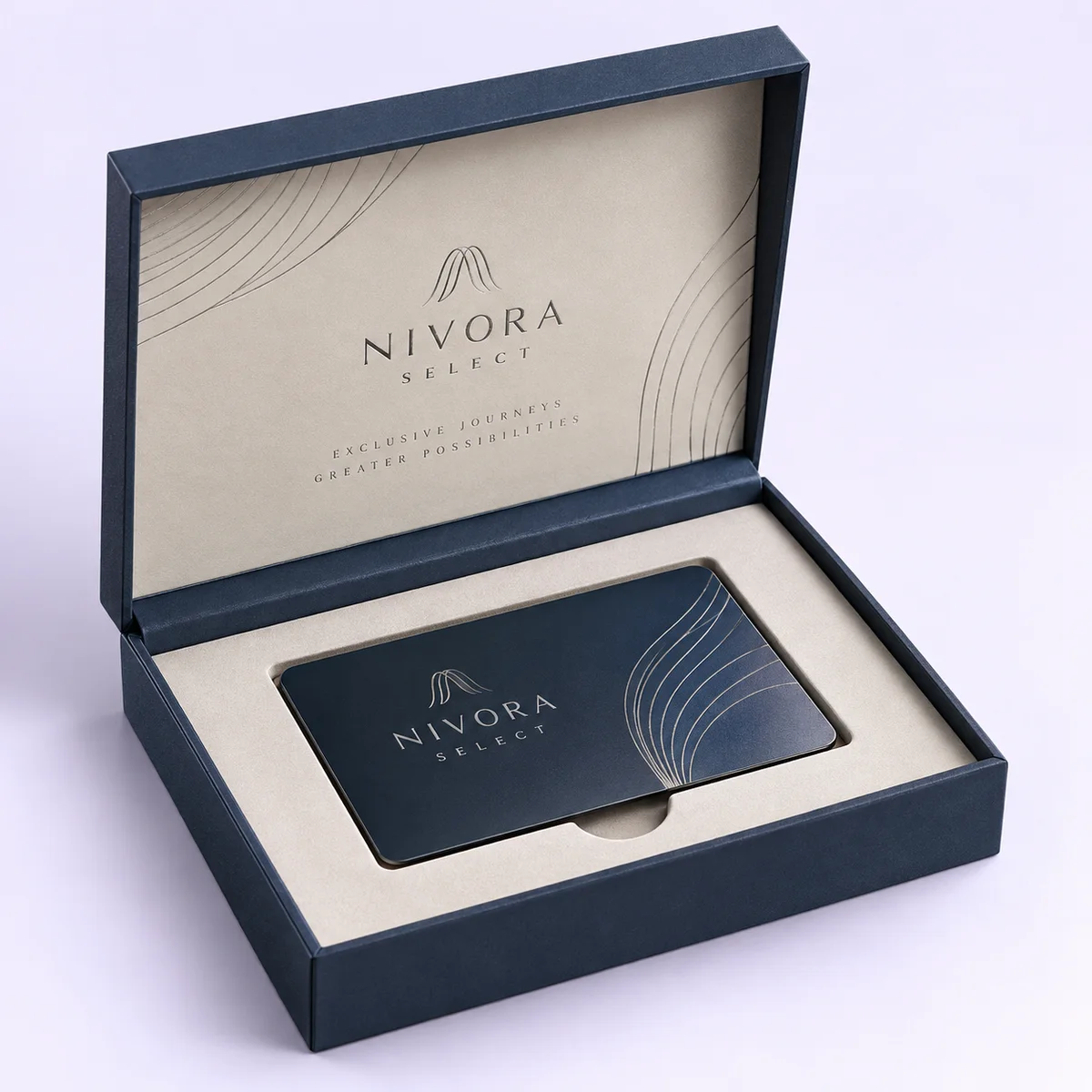
Card-Ready Rigid
★★★★★
5.0/5.0Custom Credit Card Presentation Boxes
A premium card deserves a proper reveal. Fit the card in a recessed rigid tray with room for a welcome note, crisp branding, and easy removal.
Premium Quality
Fully Customizable
Low MOQ
Fast Turnaround
100% Eco-Friendly
Sustainable materials
Free Shipping
On every order
No Die & Plate Charges
Zero hidden costs
100% Satisfaction
Quality guaranteed
Expert Support
We're here to help
Design Varieties
Explore Rigid Credit Card Presentation Styles
From discreet private-banking cases to bright membership launches, compare ten ways to frame, hold, and reveal a card through custom rigid packaging.
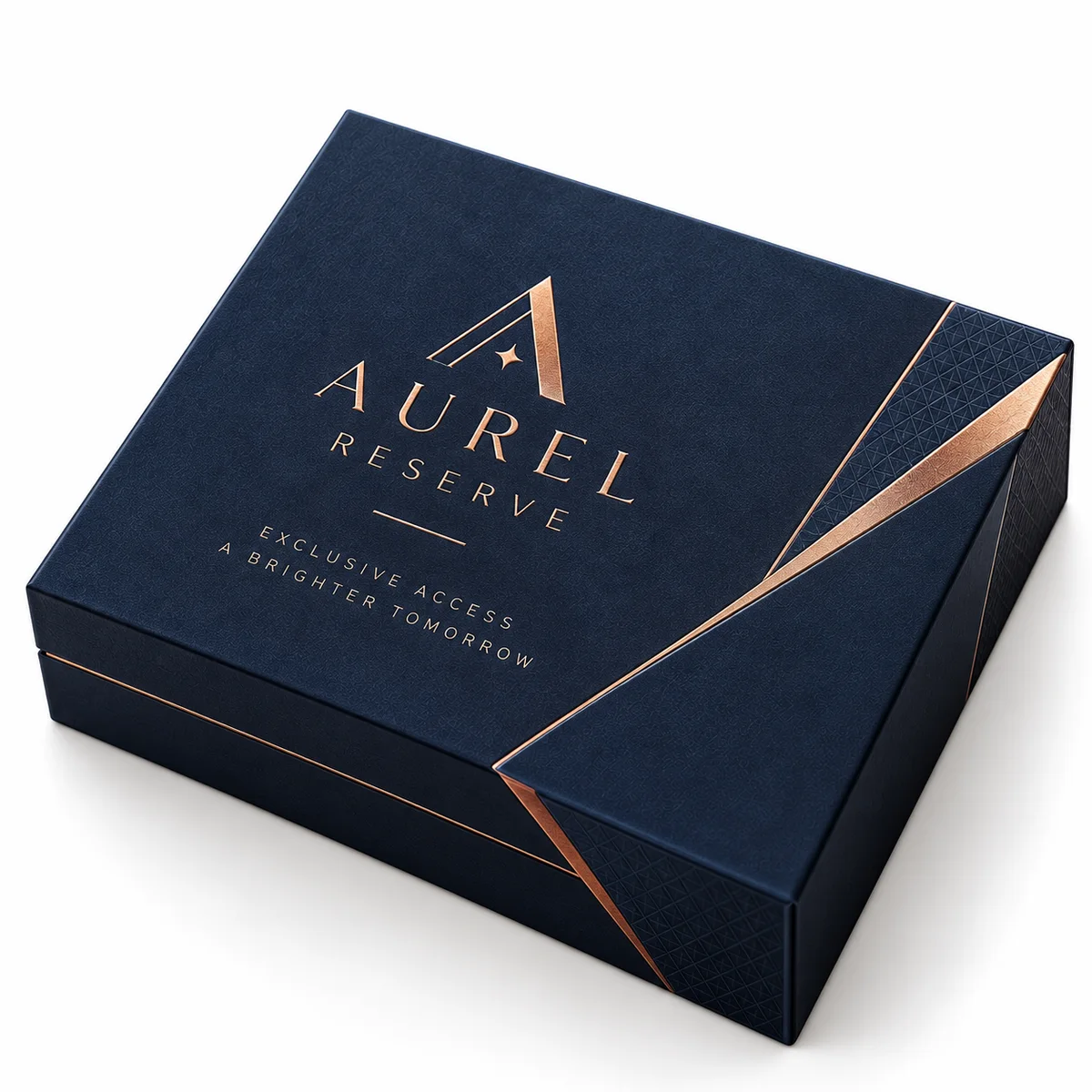
Closed Rigid Case
Closed rigid box with a fitted lid, straight sidewalls, and a copper-printed outer wrap.
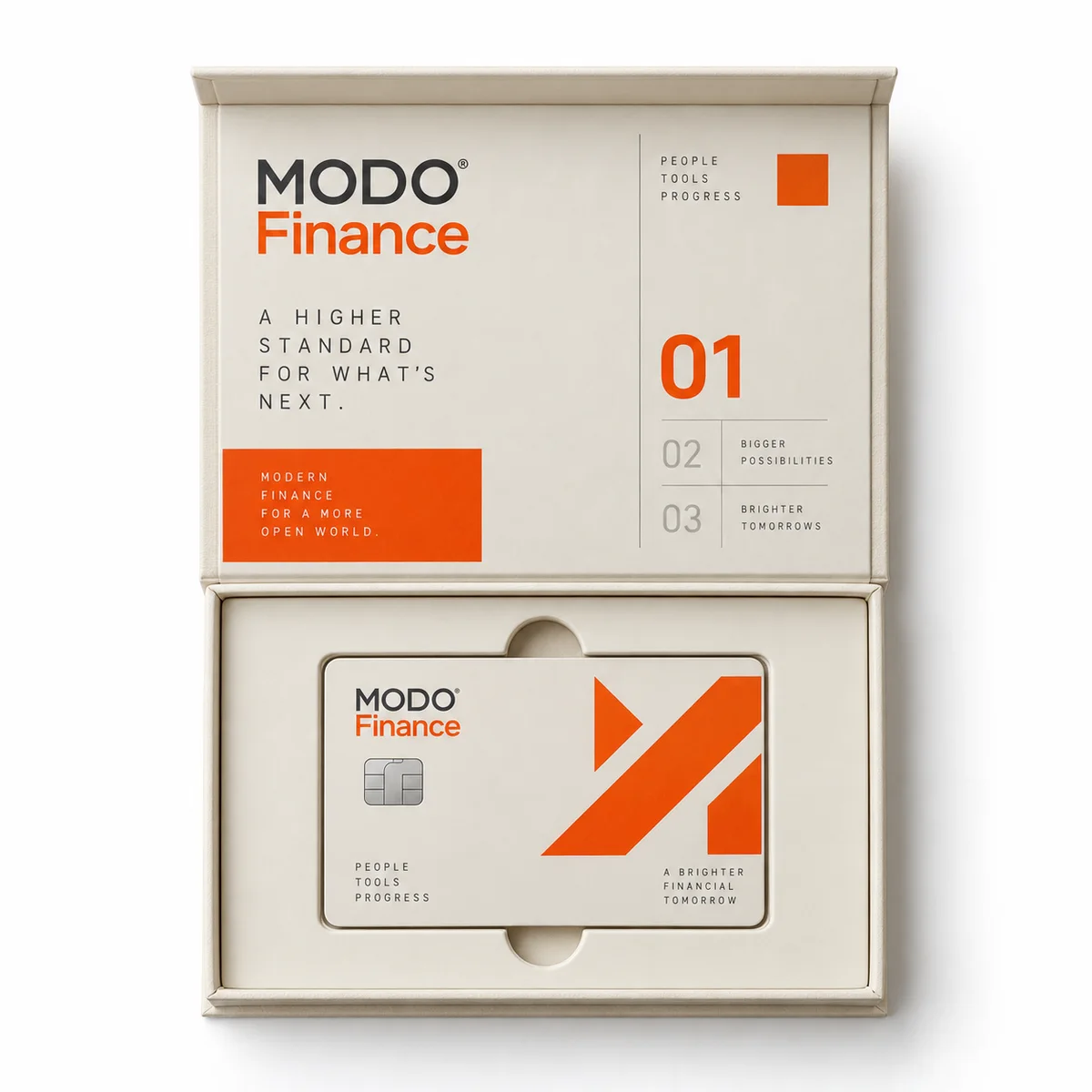
Hinged Card Display
Open hinged lid reveals a recessed card holder with a finger notch and printed inner panel.
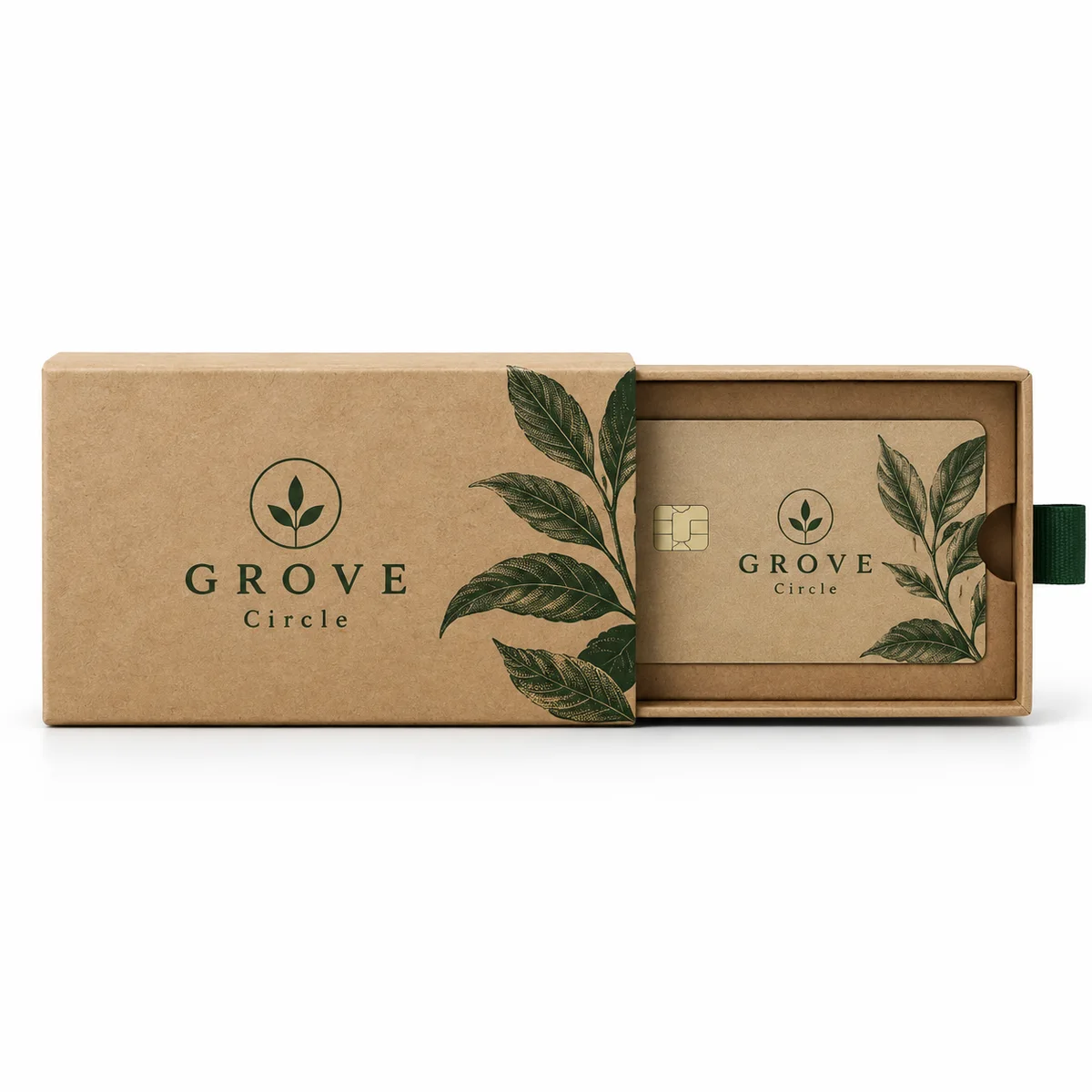
Sliding Sleeve Tray
Kraft-wrapped sleeve slides over a shallow rigid tray with a card recess and pull ribbon.
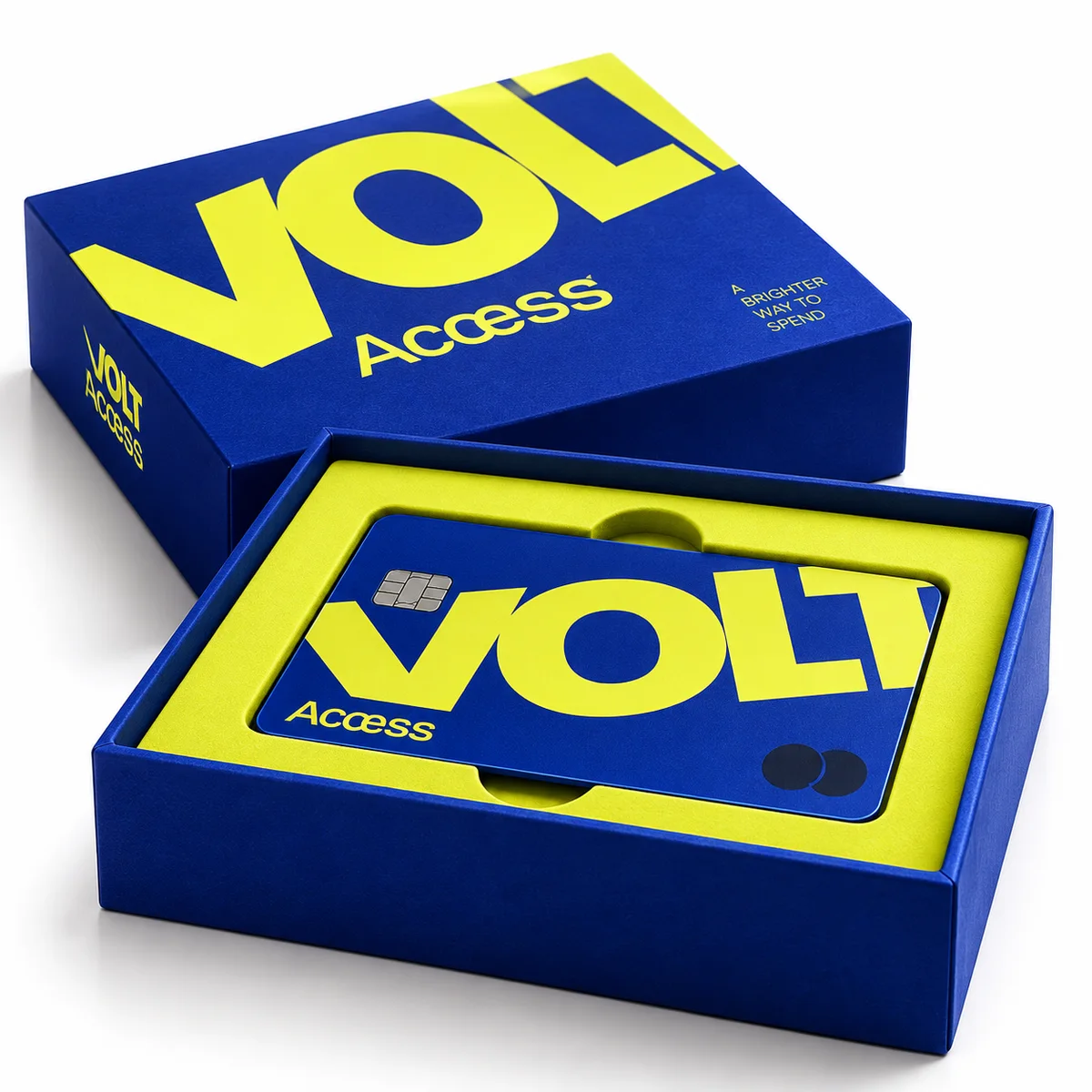
Lift-Off Card Box
Lift-off rigid lid exposes a thick colored tray with a shaped recess for one card inside.
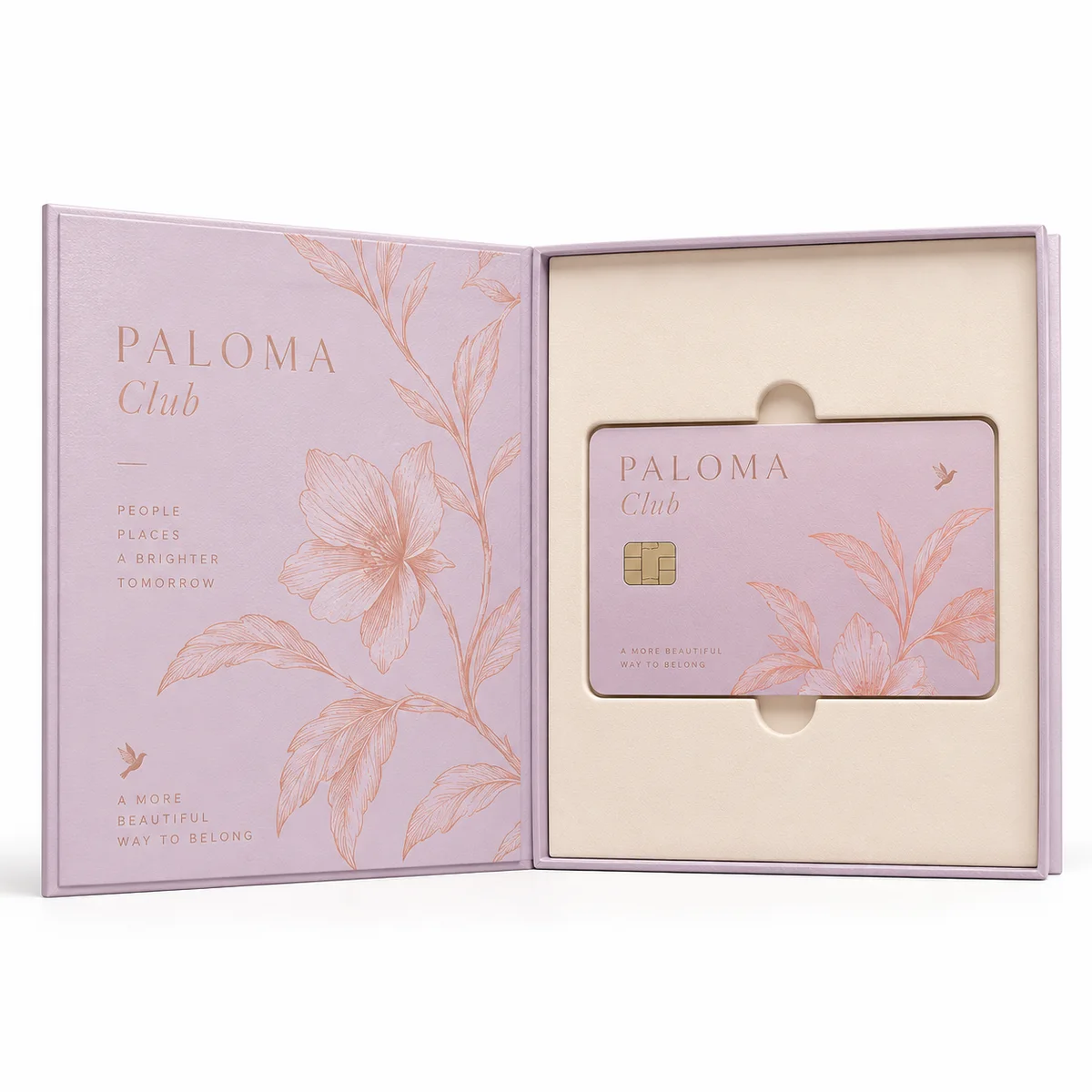
Book-Style Card Case
Book-style rigid cover folds open beside a fitted card recess with two round finger cutouts.
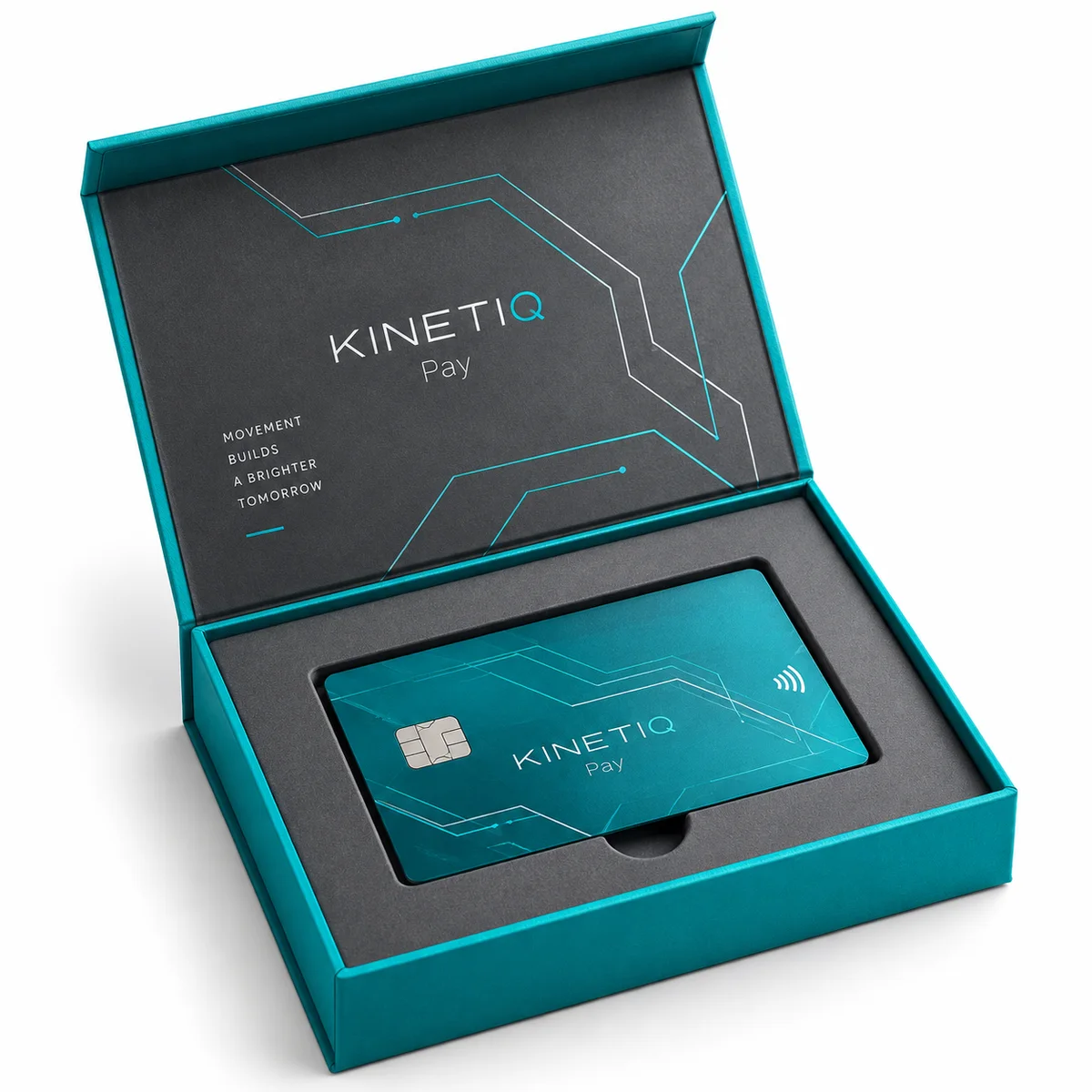
Hinged Card Presentation
Rigid hinged lid opens over a fitted dark card tray, with a finger notch for card removal.
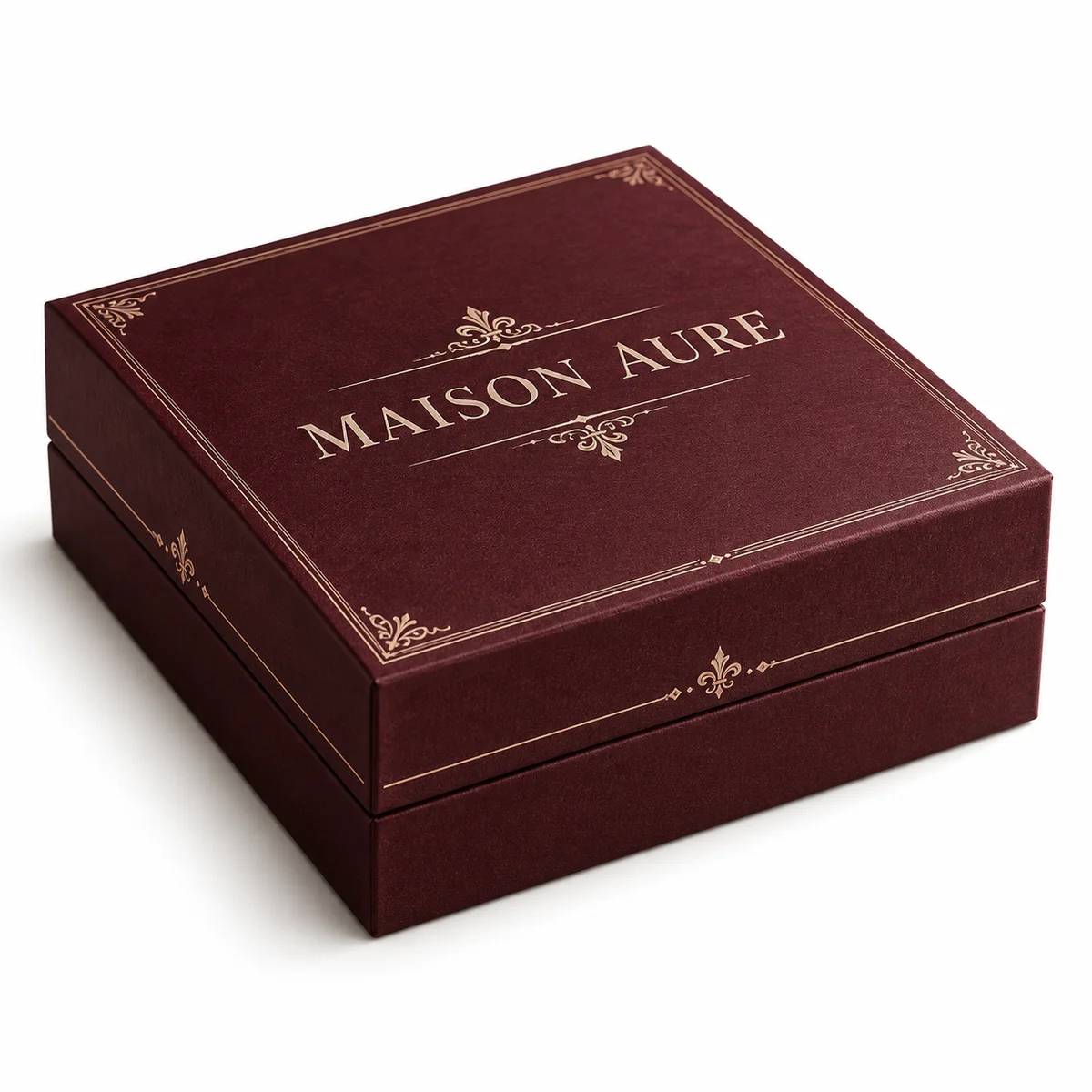
Two-Piece Rigid Lid
Two-piece rigid box has a separate fitted lid, square corners, and printed wrap on edges.
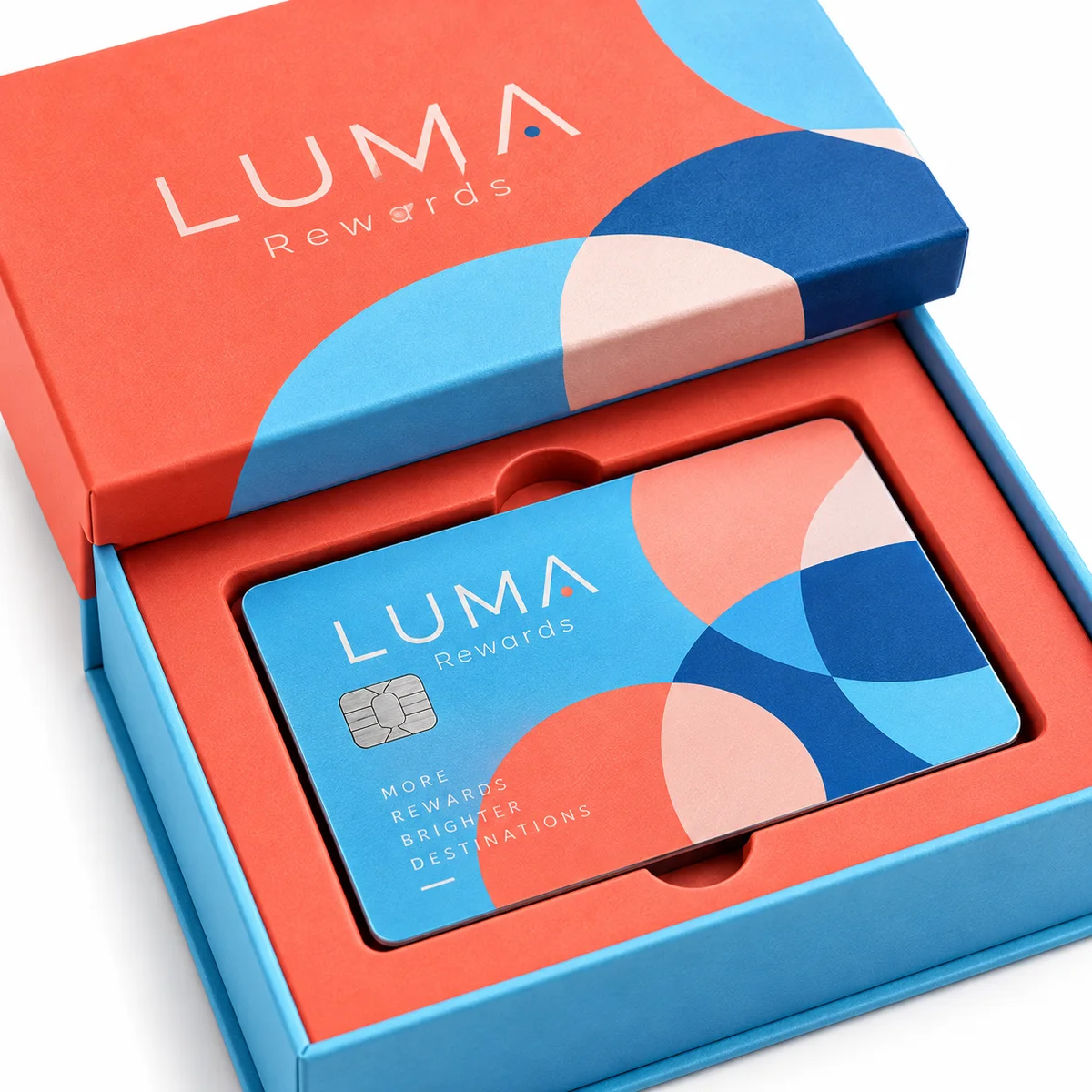
Color-Wrapped Card Tray
Raised rigid lid sits above a fitted card well, with an easy-grip notch cut in the insert.
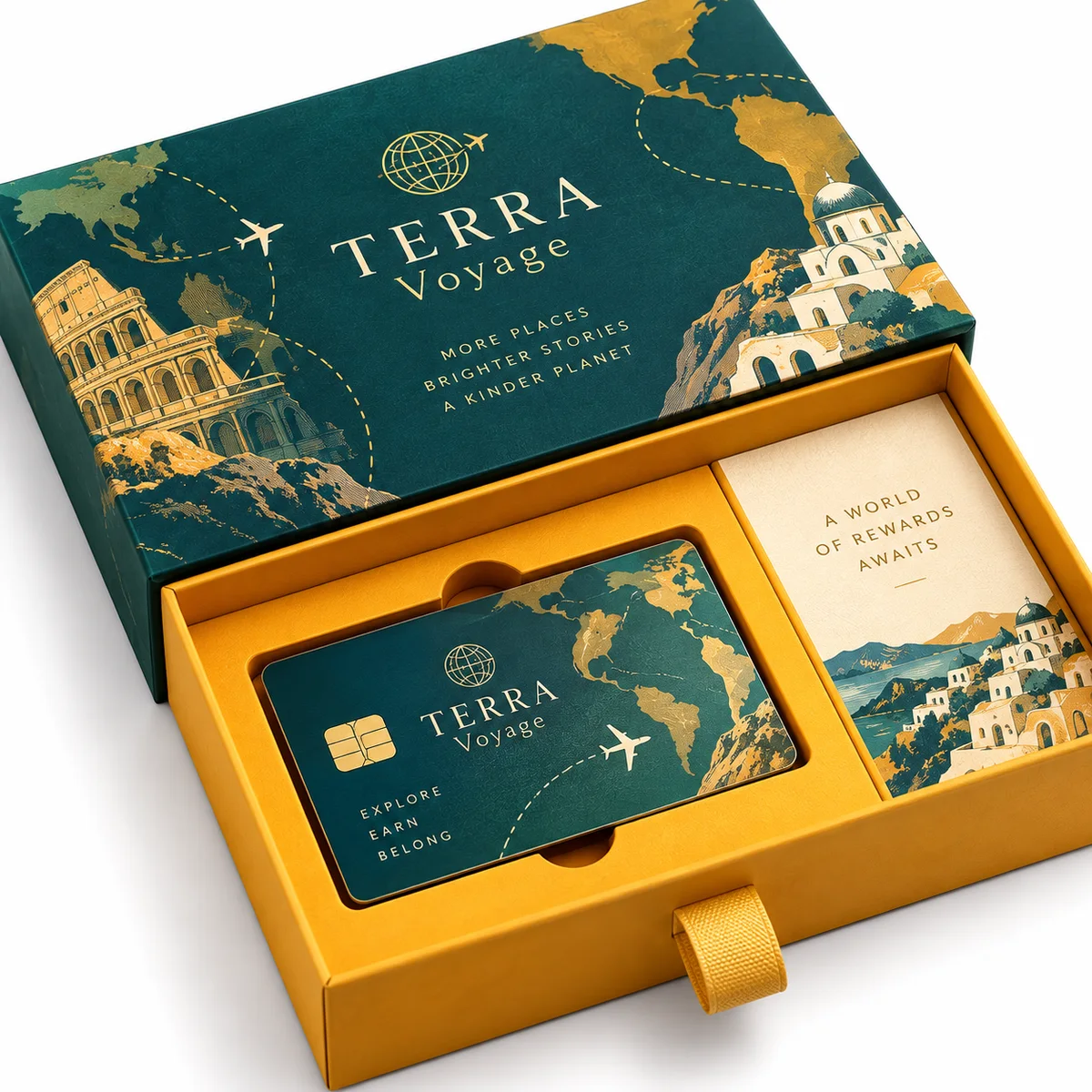
Drawer Welcome Kit
Sliding rigid drawer holds a card recess and a separate printed welcome panel beside it.
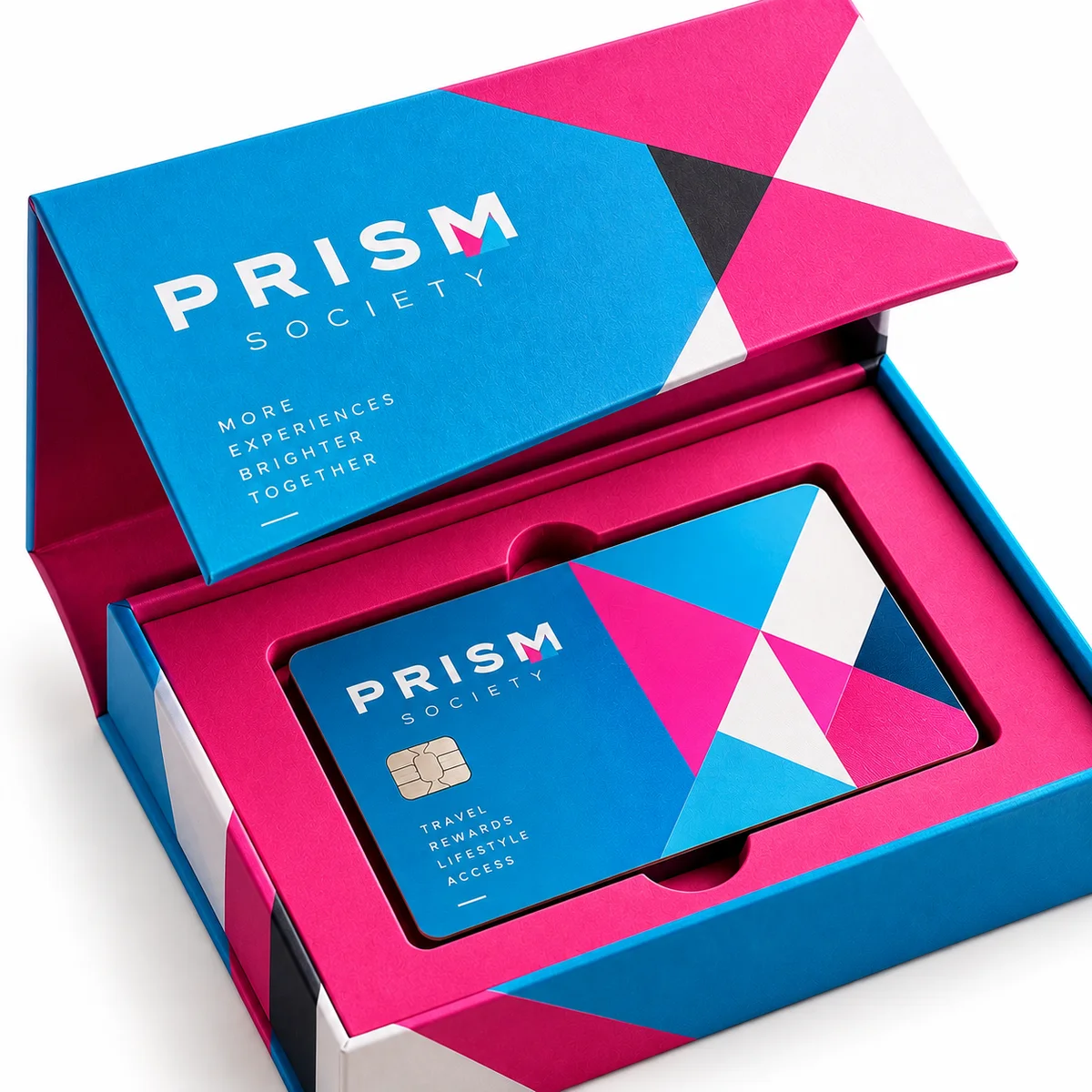
Graphic Hinged Case
Hinged rigid cover lifts to reveal a fitted card insert and a front finger-access cutout.
Can't find the perfect style?
Create a completely custom box design tailored to your brand.
Designed for Various Industries
We design packaging that fits every industry
From small businesses to global brands, our custom packaging solutions are built to elevate your brand and leave a lasting impression.
Cosmetics & Beauty
Food & Beverages
E-commerce & Retail
Electronics
Apparel & Fashion
Health & Wellness
Pharmaceuticals
Cannabis & CBD
Pet Products
Baby & Kids
Jewelry & Accessories
Home & Lifestyle
Candles & Fragrance
Coffee & Tea
Confectionery
Cosmetics & Beauty
Food & Beverages
E-commerce & Retail
Electronics
Apparel & Fashion
Health & Wellness
Pharmaceuticals
Cannabis & CBD
Pet Products
Baby & Kids
Jewelry & Accessories
Home & Lifestyle
Candles & Fragrance
Coffee & Tea
Confectionery
Supplements
Skincare & Personal Care
Haircare
Automotive
Sports & Fitness
Toys & Games
Stationery & Gifts
Bakery & Desserts
Wine & Spirits
Tobacco & Vape
Medical Devices
Tech Accessories
Subscription Boxes
Organic & Natural
Luxury Retail
Supplements
Skincare & Personal Care
Haircare
Automotive
Sports & Fitness
Toys & Games
Stationery & Gifts
Bakery & Desserts
Wine & Spirits
Tobacco & Vape
Medical Devices
Tech Accessories
Subscription Boxes
Organic & Natural
Luxury Retail
Built for brands
that care about detail.
Premium packaging. Precise printing.
Fast turnaround. No hidden costs.
10K+
Happy Customers
98%
Satisfaction Rate
Trusted by Top Brands
We work with startups to enterprises. Our boxes make an impact.
Free Design Support
Get expert help in creating the perfect packaging for your brand.
Warehouse Across USA
Faster fulfilment with local production and warehouses.
Print & Design Lovers
Crafted with passion, just the way your brand deserves.
Custom Credit Card Presentation Boxes for Premium Card Reveals
A new premium credit card often arrives with more than an account number. There may be a welcome letter, activation guidance, or an invitation to a member program. The presentation box needs to show the card first, hold it steady, and leave room for those materials without turning a simple reveal into a difficult unpacking job.
Rigid Credit Card Boxes with a Deliberate First Reveal
A shallow card tray gives a single card a clear place inside the box. Unlike a loose card resting on a printed panel, a fitted recess keeps its edges aligned when the lid opens. That controlled reveal matters for premium bank cards, private memberships, and executive onboarding.
Packopie's proposed custom credit card presentation boxes use wrapped rigid paperboard: a firm board core covered with printed or specialty paper. Buyers comparing Custom Rigid Boxes can choose the outer shape, the card-holder layout, and where the brand appears.
For programs needing simpler custom credit card boxes, the tray can focus on one card. Larger welcome kits can reserve more interior space for a message. In either case, the card stays the main feature.
Opening Styles for Cards and Welcome Kits
An opening style changes what the recipient sees and touches. A book-style rigid case opens along a spine, putting the branded lid opposite the card. It can show a short welcome message the moment the box opens. A lift-off lid is separate from the base, creating a slower reveal with a clean display surface.
Two-piece rigid boxes suit simple presentations with little extra material. Rigid drawer boxes reveal their contents as a tray slides out of a sleeve; that movement can suit a card beside a folded note or a small printed guide. A non-magnetic hinge may be useful when an issuer prefers to avoid a magnetic closure altogether.
For a hinged premium format, Custom Magnetic Closure Boxes show the related construction family. Magnet positions and card compatibility must be checked for the actual card program, especially where magnetic stripes are involved.
Precision Card Inserts for a Secure and Easy Lift
An insert should hold a card in place without pinching it. A common ID-1 payment card measures 85.60 × 53.98 mm, or about 3.370 × 2.125 inches. Those measurements are a starting point, not a complete insert drawing. Clearance also depends on card thickness, raised details, corner shape, and the chosen lining.
A die-cut paperboard holder creates a slim, neat recess. EVA foam offers a padded cutout. Velvet-lined options can add a softer contact surface, subject to sampling and material review. Whichever insert is chosen, a semicircular finger notch or a ribbon lift makes removal less awkward. Without a planned lift point, a snug card can be hard to pick up.
Thicker metal cards need particular attention. The tray depth should be tested with a physical sample or confirmed dimensions before a production run.
Extra Space for Welcome Letters and Cardholder Materials
A credit card presentation can carry the next steps in the customer journey without burying the card. A printed letter may sit inside a lid pocket, alongside the card in a divided tray, or beneath a removable panel. A short welcome booklet needs more depth than a flat printed note. These choices affect the insert footprint and the box's finished size.
The layout should also reflect how the kit is packed. An employee placing hundreds of cards into trays needs a clear orientation and practical pickup access. A card issuer sending individual kits may require a separate protective outer mailer and its own security or fulfillment process. The decorative rigid box is not itself a secure card-issuance system.
Custom Printed Wraps and Finishes for Financial Brands
The outside wrap sets the first visual cue, but the inside surface carries the message seen during opening. Full-color printing can coordinate the lid, spine, and card cradle with a bank or membership identity. A restrained one-color design may make a foil mark or debossed logo more noticeable than a busy pattern.
The board core and paper wrap are separate decisions. Rigid grayboard supplies shape; white printed paper, natural kraft, or textured wrap changes the surface. Suggested board gauges include 1.5, 2.0, and 2.5 mm, with the final choice matched to box dimensions and contents. Matte and gloss lamination alter surface appearance, while soft-touch film adds a different feel. Foil stamping, embossing, and selective spot UV can emphasize a short name or emblem.
Artwork should be checked against a production dieline so text does not disappear around wrapped edges, hinges, or corners.
Card Presentation Packaging for Banks, Clubs, and Loyalty Programs
A private banking launch might use a restrained cover and a single centered card. A fintech welcome kit may favor high-contrast graphic printing and a visible activation guide. Hotel memberships and travel programs can use the lid interior for a short message, leaving the card easy to lift out. Corporate programs may pair the card with an executive letter.
The practical questions remain consistent: who opens the box, what must be seen first, and what else travels with the card?
A physical sample is especially useful when the project includes a metal card, a textured wrap, an insert lining, or a magnetic closure. It lets the team assess card removal and appearance before the bulk order.
Custom Rigid Box Specifications for a Clear Wholesale Quote
A useful custom quote starts with the card's physical dimensions or sample, the preferred opening style, the number and size of included paper pieces, and the finished box quantity. Print-ready artwork is helpful, but a clear description of the proposed branding is enough to begin planning the structure. Material choices, inserts, finishes, and delivery ZIP code narrow the estimate.
For Packopie's current planning model, 100 boxes is a suggested starting quantity, not a confirmed manufacturing minimum. The proposed unit rates are estimates only. Production timing and US freight must be confirmed for each order, and any rush request depends on capacity. Final pricing also needs a reviewed calculation for quantity breaks and combined add-ons.
Once the card fit, box layout, print treatment, and quantity are aligned, Packopie can prepare a specification-led quotation that reflects the actual presentation rather than a generic card-sized box. That gives procurement teams a clearer basis for comparing designs, approving samples, and planning delivery.
Frequently Asked Questions
The card should stay centered without being hard to remove. A standard payment card measures 85.60 × 53.98 mm, but its thickness and any raised details also matter. We recommend checking the proposed recess against a physical card sample before finalizing the insert.
Magnet placement needs review when the card has a magnetic stripe. The closure should not press a magnet directly against the card area. A hinged or lift-off box without magnets is another option when card compatibility cannot be confirmed.
A custom two-part layout can place the card in a recessed holder and the letter in a separate compartment or pocket. The letter's folded size and thickness help determine the finished box dimensions. A drawer layout may work well for kits that include several printed pieces.
A fitted insert supports the card around its edges. Paperboard and foam holders can be shaped to limit movement, while a finger notch or pull ribbon makes removal easier. The final insert should be checked with the actual card and opening direction.
For mailing, plan a separate protective outer package and confirm the card issuer's handling requirements. The rigid presentation box is the inner branded experience; it is not a substitute for an approved card-issuance or secure-fulfillment process.
It may. A thicker metal card or one with raised lettering can sit differently in a shallow recess. Supply the actual sample or confirmed thickness and raised-feature details so the card holder can be sized without excessive pressure on its surface.
More Solutions
You May Also Like
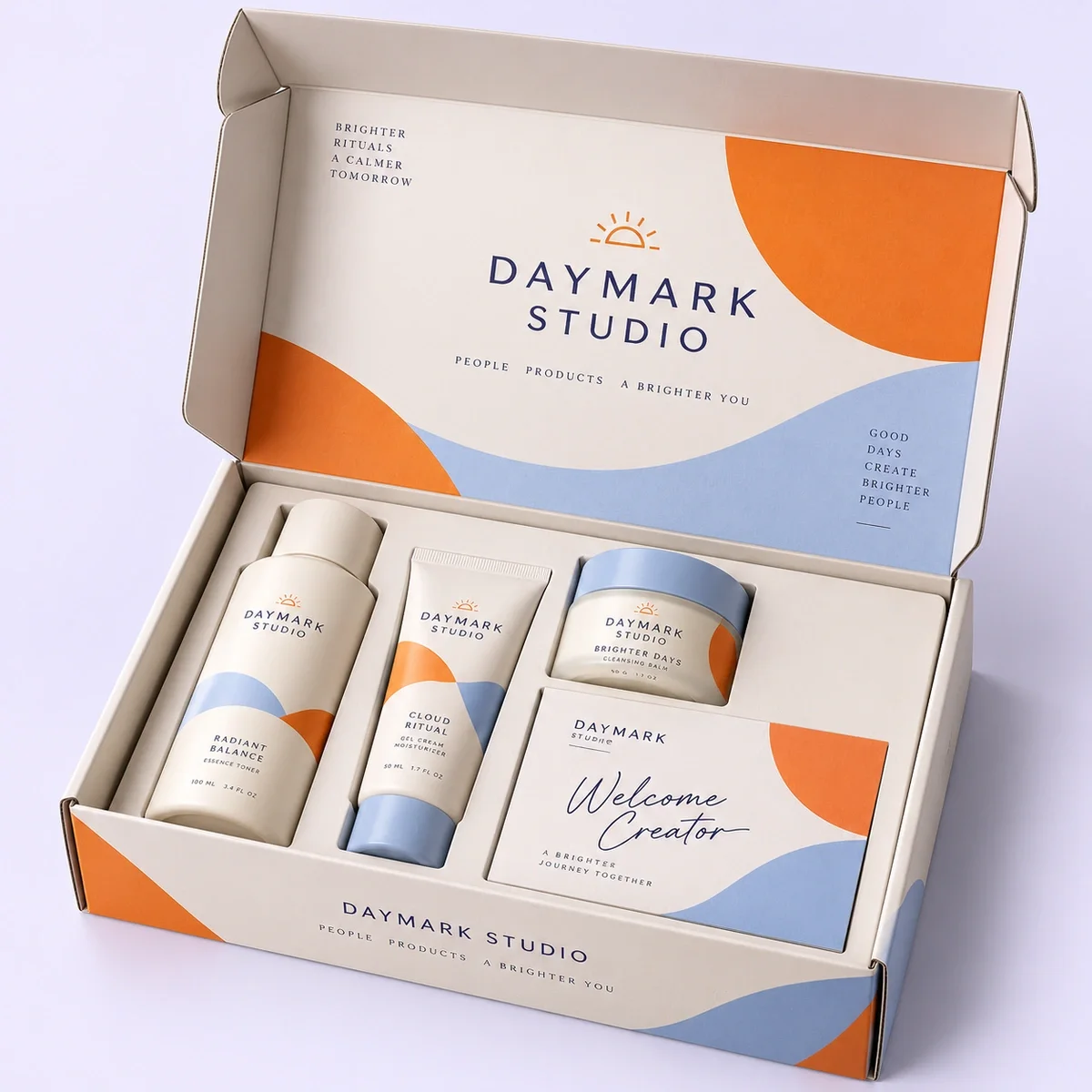
Custom Influencer Kit Packaging
For creator seeding and PR launches, made-to-order kit boxes keep mixed-size samples seated in fitted inserts and frame the brand story when opened.
View product →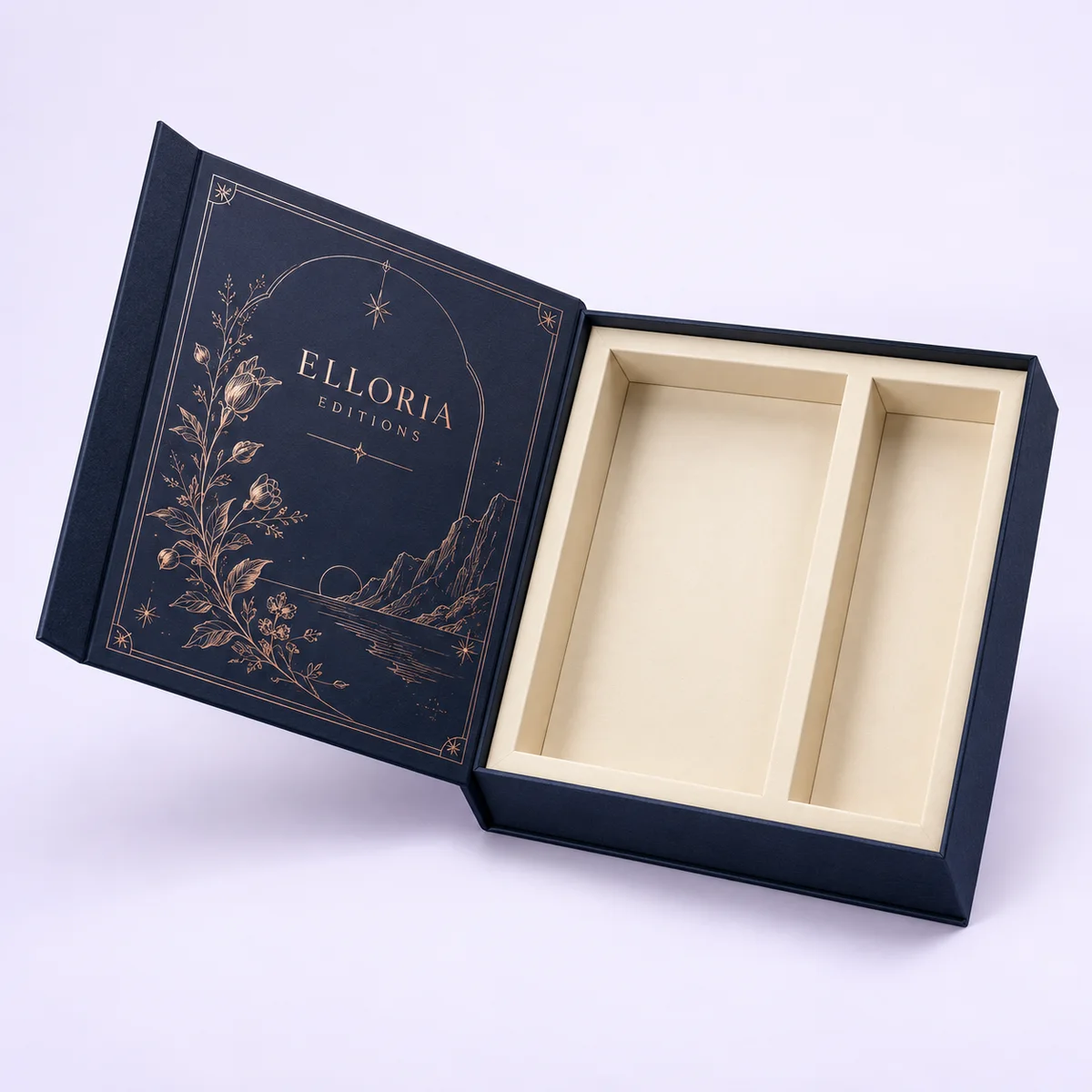
Custom Book Style Rigid Boxes
Turn luxury gift sets into a memorable reveal with a hinged book-cover lid, secure fitted tray, and space for thoughtful inside-cover branding.
View product →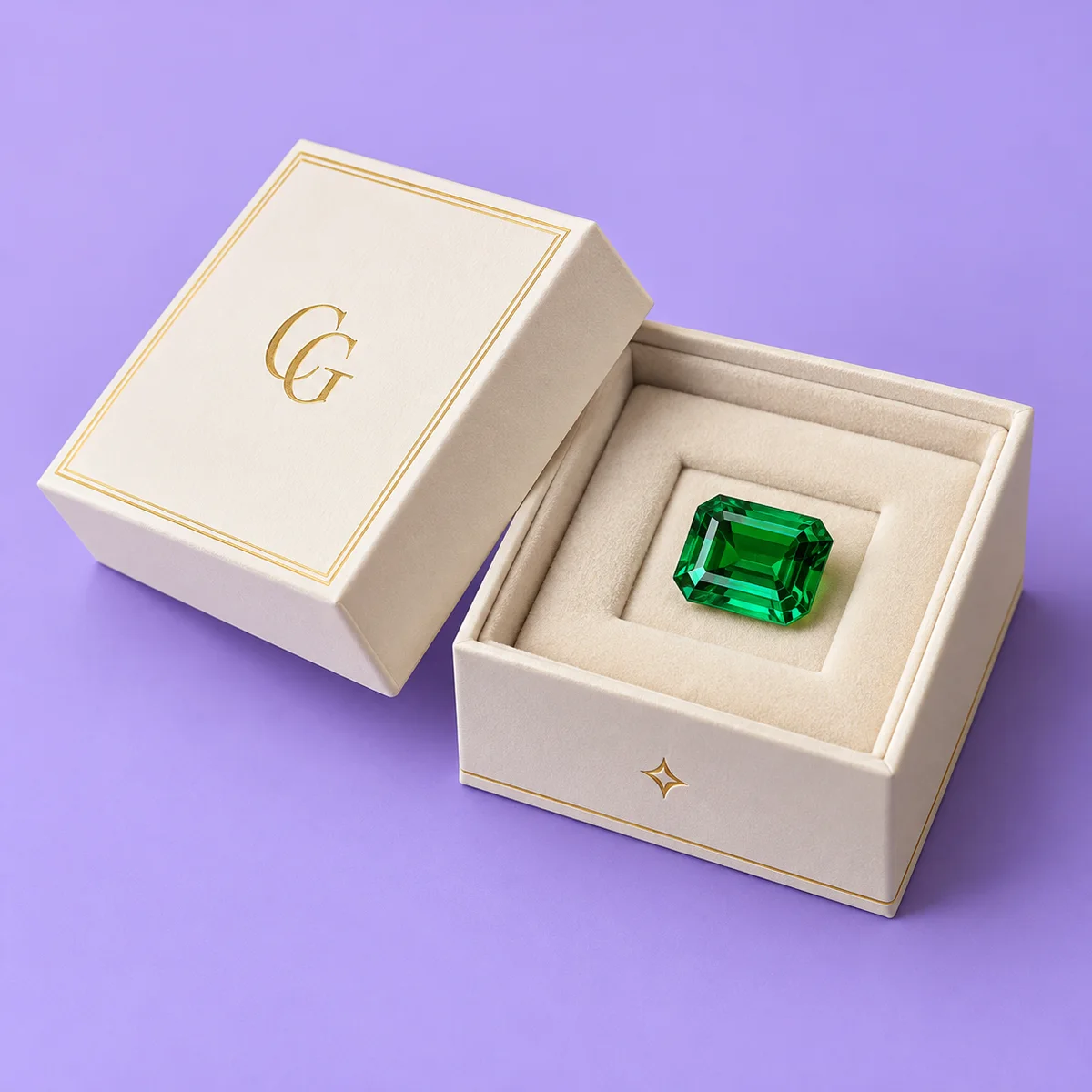
Custom Gemstone Packaging
A loose gemstone deserves a secure, shaped display. Choose a rigid presentation box with a padded cavity that keeps the cut visible and helps limit movement.
View product →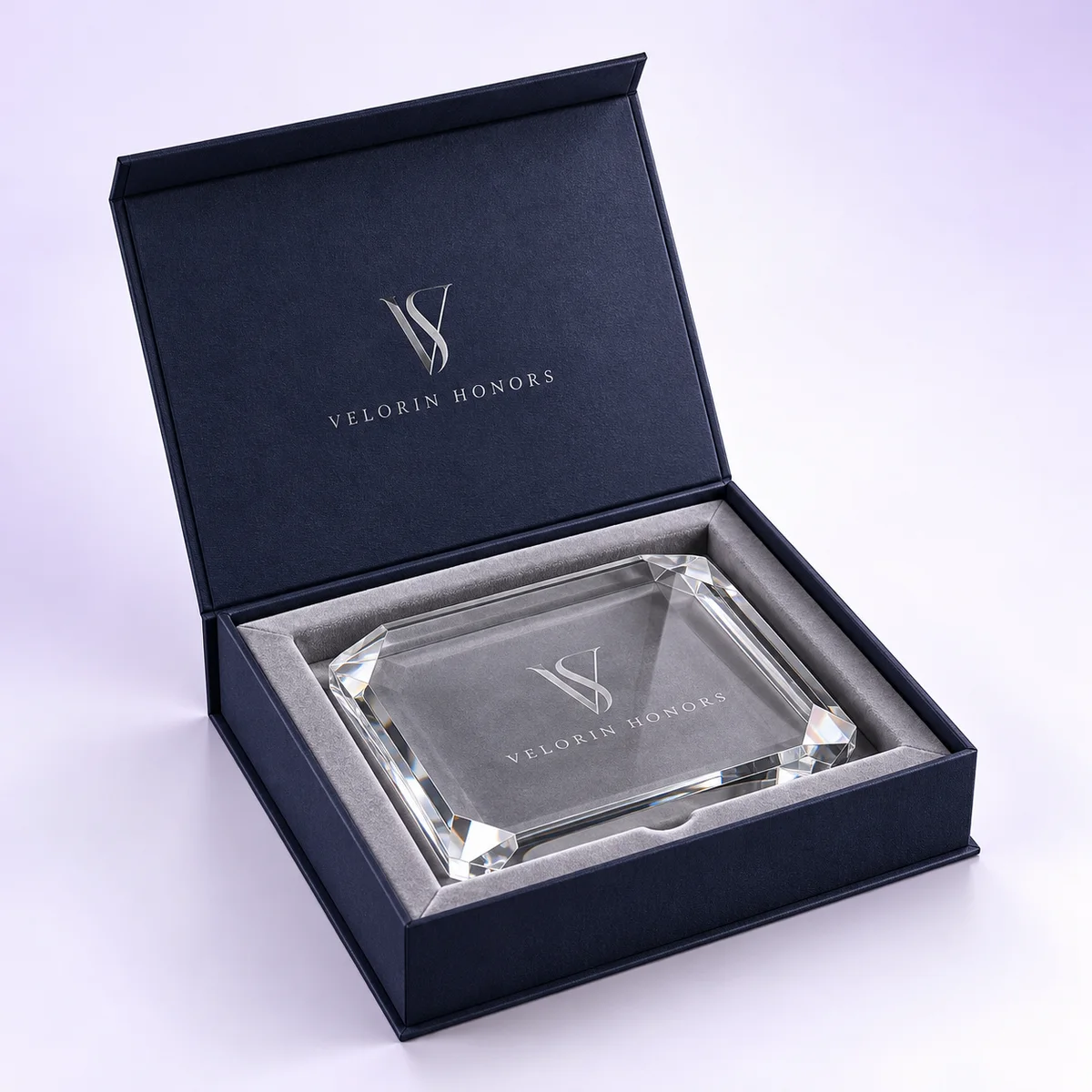
Custom Award Presentation Boxes
A crystal plaque that shifts in its case can spoil the handoff. Custom rigid boxes pair a fitted insert with a refined lid reveal for award ceremonies.
View product →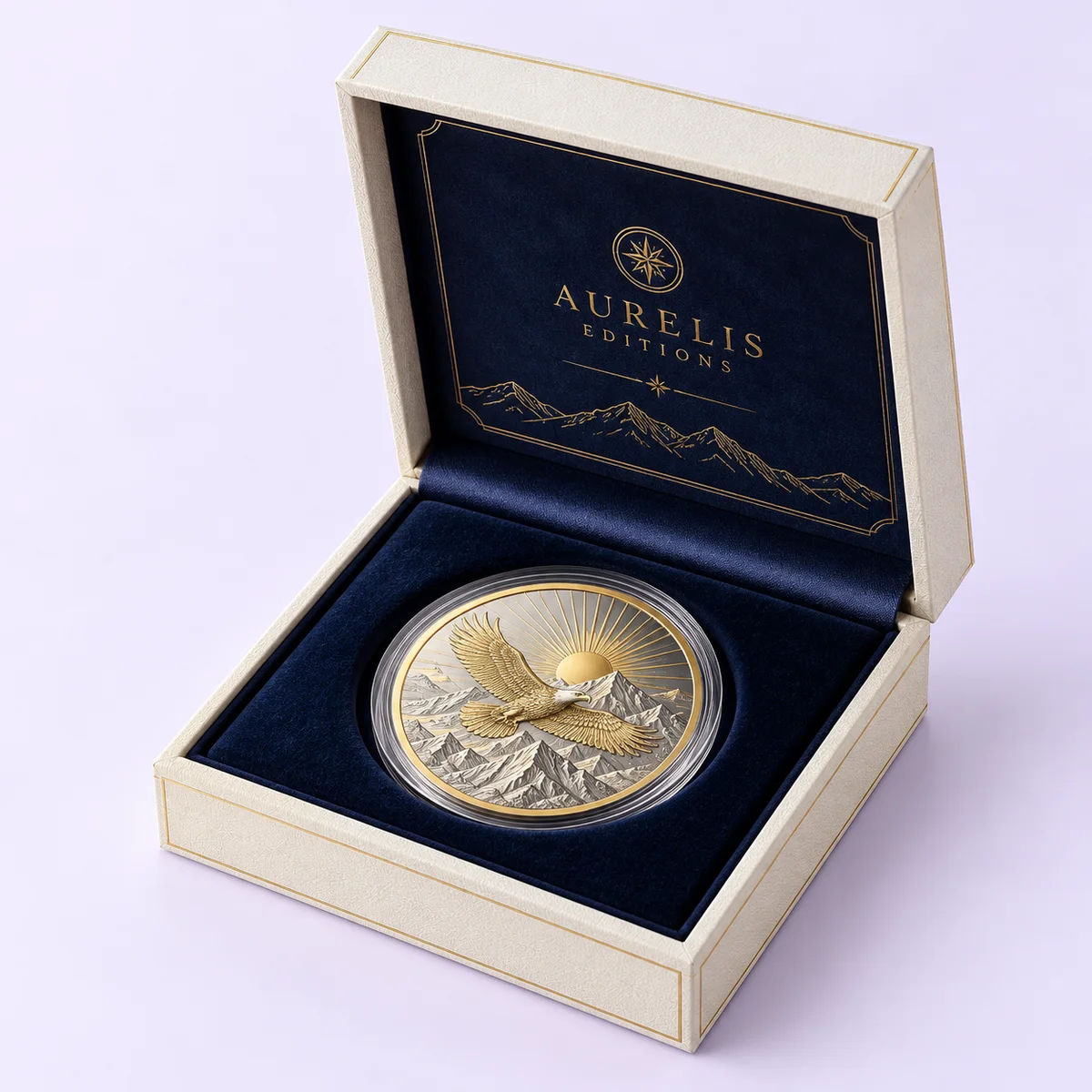
Custom Coin Boxes
Commemorative coins and challenge coin awards get a refined reveal in rigid presentation cases with capsule-fitted inserts, wrapped lids, and detailed finishes.
View product →Custom Influencer Kit Packaging
For creator seeding and PR launches, made-to-order kit boxes keep mixed-size samples seated in fitted inserts and frame the brand story when opened.
View product →Custom Book Style Rigid Boxes
Turn luxury gift sets into a memorable reveal with a hinged book-cover lid, secure fitted tray, and space for thoughtful inside-cover branding.
View product →Custom Gemstone Packaging
A loose gemstone deserves a secure, shaped display. Choose a rigid presentation box with a padded cavity that keeps the cut visible and helps limit movement.
View product →Custom Award Presentation Boxes
A crystal plaque that shifts in its case can spoil the handoff. Custom rigid boxes pair a fitted insert with a refined lid reveal for award ceremonies.
View product →Custom Coin Boxes
Commemorative coins and challenge coin awards get a refined reveal in rigid presentation cases with capsule-fitted inserts, wrapped lids, and detailed finishes.
View product →Custom Influencer Kit Packaging
For creator seeding and PR launches, made-to-order kit boxes keep mixed-size samples seated in fitted inserts and frame the brand story when opened.
View product →Custom Book Style Rigid Boxes
Turn luxury gift sets into a memorable reveal with a hinged book-cover lid, secure fitted tray, and space for thoughtful inside-cover branding.
View product →Custom Gemstone Packaging
A loose gemstone deserves a secure, shaped display. Choose a rigid presentation box with a padded cavity that keeps the cut visible and helps limit movement.
View product →Custom Award Presentation Boxes
A crystal plaque that shifts in its case can spoil the handoff. Custom rigid boxes pair a fitted insert with a refined lid reveal for award ceremonies.
View product →Custom Coin Boxes
Commemorative coins and challenge coin awards get a refined reveal in rigid presentation cases with capsule-fitted inserts, wrapped lids, and detailed finishes.
View product →Custom Influencer Kit Packaging
For creator seeding and PR launches, made-to-order kit boxes keep mixed-size samples seated in fitted inserts and frame the brand story when opened.
View product →Custom Book Style Rigid Boxes
Turn luxury gift sets into a memorable reveal with a hinged book-cover lid, secure fitted tray, and space for thoughtful inside-cover branding.
View product →Custom Gemstone Packaging
A loose gemstone deserves a secure, shaped display. Choose a rigid presentation box with a padded cavity that keeps the cut visible and helps limit movement.
View product →Custom Award Presentation Boxes
A crystal plaque that shifts in its case can spoil the handoff. Custom rigid boxes pair a fitted insert with a refined lid reveal for award ceremonies.
View product →Custom Coin Boxes
Commemorative coins and challenge coin awards get a refined reveal in rigid presentation cases with capsule-fitted inserts, wrapped lids, and detailed finishes.
View product →✦ Upgrade Today
Ready to Upgrade Your Brand Packaging?
Get custom templates matching your custom dimensions. Instant 3D digital proof samples returned in hours.