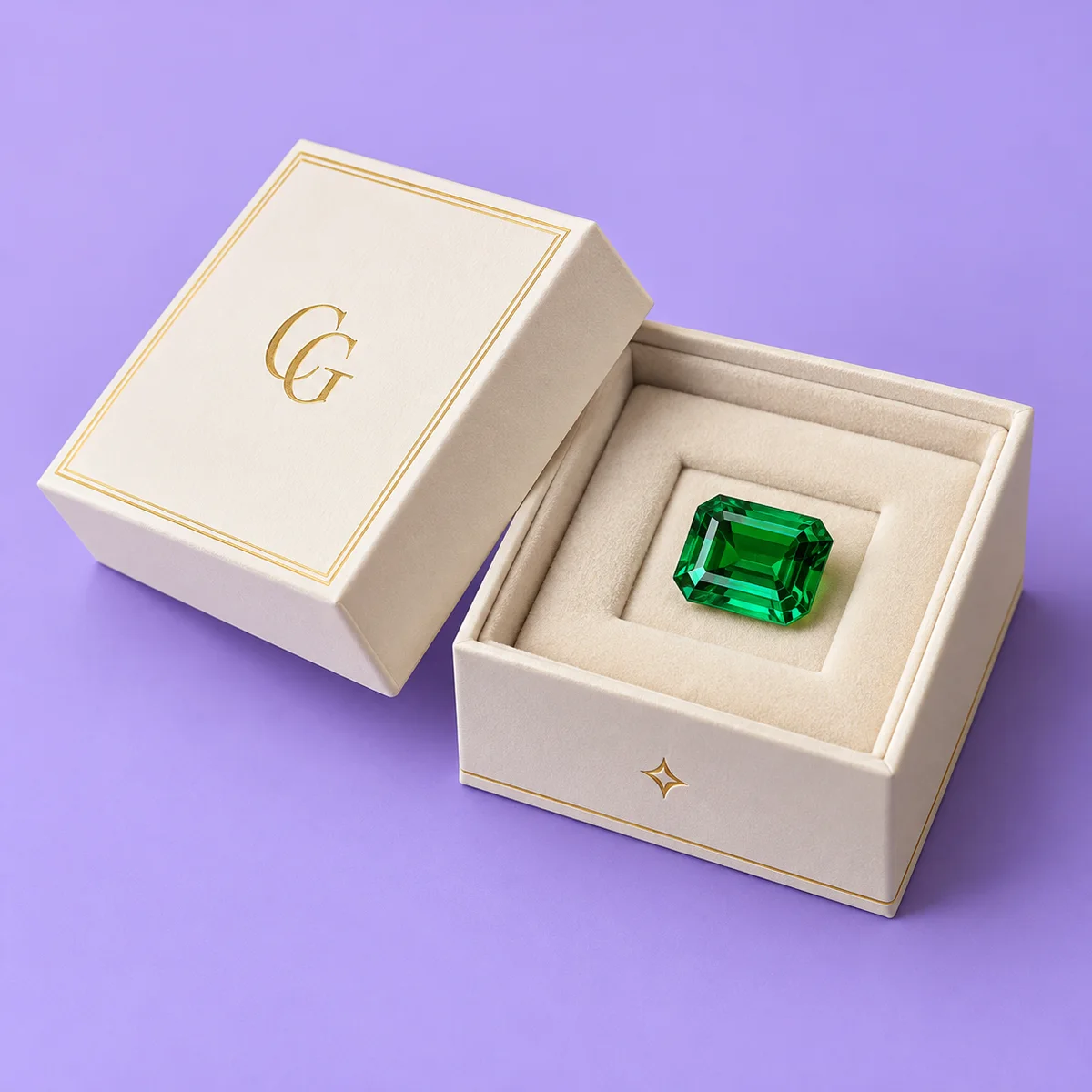
Gemstone Display Packaging
★★★★★
4.7/5.0Custom Gemstone Packaging
A loose gemstone deserves a secure, shaped display. Choose a rigid presentation box with a padded cavity that keeps the cut visible and helps limit movement.
Premium Quality
Fully Customizable
Low MOQ
Fast Turnaround
100% Eco-Friendly
Sustainable materials
Free Shipping
On every order
No Die & Plate Charges
Zero hidden costs
100% Satisfaction
Quality guaranteed
Expert Support
We're here to help
Design Varieties
Gemstone Boxes Built Around the Stone
Explore distinct rigid box structures, fitted gemstone displays, and decorative finishes for single stones, collections, and luxury gifting.
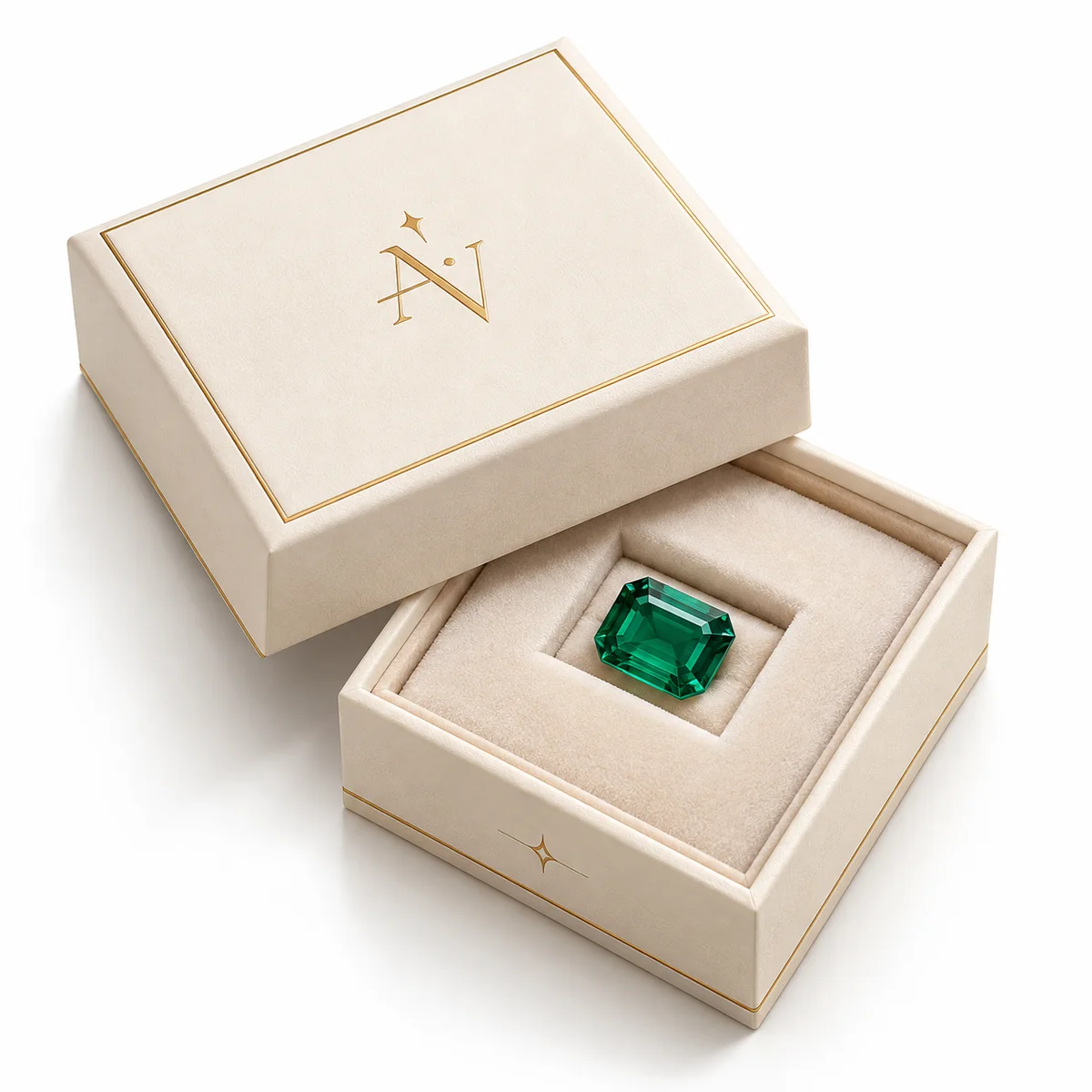
Lift-Off Gemstone Box
A separate rigid lid lifts away from a plush cream insert with one recessed gemstone cavity.
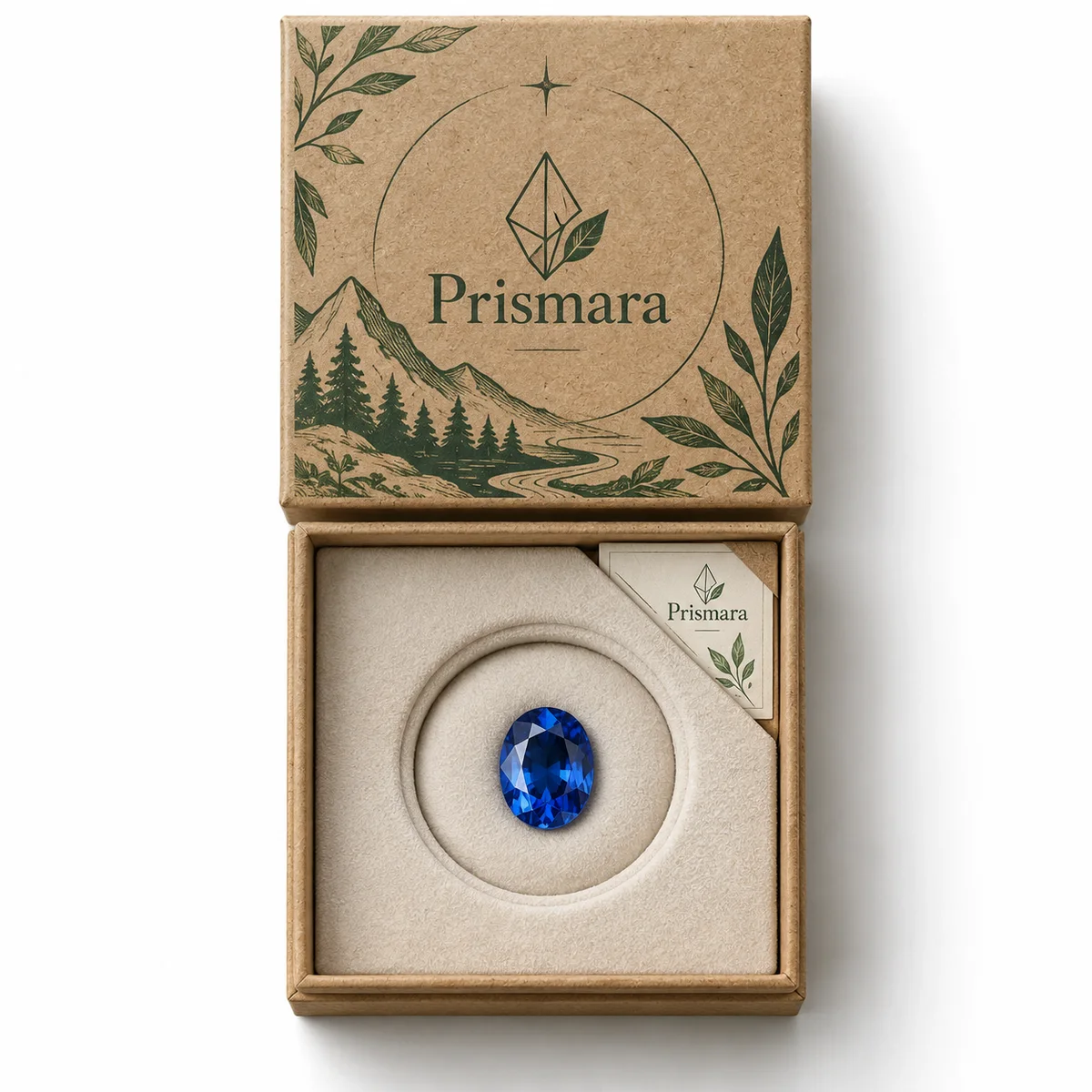
Kraft Lid-and-Base Box
Kraft-wrapped lid and base hold a padded single-stone well and a tucked certificate card.
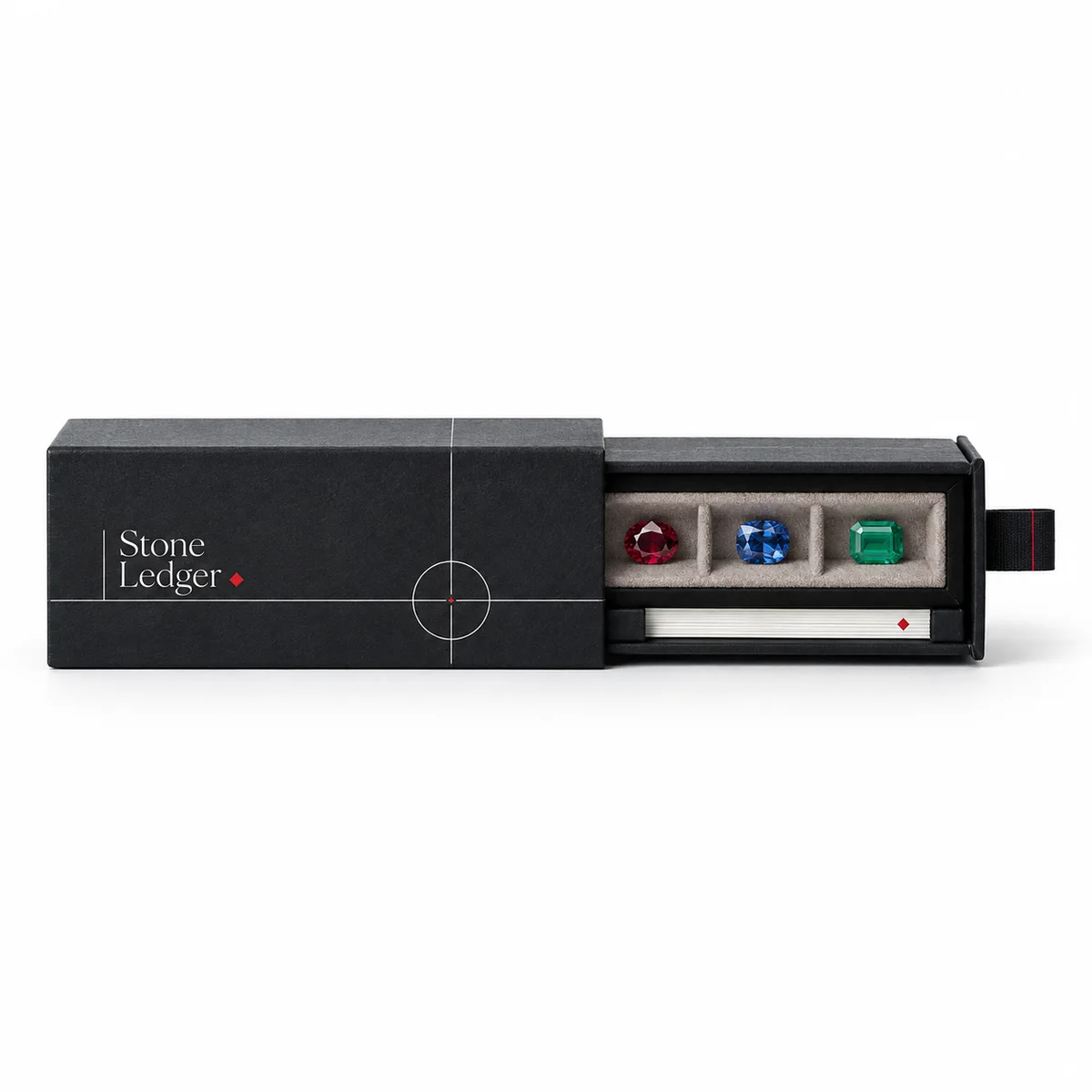
Sliding Gemstone Drawer
A pull-tab drawer slides from its rigid sleeve, showing three gem slots and a card channel.
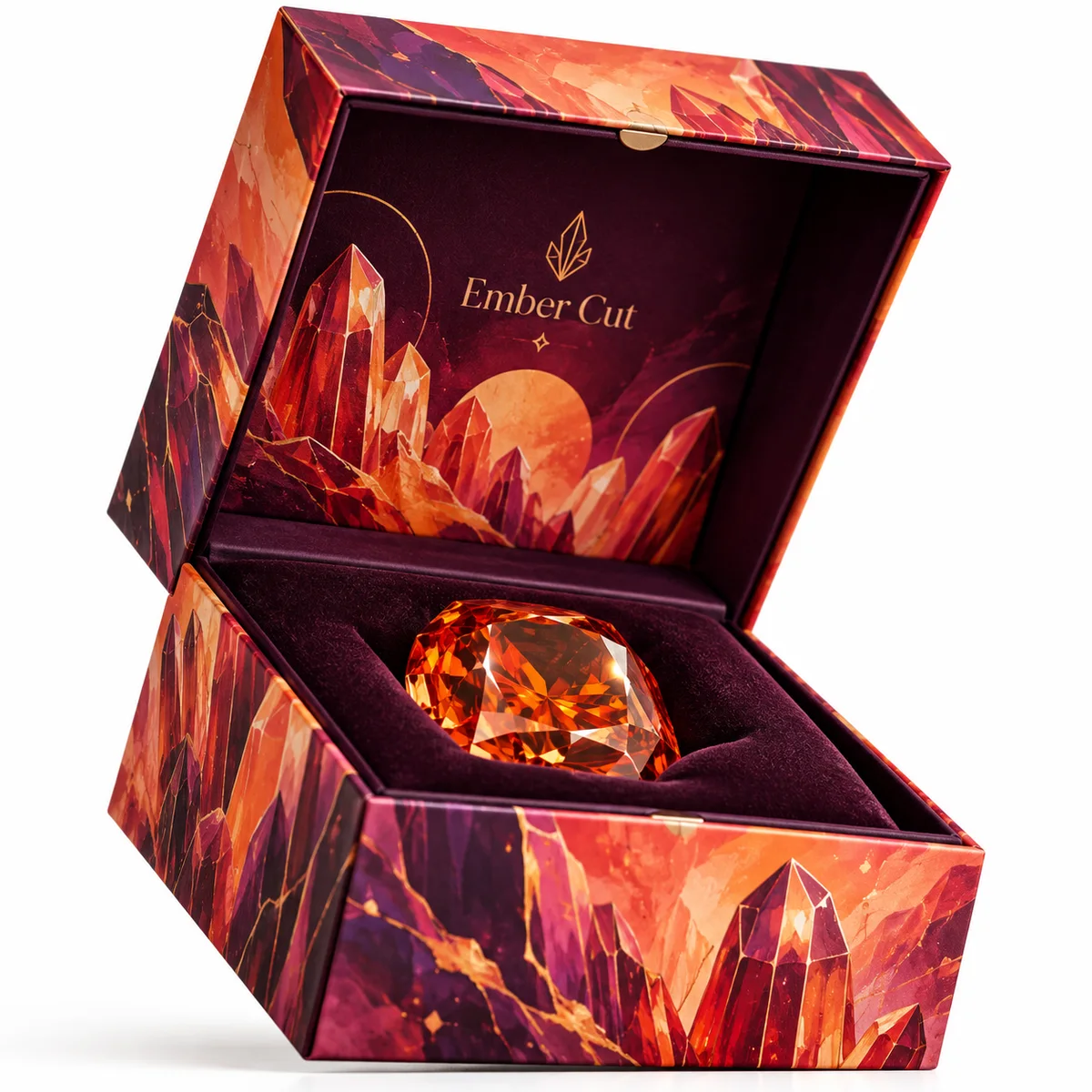
Illustrated Hinged Case
A hinged rigid cover opens over a velvet well holding one faceted stone and a front clasp.
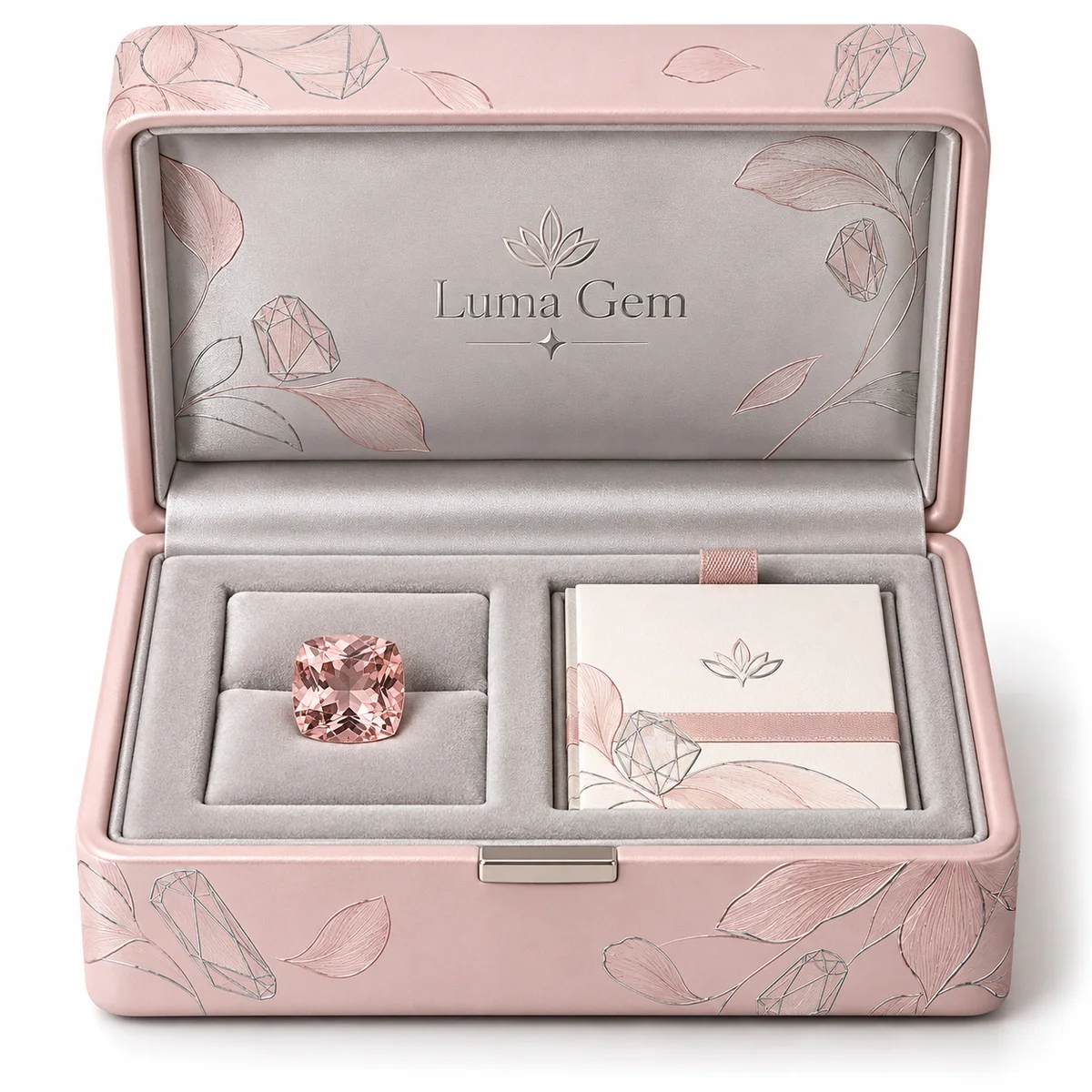
Clamshell Presentation Case
A hinged clamshell opens to twin padded bays for one gemstone and a folded document card.
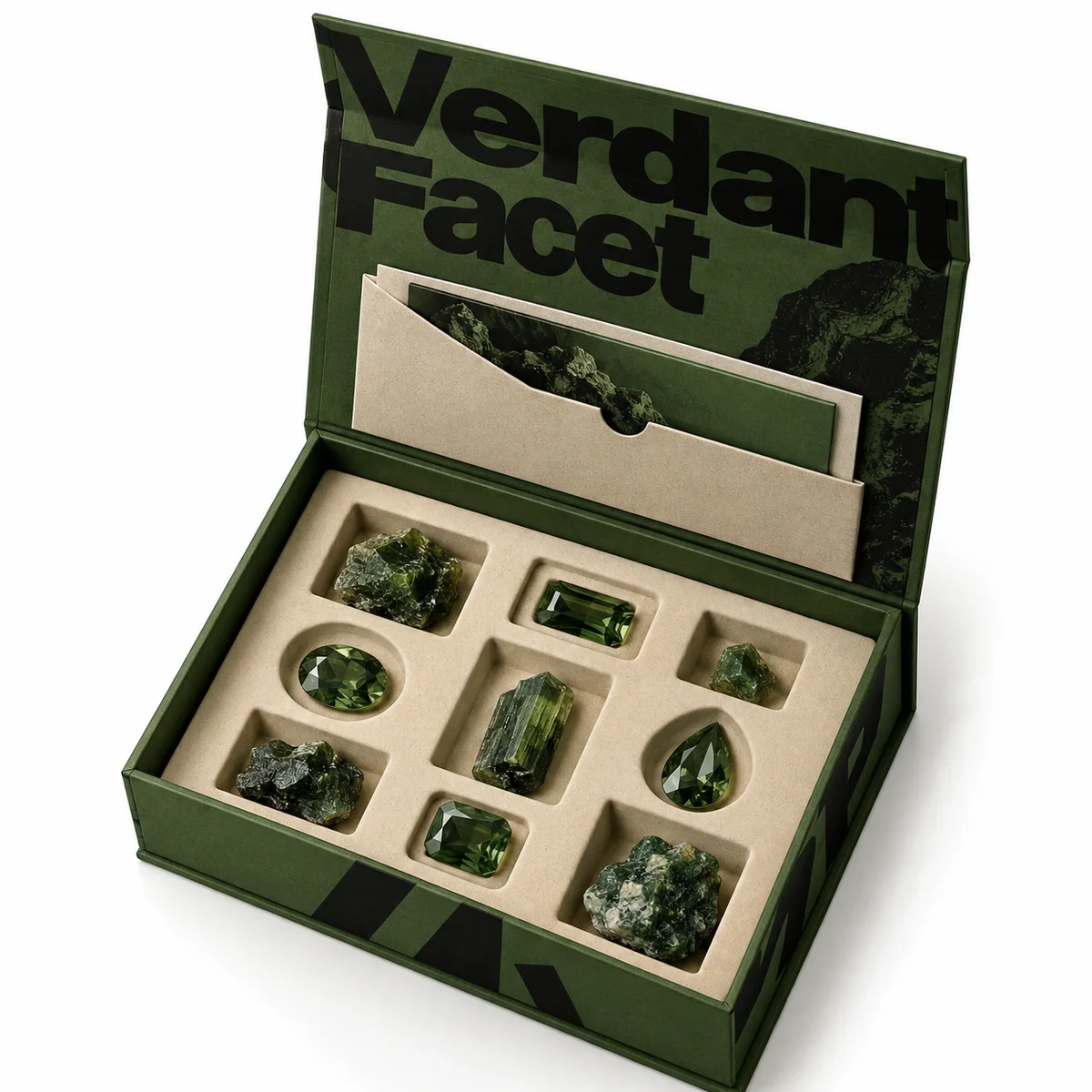
Book-Style Collector Case
A hinged book-style lid holds a paper pocket above shaped wells for a set of loose stones.
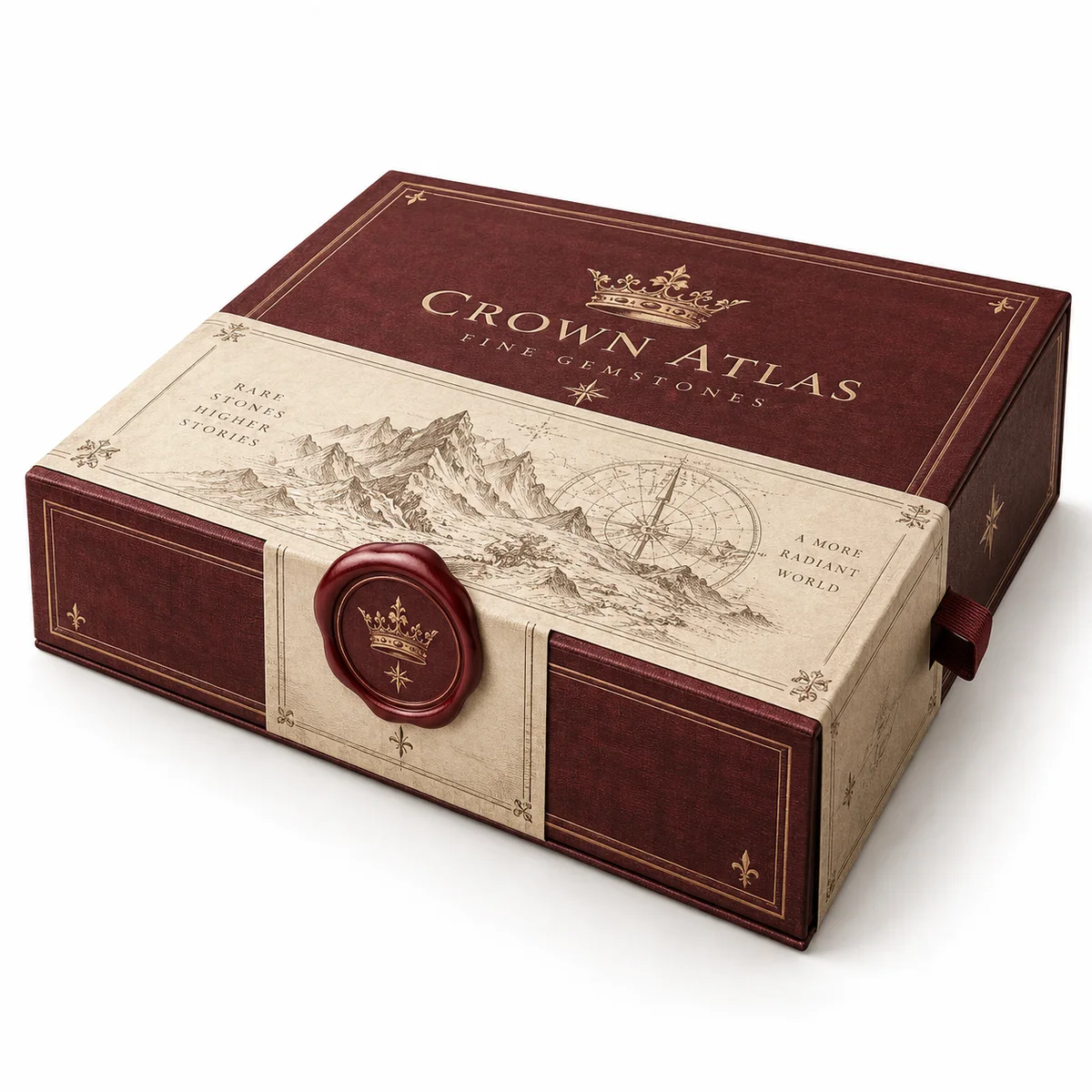
Wrapped Keepsake Box
A rigid closed box features a printed wrap band, wax-style seal and small ribbon pull tab.
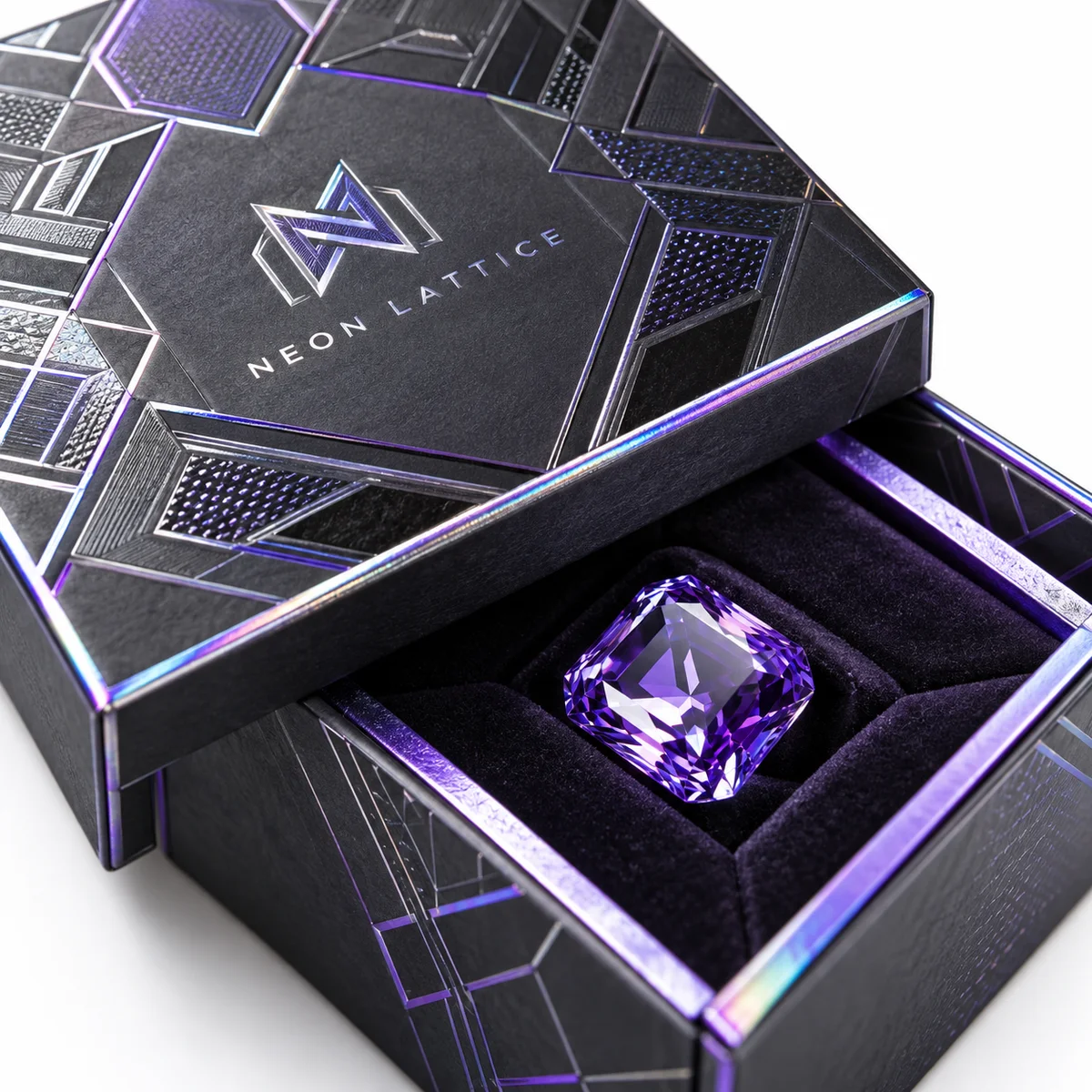
Holographic Rigid Box
A lift-off lid reveals one plush stone well, with reflective foil trim around the box edges.
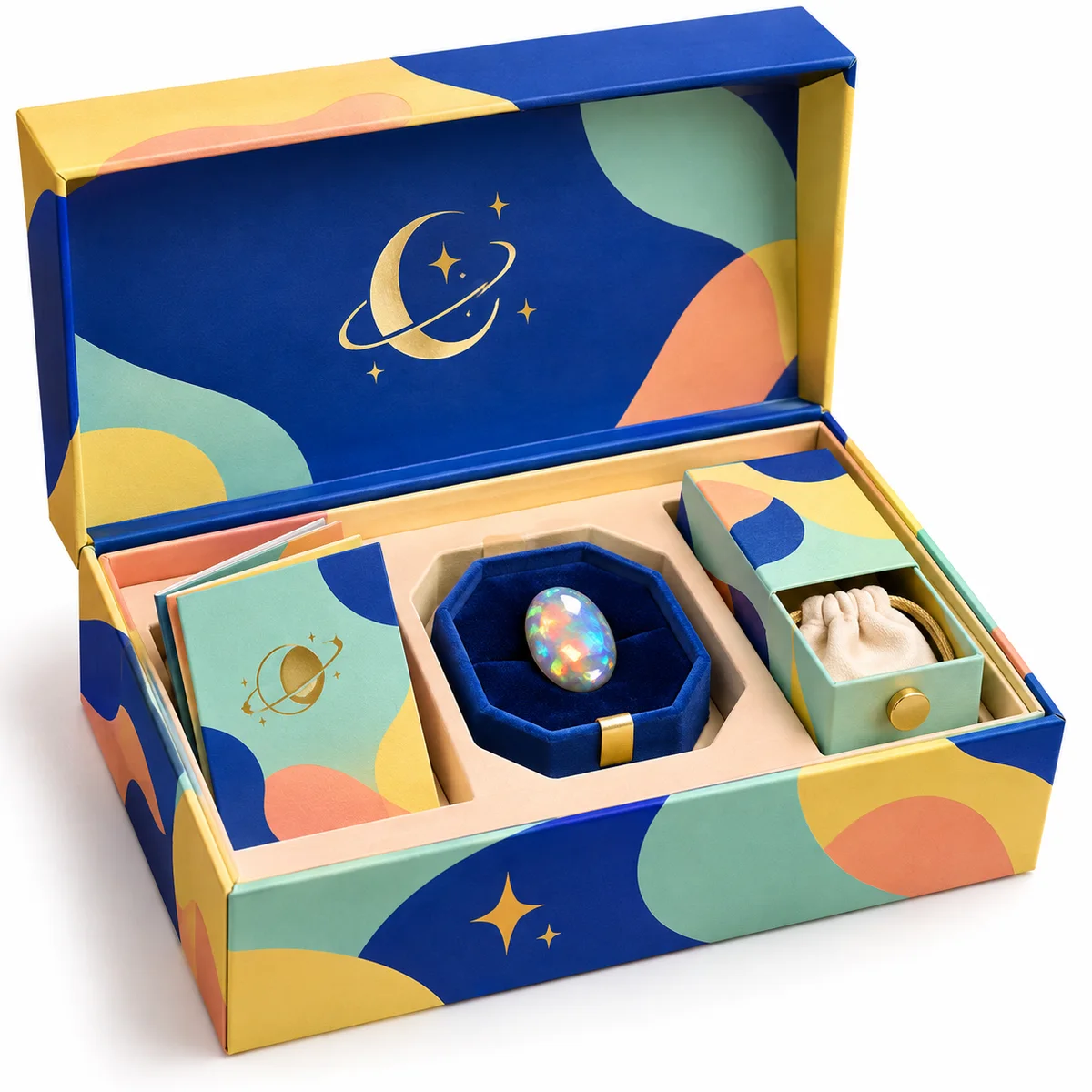
Compartment Gift Case
A hinged lid opens over a gem well, document booklet, and a small side accessory drawer.
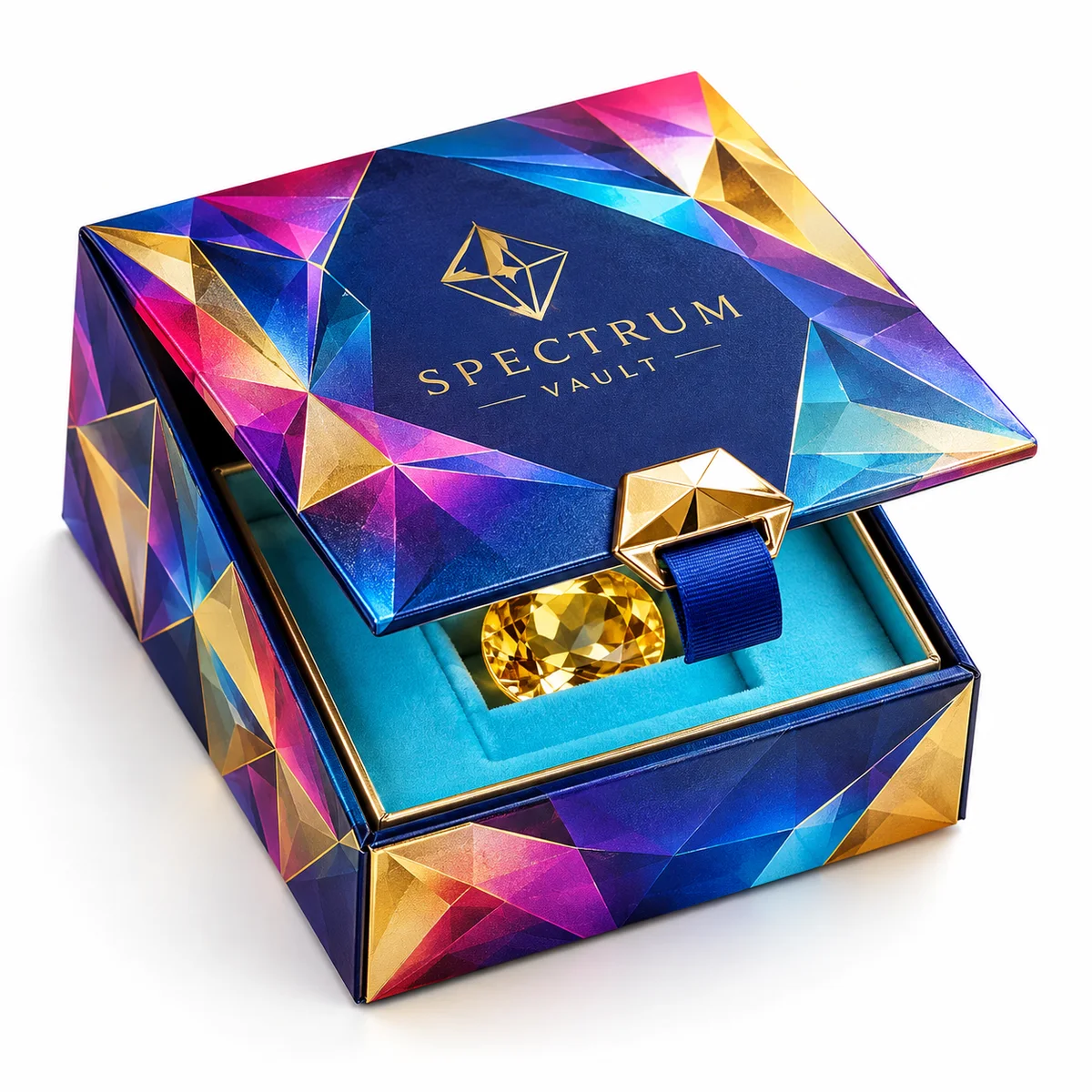
Ribbon-Tab Closure Box
A rigid fold-over lid sits ajar at its gold-toned clasp, revealing a padded single-gem well.
Can't find the perfect style?
Create a completely custom box design tailored to your brand.
Designed for Various Industries
We design packaging that fits every industry
From small businesses to global brands, our custom packaging solutions are built to elevate your brand and leave a lasting impression.
Cosmetics & Beauty
Food & Beverages
E-commerce & Retail
Electronics
Apparel & Fashion
Health & Wellness
Pharmaceuticals
Cannabis & CBD
Pet Products
Baby & Kids
Jewelry & Accessories
Home & Lifestyle
Candles & Fragrance
Coffee & Tea
Confectionery
Cosmetics & Beauty
Food & Beverages
E-commerce & Retail
Electronics
Apparel & Fashion
Health & Wellness
Pharmaceuticals
Cannabis & CBD
Pet Products
Baby & Kids
Jewelry & Accessories
Home & Lifestyle
Candles & Fragrance
Coffee & Tea
Confectionery
Supplements
Skincare & Personal Care
Haircare
Automotive
Sports & Fitness
Toys & Games
Stationery & Gifts
Bakery & Desserts
Wine & Spirits
Tobacco & Vape
Medical Devices
Tech Accessories
Subscription Boxes
Organic & Natural
Luxury Retail
Supplements
Skincare & Personal Care
Haircare
Automotive
Sports & Fitness
Toys & Games
Stationery & Gifts
Bakery & Desserts
Wine & Spirits
Tobacco & Vape
Medical Devices
Tech Accessories
Subscription Boxes
Organic & Natural
Luxury Retail
Built for brands
that care about detail.
Premium packaging. Precise printing.
Fast turnaround. No hidden costs.
10K+
Happy Customers
98%
Satisfaction Rate
Trusted by Top Brands
We work with startups to enterprises. Our boxes make an impact.
Free Design Support
Get expert help in creating the perfect packaging for your brand.
Warehouse Across USA
Faster fulfilment with local production and warehouses.
Print & Design Lovers
Crafted with passion, just the way your brand deserves.
Custom Gemstone Packaging That Gives Every Stone Its Own Place
An emerald-cut stone lies flat in its display, but a pear cut brings a pointed tip and a different depth. Those small differences decide whether a presentation case feels precise or leaves the gem sliding across its insert. Custom gemstone packaging gives loose stones a considered place to rest, with a rigid exterior that looks composed before the lid even opens.
A Gemstone Reveal Designed for the Retail Counter
When a jeweler lifts the lid, the stone should be the first thing the buyer sees. A shallow velvet-facing cavity can set a vivid sapphire against cream, while a dark insert can frame a diamond without crowding the view. The box should open smoothly, sit level on the counter, and let someone examine the gem without chasing it across a loose pad.
These are presentation cases for loose stones, not simply smaller versions of custom jewelry boxes designed for finished rings or necklaces. A two-piece lift-off lid clears the viewing area. Book-style rigid boxes keep the cover attached. For a controlled reveal, custom magnetic closure boxes offer another structural direction, adapted for the gem cavity. Sliding drawer boxes use a tray pulled from a sleeve.
Insert Cavities Measured to the Stone, Not Just the Box
Start with the gem’s actual length, width, and depth in millimeters. A round brilliant, oval, emerald cut, cushion cut, and marquise do not sit the same way. The support under each stone matters too. A deep pavilion may require a different recess from a shallow cut, even when the top dimensions seem close.
A die-cut EVA foam insert gives the cavity a defined shape. Velvet-facing or microfiber lining can add a softer display surface. The chosen fabric and cushion still need to be checked against the particular stone; a soft-looking lining alone does not guarantee a safe fit. Pointed ends and fragile edges need room away from the walls, while enough support remains to help control movement.
Before artwork is finalized, a stone sketch, detailed measurements, or a physical sample can guide the insert design. A fit check is especially important when one presentation style must accommodate several gemstone cuts.
Separate Every Stone in a Curated Collection
A matched ruby and sapphire pair may belong in one presentation box, yet each should have its own well. Diamonds, emeralds, opals, and other stones vary in hardness and toughness. Bringing loose pieces together can leave softer surfaces exposed to scratches or pressure during repeated handling.
Multi-cavity trays turn that concern into an orderly display. Dealers can set a row of stones by color or size. Lapidary studios can separate rough specimens from polished cuts. Collectors can keep each stone in a labeled position rather than searching through loose pouches before a viewing.
Not every gem has the same storage needs. Opals, for example, can be sensitive to heat and sudden temperature changes; a fitted insert cannot control the room around the box. For delicate or treated stones, the holder, storage setting, and handling routine should be considered together.
Leave a Place for the Gemstone's Paper Trail
A stone may arrive with a grading or identification report, a carat-weight note, or a retailer's own stock reference. Keep that information close to the gem, not directly over its surface.
A flat pocket inside the lid keeps a report separate from the cavity. A folded card can sit in a shallow side channel. For a collection, simple labels beside individual wells help staff match each item to its paperwork without lifting every stone. The report itself remains issued by the relevant laboratory or seller; packaging does not certify the gem.
This organization is useful in trade appointments, private viewings, auctions, and retail handovers. It also helps the recipient understand what is inside before the box goes back into storage.
Rigid Board, Paper Wraps, and Finishes With Restraint
The outer case should feel substantial without overpowering the stone. Wrapped custom rigid boxes use a firm board core that keeps a defined shape. For this project, the proposed board range is 1.5 to 2.5 mm, with the final thickness chosen for the box size and tray load.
White paper keeps the look quiet. Kraft brings visible paper texture. A deeper color or woven-look wrap can echo the gemstone’s character. Printed logos, CMYK artwork, Pantone color matching, matte or soft-touch lamination, foil stamping, and embossing offer distinct finishes. A small gold foil mark may be enough for a single-stone case; more elaborate printing can suit a collector edition.
For a presentation meant as a gift, the visual direction may draw from custom gift boxes, while still reserving the central display for the gem. The exterior carries the brand; the interior puts the cut and color first.
From Gem Dealer Displays to US Retail Fulfillment
A gemstone dealer opening sample cases throughout the day needs easy access and dependable organization. A jewelry designer presenting a selected center stone may favor a calm single-stone reveal. Auction sellers and collectors often need more compartments and clear identification. The same outer shape does not serve each use equally well.
For a branded retail line, custom retail boxes offer a broader merchandising context. Gemstone presentation adds another layer: precise placement for the loose item and a planned location for its documents. A consistent box and insert layout can help staff recognize sizes and keep display sets organized across repeat orders.
The presentation case is not the shipping carton. Orders traveling within the United States require suitable outer packaging, cushioning, and shipping arrangements based on the value and fragility of the contents. Freight should be quoted separately rather than assumed to be included in the box price.
A Custom Gemstone Packaging Quote Starts With the Stone
A useful brief combines the stone’s measurements and shape with the number of cavities, box opening style, artwork, quantity, and destination. Include any report or label dimensions and tell Packopie whether the case is meant for a counter reveal, a gift, or a larger collection. That context helps narrow the rigid construction and insert choices before pricing is reviewed.
Start with the target quantity, whether 100 pieces or several thousand, and the number of insert layouts. Early price estimates guide choices, but they are not final production prices. Complex trays, delicate gems, combined finishes, lead times, and freight require review.
Once those details are aligned, Packopie can prepare a custom quotation that reflects the actual gemstone presentation rather than a generic box dimension.
Frequently Asked Questions
Keep each gemstone in a separate padded cavity. Harder stones can scratch softer ones when they move together. A multi-cavity tray helps keep diamonds, sapphires, emeralds, and other stones from making direct contact during handling.
The insert should follow the stone's length, width, depth, and cut. Extra clearance around the pointed tips helps prevent pressure when the box closes. Provide exact gemstone measurements or a physical sample so the cavity design can be checked before production.
A separate document pocket or side compartment keeps the report beside the stone without placing paper directly over its surface. The pocket can be sized for a grading report, authenticity card, or gemstone identification document.
A smooth, soft liner can be suitable, but the material and contact pressure must be checked for the specific gemstone. Opals and pearls also require care with heat and storage conditions. A presentation box alone does not control temperature or humidity.
A lift-off lid gives an open view of the gemstone and its insert. Hinged or magnetic cases keep the cover attached during counter presentations. Sliding drawers create a controlled reveal. Choose based on how often the stone will be shown, handled, or stored.
Use a separate protective shipping carton with suitable cushioning. The rigid presentation box supports display and handling but does not replace transit protection. Valuable gemstones may also require additional security, insurance, and carrier arrangements.
More Solutions
You May Also Like
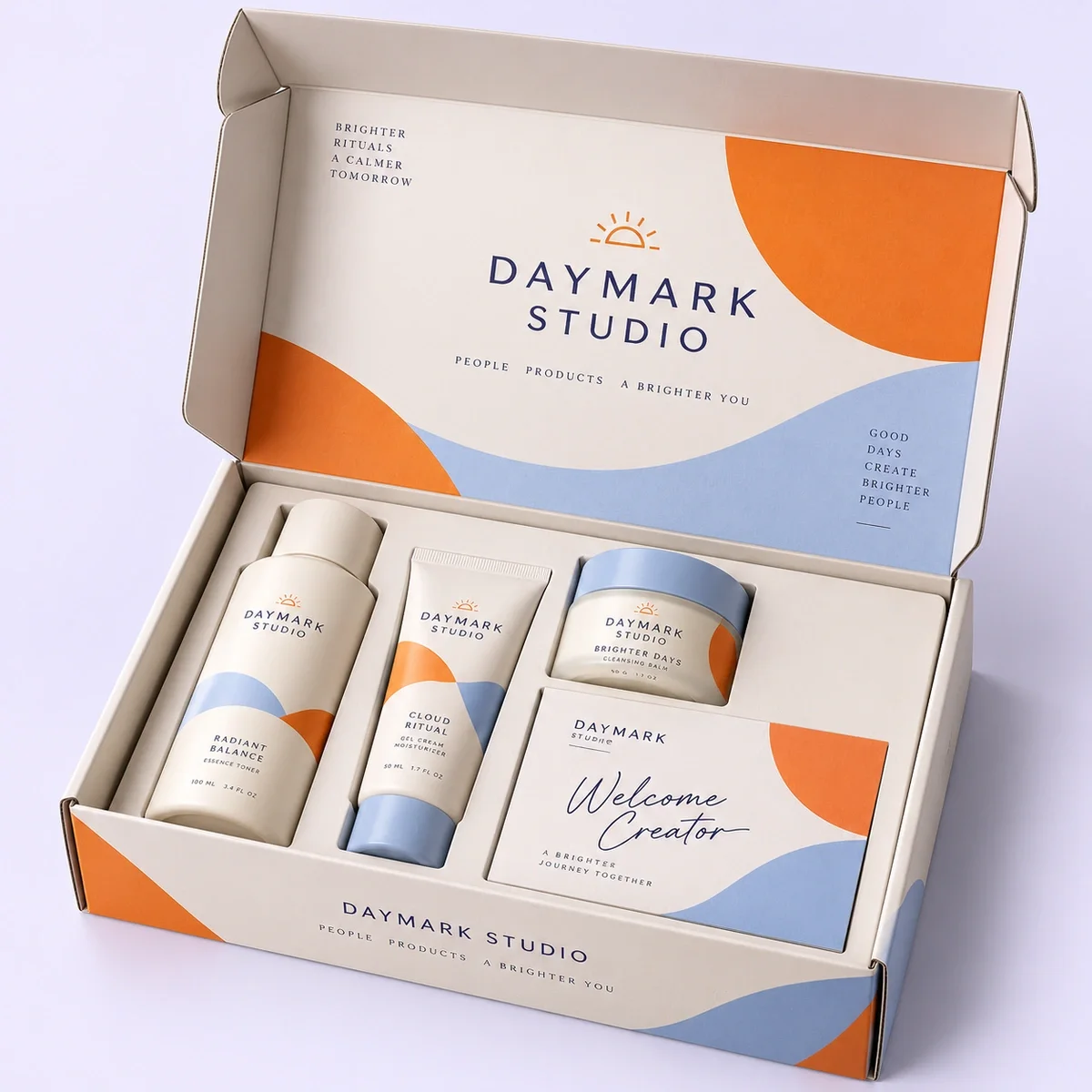
Custom Influencer Kit Packaging
For creator seeding and PR launches, made-to-order kit boxes keep mixed-size samples seated in fitted inserts and frame the brand story when opened.
View product →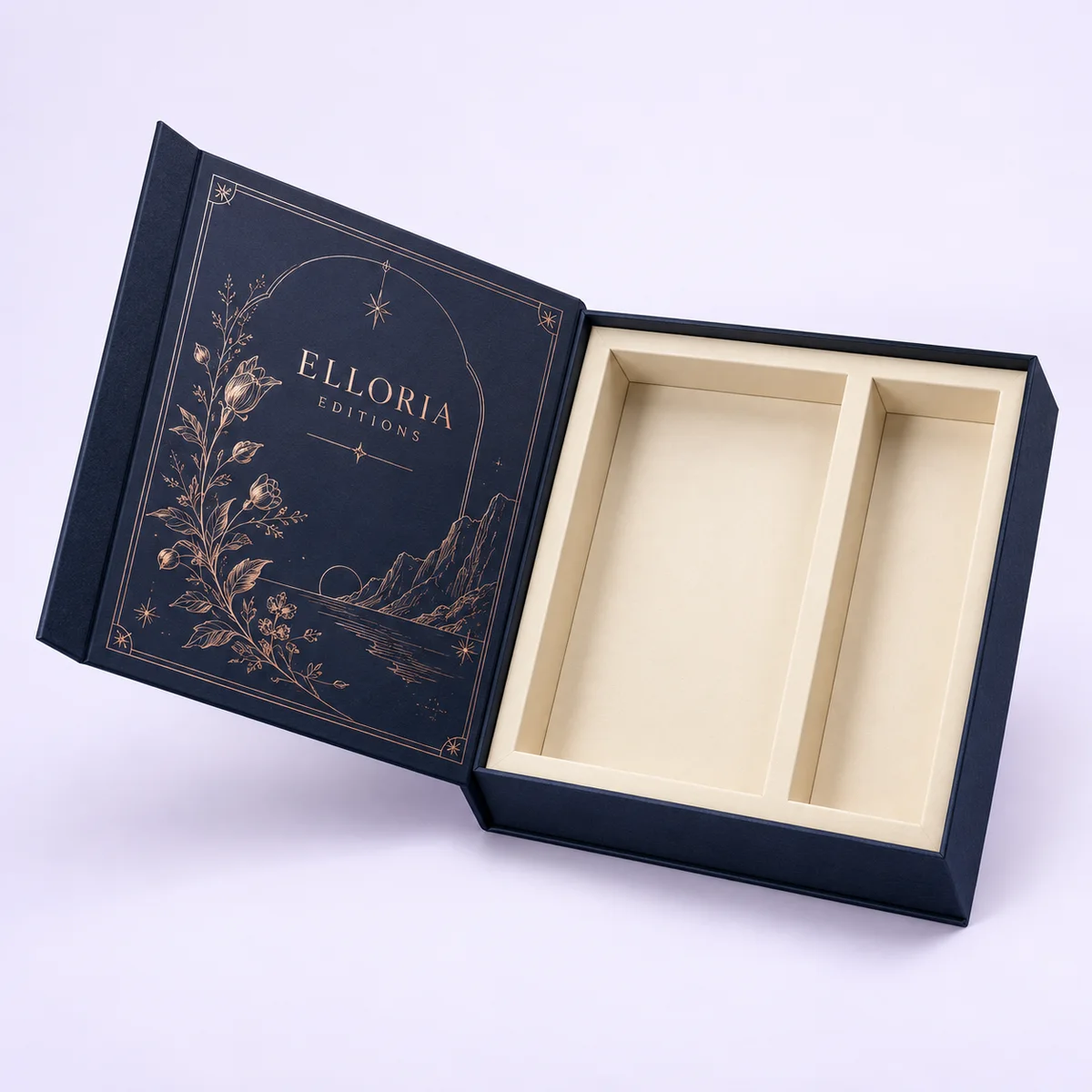
Custom Book Style Rigid Boxes
Turn luxury gift sets into a memorable reveal with a hinged book-cover lid, secure fitted tray, and space for thoughtful inside-cover branding.
View product →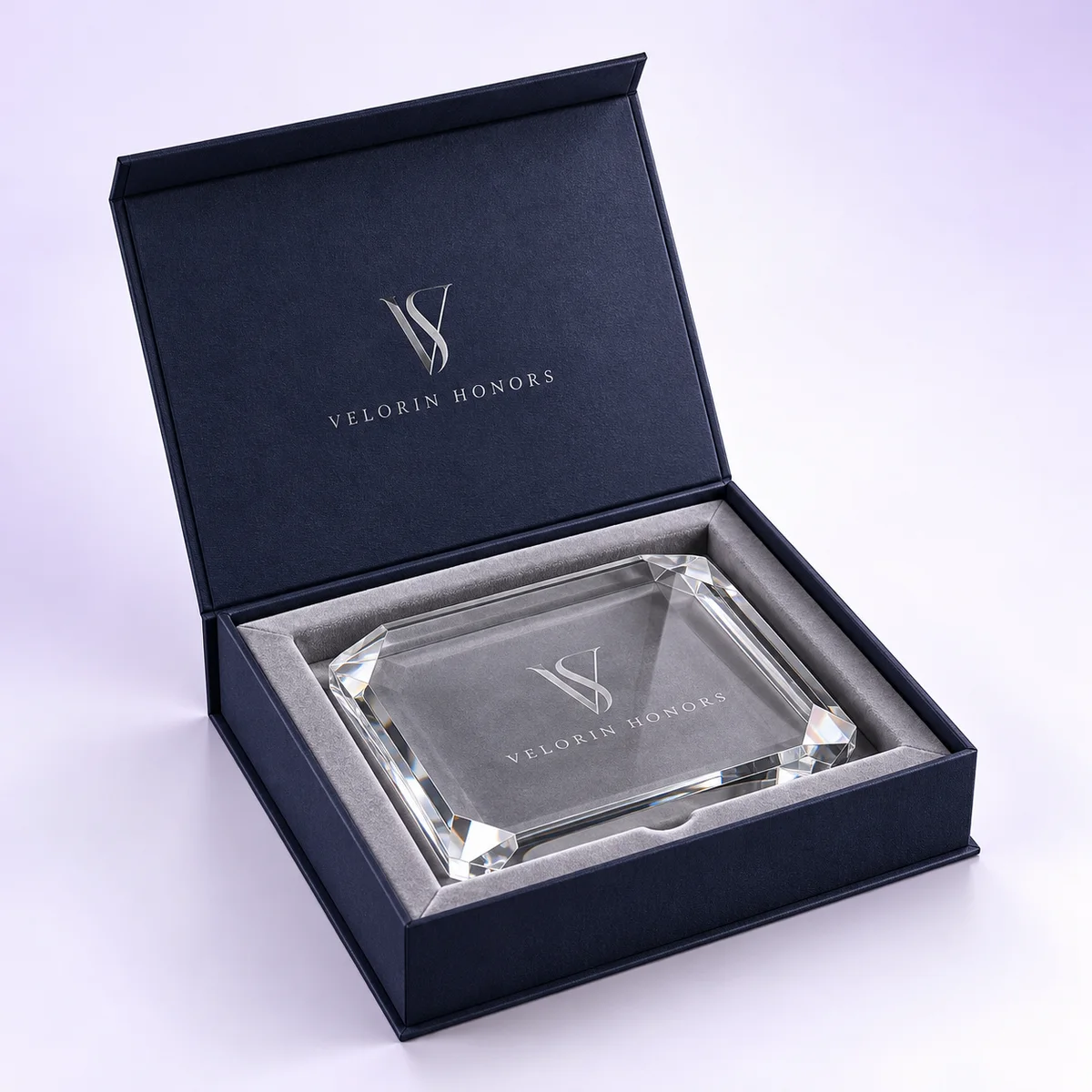
Custom Award Presentation Boxes
A crystal plaque that shifts in its case can spoil the handoff. Custom rigid boxes pair a fitted insert with a refined lid reveal for award ceremonies.
View product →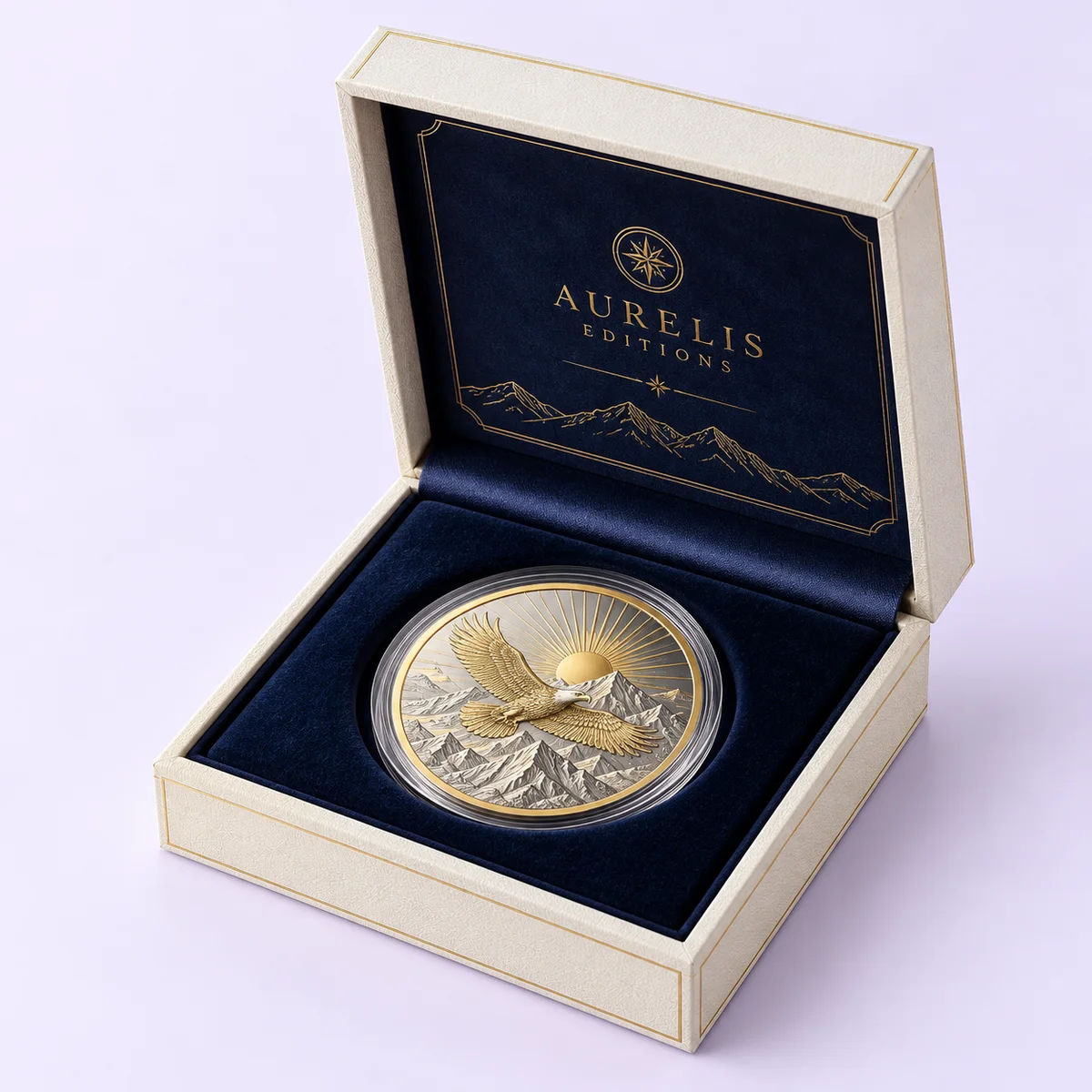
Custom Coin Boxes
Commemorative coins and challenge coin awards get a refined reveal in rigid presentation cases with capsule-fitted inserts, wrapped lids, and detailed finishes.
View product →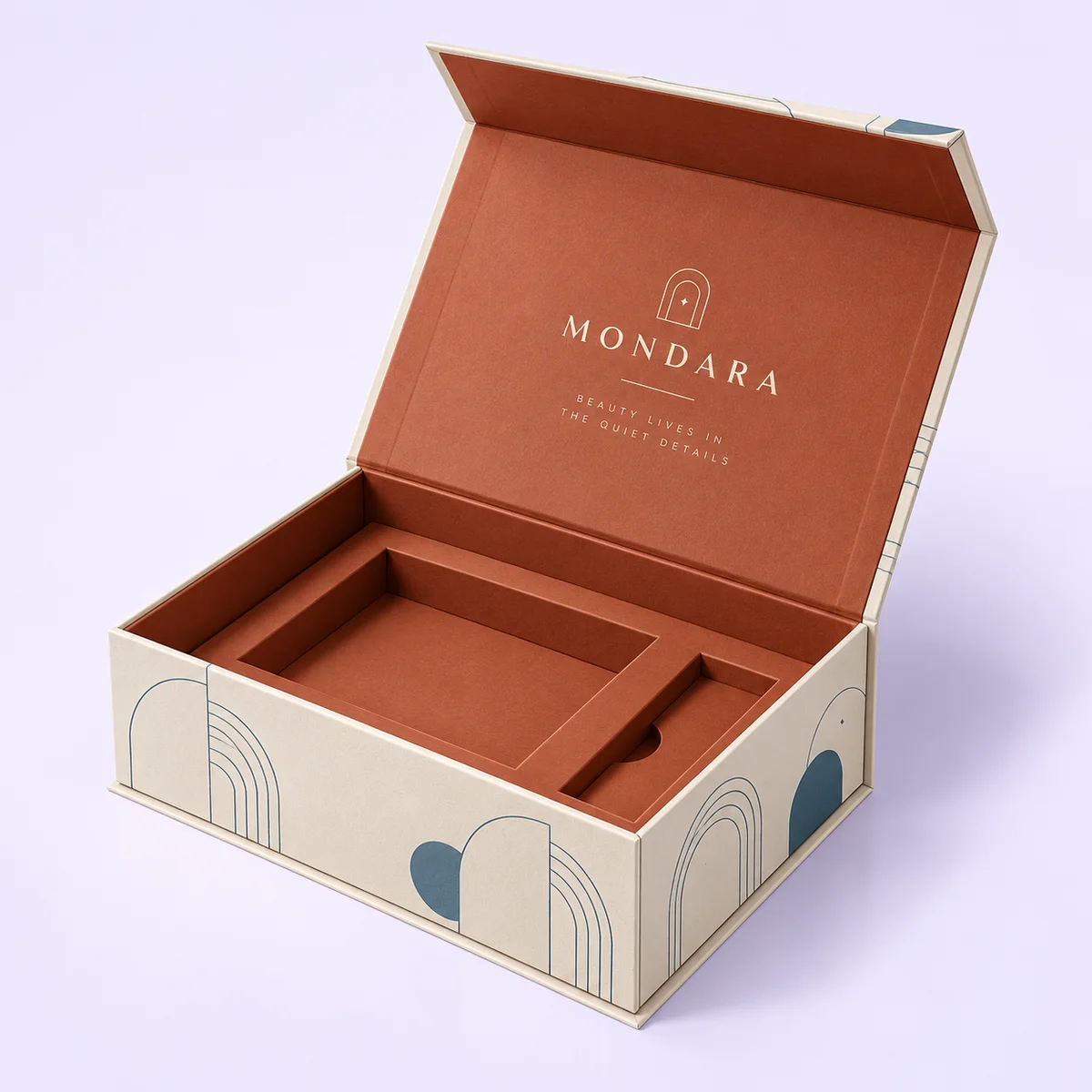
Custom Flip Top Boxes
The lid stays attached through each reveal, with rigid walls, optional fitted trays, and inside-lid artwork tailored to skincare, accessories, and gifts.
View product →Custom Influencer Kit Packaging
For creator seeding and PR launches, made-to-order kit boxes keep mixed-size samples seated in fitted inserts and frame the brand story when opened.
View product →Custom Book Style Rigid Boxes
Turn luxury gift sets into a memorable reveal with a hinged book-cover lid, secure fitted tray, and space for thoughtful inside-cover branding.
View product →Custom Award Presentation Boxes
A crystal plaque that shifts in its case can spoil the handoff. Custom rigid boxes pair a fitted insert with a refined lid reveal for award ceremonies.
View product →Custom Coin Boxes
Commemorative coins and challenge coin awards get a refined reveal in rigid presentation cases with capsule-fitted inserts, wrapped lids, and detailed finishes.
View product →Custom Flip Top Boxes
The lid stays attached through each reveal, with rigid walls, optional fitted trays, and inside-lid artwork tailored to skincare, accessories, and gifts.
View product →Custom Influencer Kit Packaging
For creator seeding and PR launches, made-to-order kit boxes keep mixed-size samples seated in fitted inserts and frame the brand story when opened.
View product →Custom Book Style Rigid Boxes
Turn luxury gift sets into a memorable reveal with a hinged book-cover lid, secure fitted tray, and space for thoughtful inside-cover branding.
View product →Custom Award Presentation Boxes
A crystal plaque that shifts in its case can spoil the handoff. Custom rigid boxes pair a fitted insert with a refined lid reveal for award ceremonies.
View product →Custom Coin Boxes
Commemorative coins and challenge coin awards get a refined reveal in rigid presentation cases with capsule-fitted inserts, wrapped lids, and detailed finishes.
View product →Custom Flip Top Boxes
The lid stays attached through each reveal, with rigid walls, optional fitted trays, and inside-lid artwork tailored to skincare, accessories, and gifts.
View product →Custom Influencer Kit Packaging
For creator seeding and PR launches, made-to-order kit boxes keep mixed-size samples seated in fitted inserts and frame the brand story when opened.
View product →Custom Book Style Rigid Boxes
Turn luxury gift sets into a memorable reveal with a hinged book-cover lid, secure fitted tray, and space for thoughtful inside-cover branding.
View product →Custom Award Presentation Boxes
A crystal plaque that shifts in its case can spoil the handoff. Custom rigid boxes pair a fitted insert with a refined lid reveal for award ceremonies.
View product →Custom Coin Boxes
Commemorative coins and challenge coin awards get a refined reveal in rigid presentation cases with capsule-fitted inserts, wrapped lids, and detailed finishes.
View product →Custom Flip Top Boxes
The lid stays attached through each reveal, with rigid walls, optional fitted trays, and inside-lid artwork tailored to skincare, accessories, and gifts.
View product →✦ Upgrade Today
Ready to Upgrade Your Brand Packaging?
Get custom templates matching your custom dimensions. Instant 3D digital proof samples returned in hours.