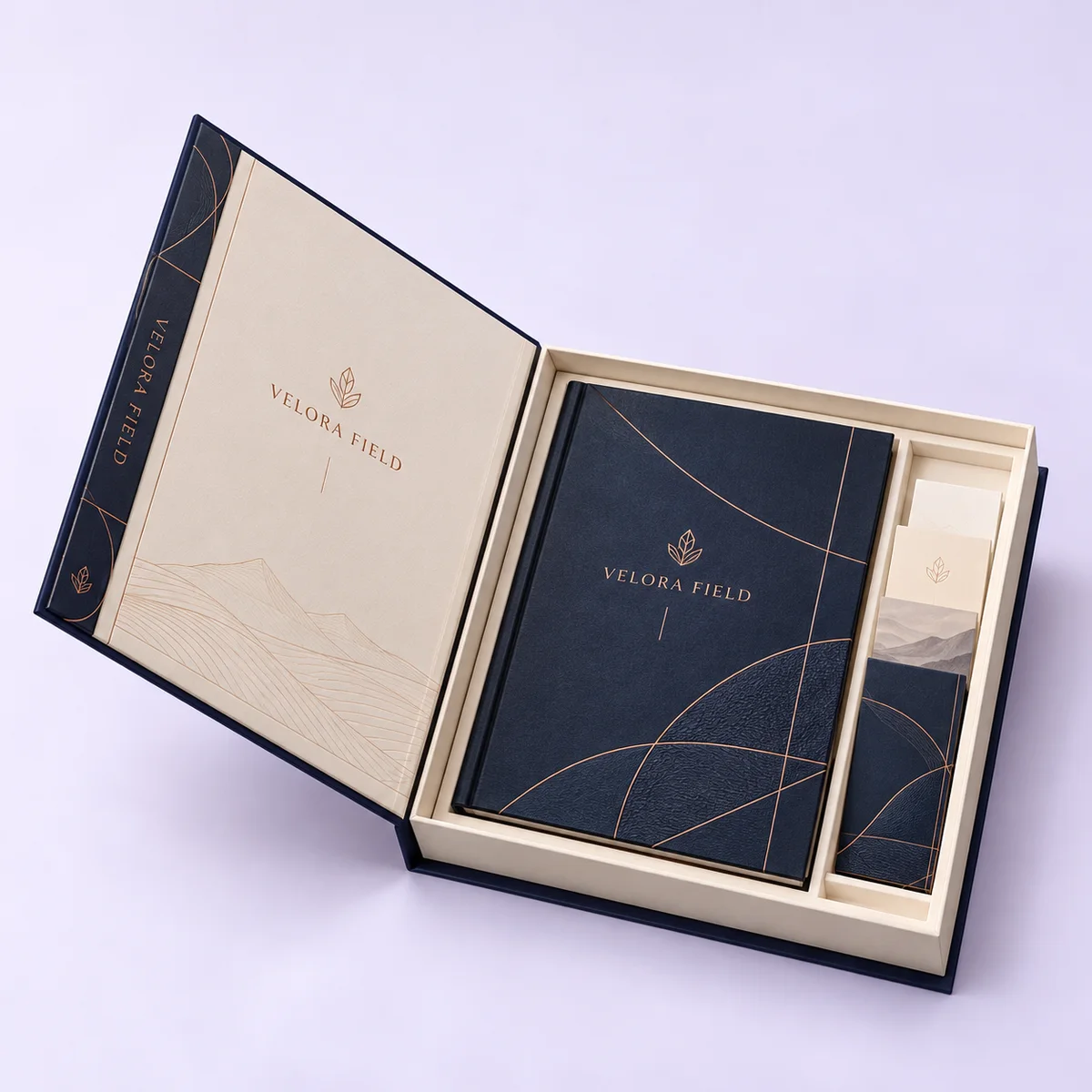
Made for Presentation
★★★★★
5.0/5.0Custom Booklet Boxes
Keep brochures, manuals, and presentation inserts neatly aligned in a book-opening box with a fitted interior, protected edges, and room for your brand story.
Premium Quality
Fully Customizable
Low MOQ
Fast Turnaround
100% Eco-Friendly
Sustainable materials
Free Shipping
On every order
No Die & Plate Charges
Zero hidden costs
100% Satisfaction
Quality guaranteed
Expert Support
We're here to help
Design Varieties
Booklet Formats That Fit Your Story
From single-booklet presentations to multi-piece welcome kits, plan the cover, pockets, and internal compartments around your contents.
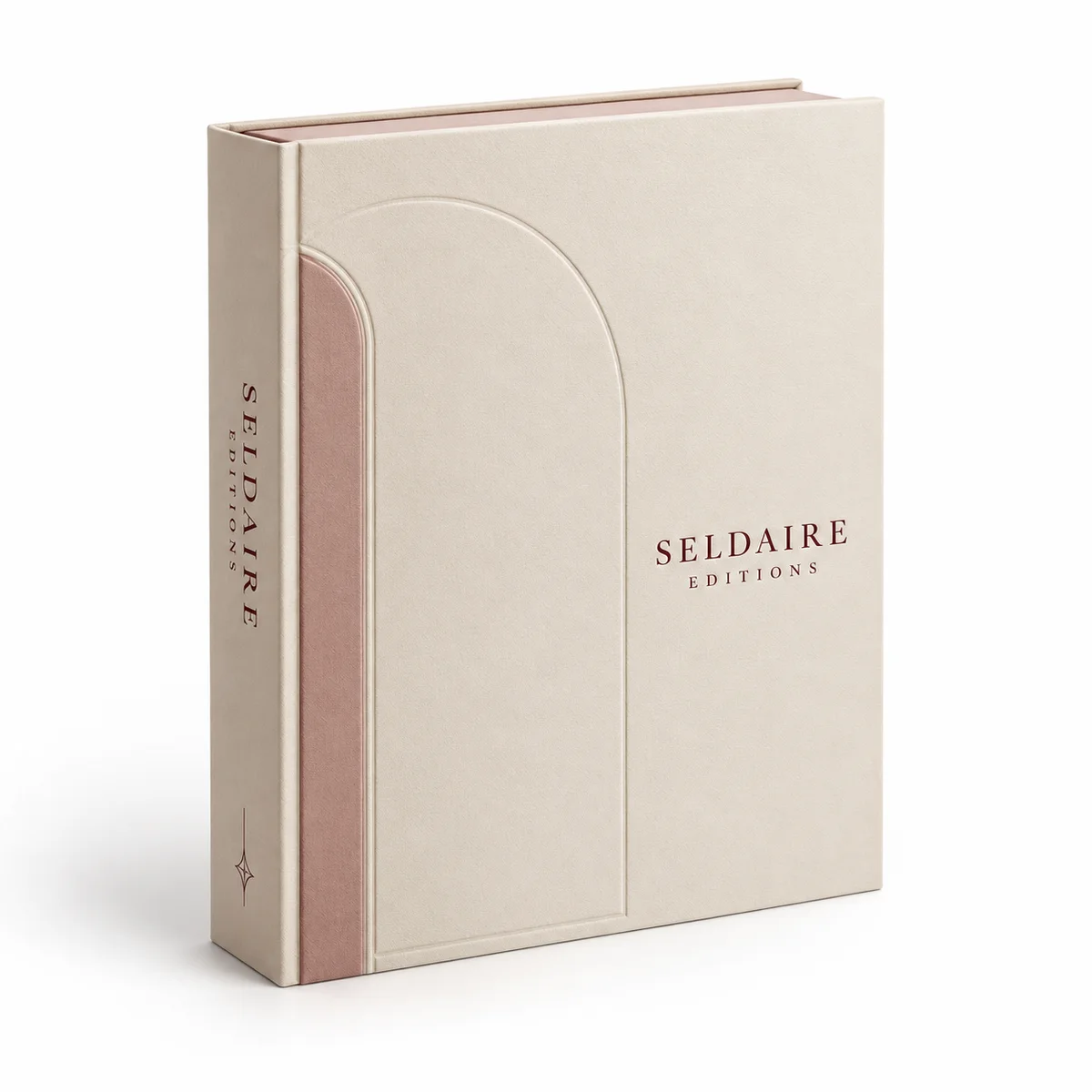
Embossed Arch Case
Closed book-style rigid case has a raised arch on the cover and a wrapped, labeled spine.
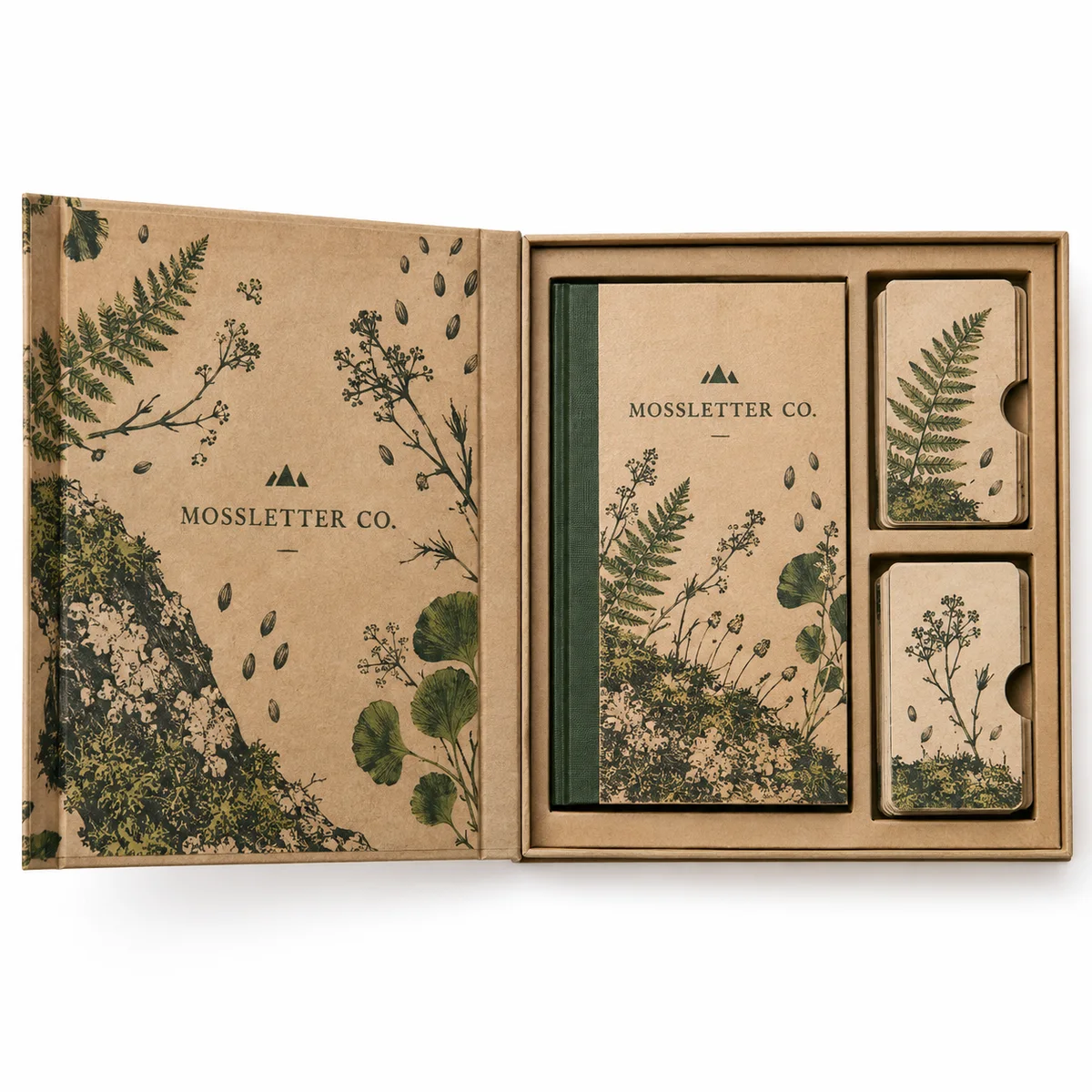
Botanical Insert Tray
Open kraft book-style case holds a field guide and two card stacks in fitted tray wells.
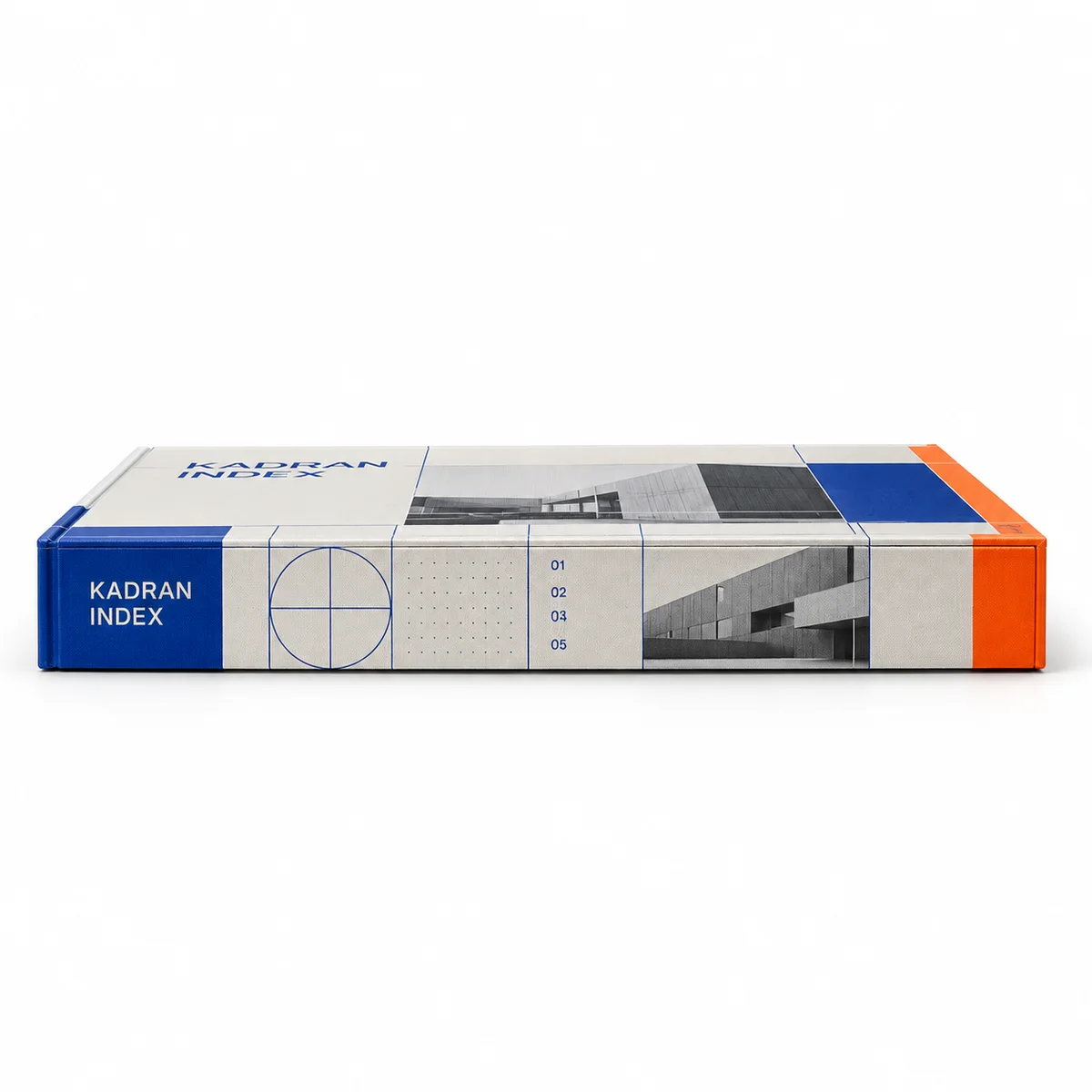
Slim Landscape Case
Closed landscape booklet case has a low profile, printed spine graphics, and square edges.
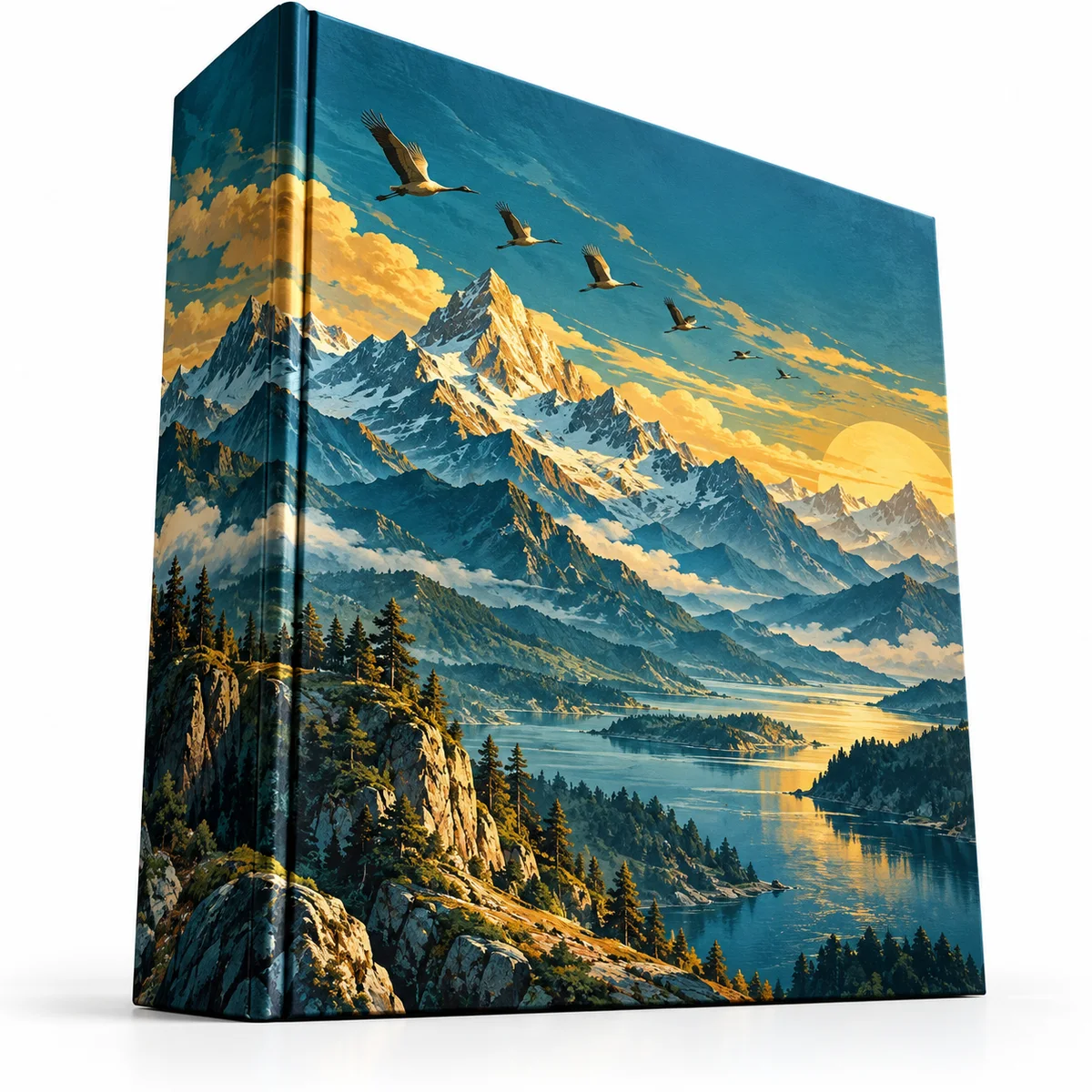
Illustrated Wrap Case
Closed hardcover-style booklet case carries landscape artwork across the cover and spine.
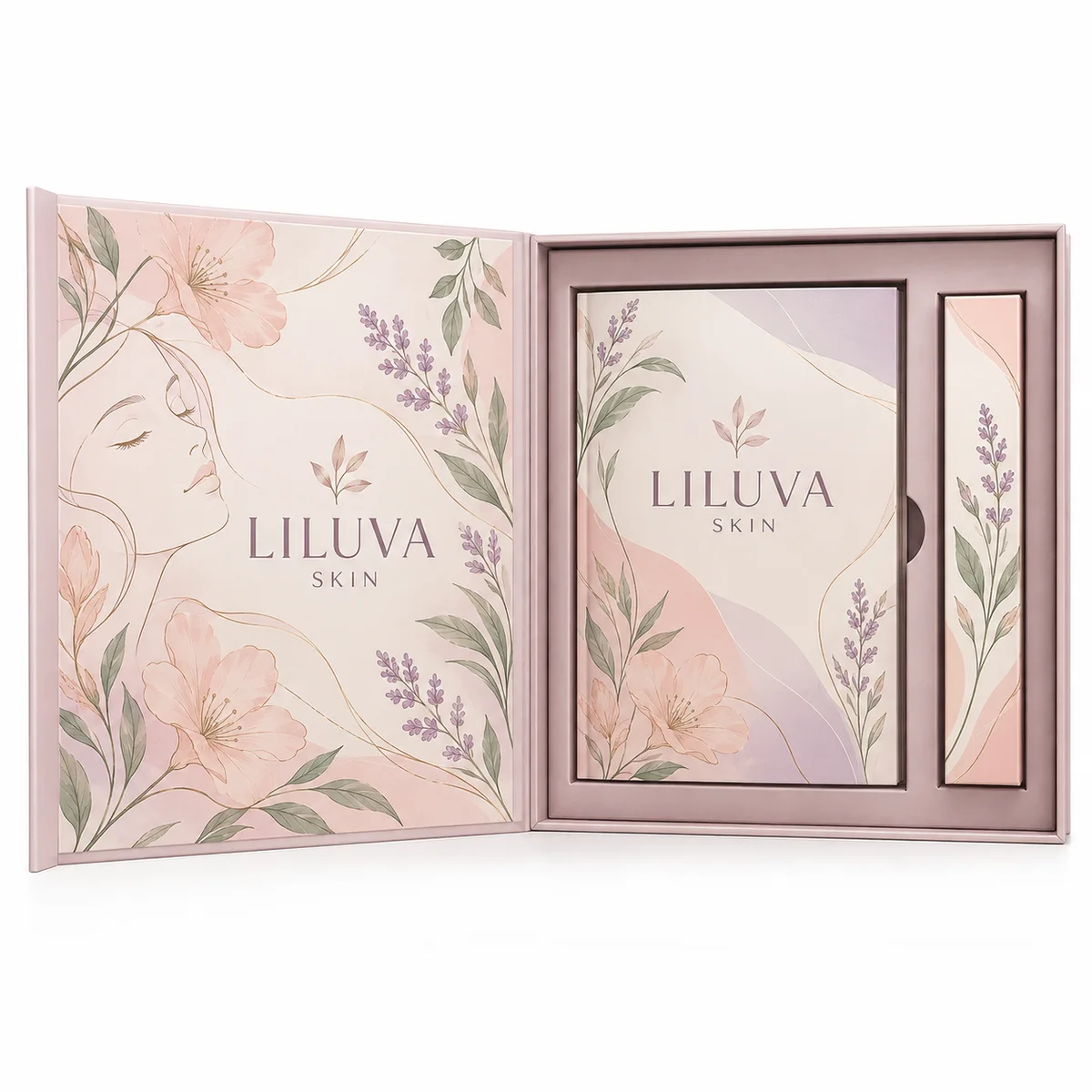
Skincare Booklet Tray
Open hinged case holds a printed booklet beside a slim insert well with a finger cutout.
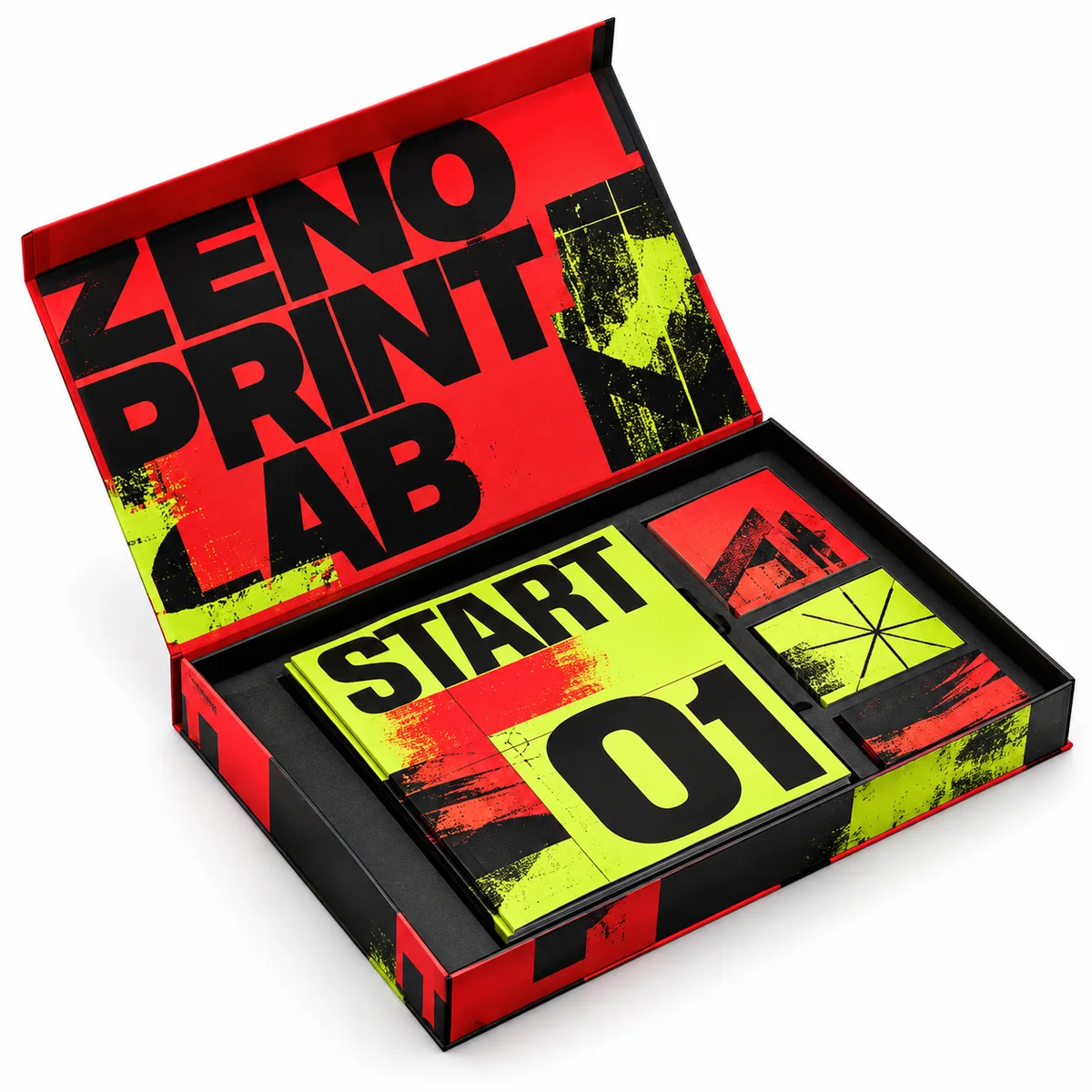
Divided Welcome Kit
Open book-style box has a black tray separating a booklet from three printed card wells.
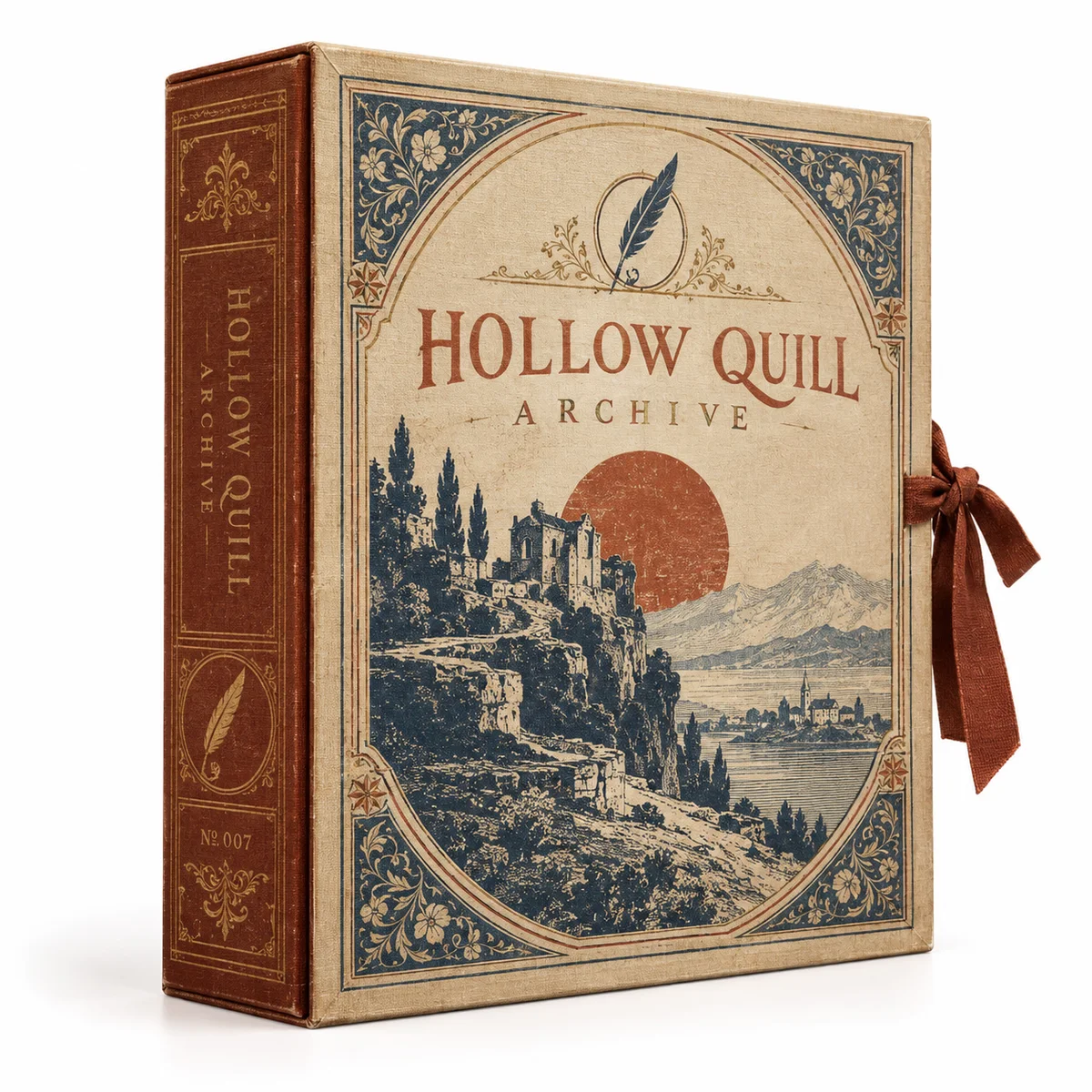
Ribbon-Tie Archive
Closed rigid book-style case has a printed spine and an external ribbon tie at the side.
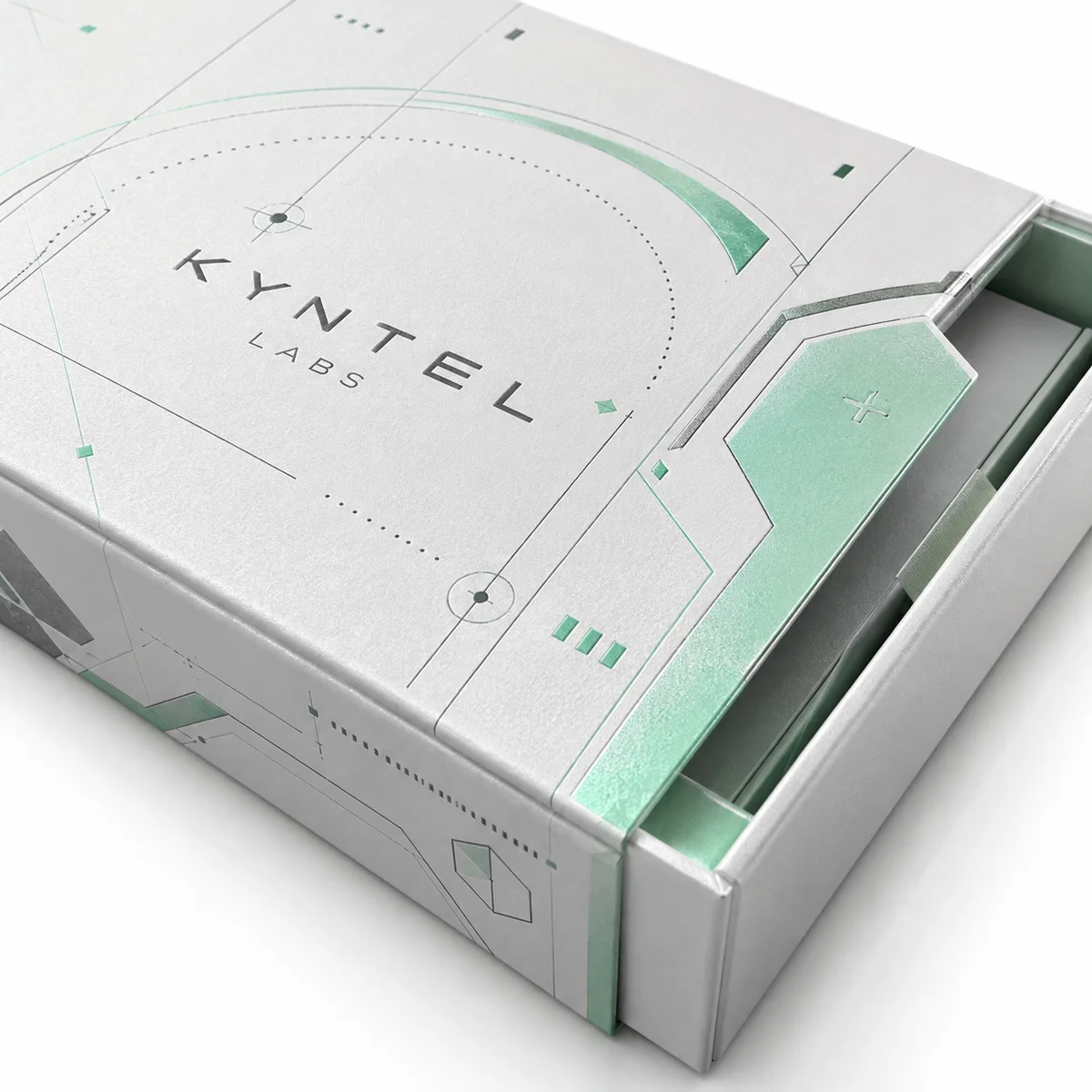
Geometric Flap Detail
Close-up shows the rigid paper-wrapped lid, shaped closing flap, and partially visible tray.
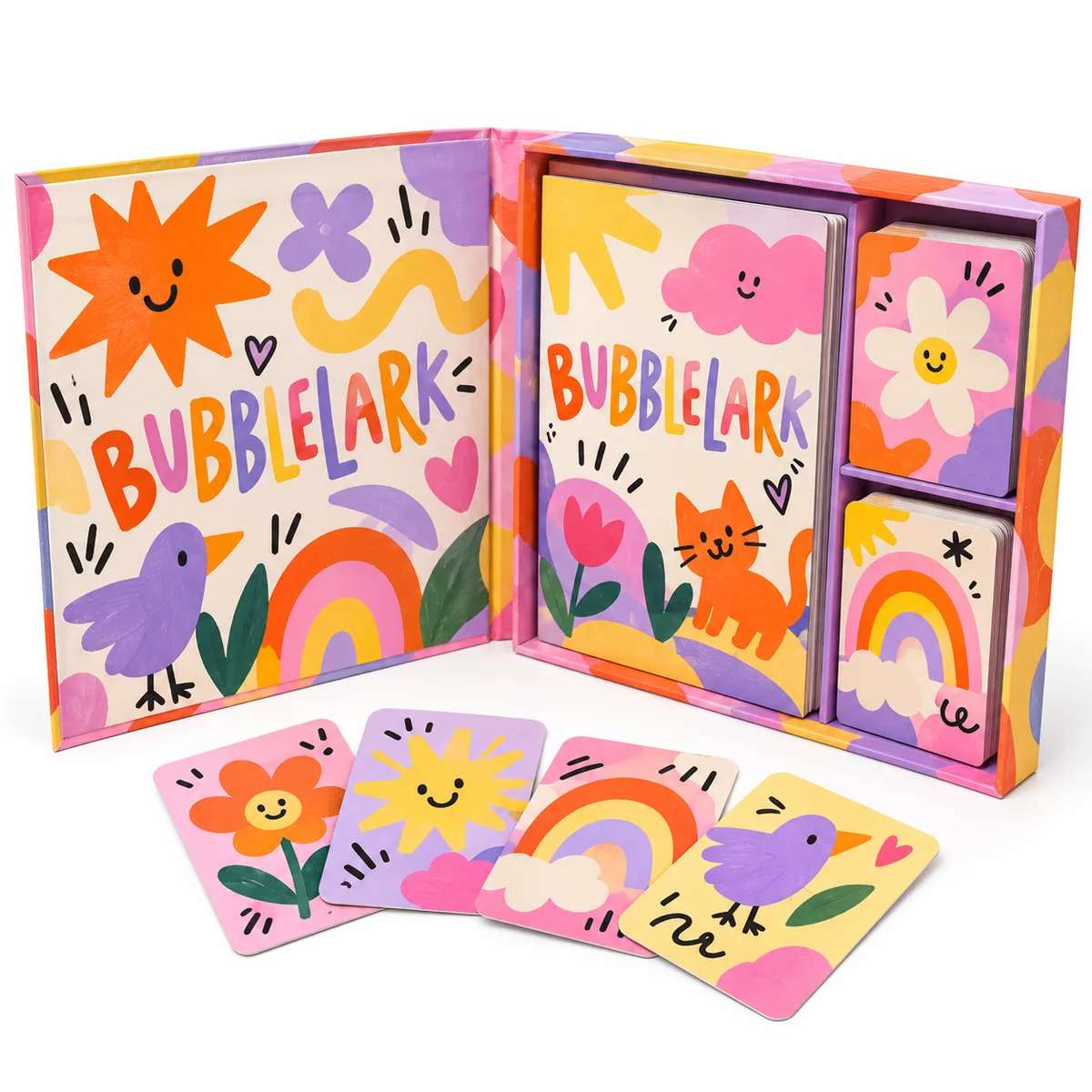
Activity Card Organizer
Open hinged booklet case holds an activity book and two narrow stacks of illustrated cards.
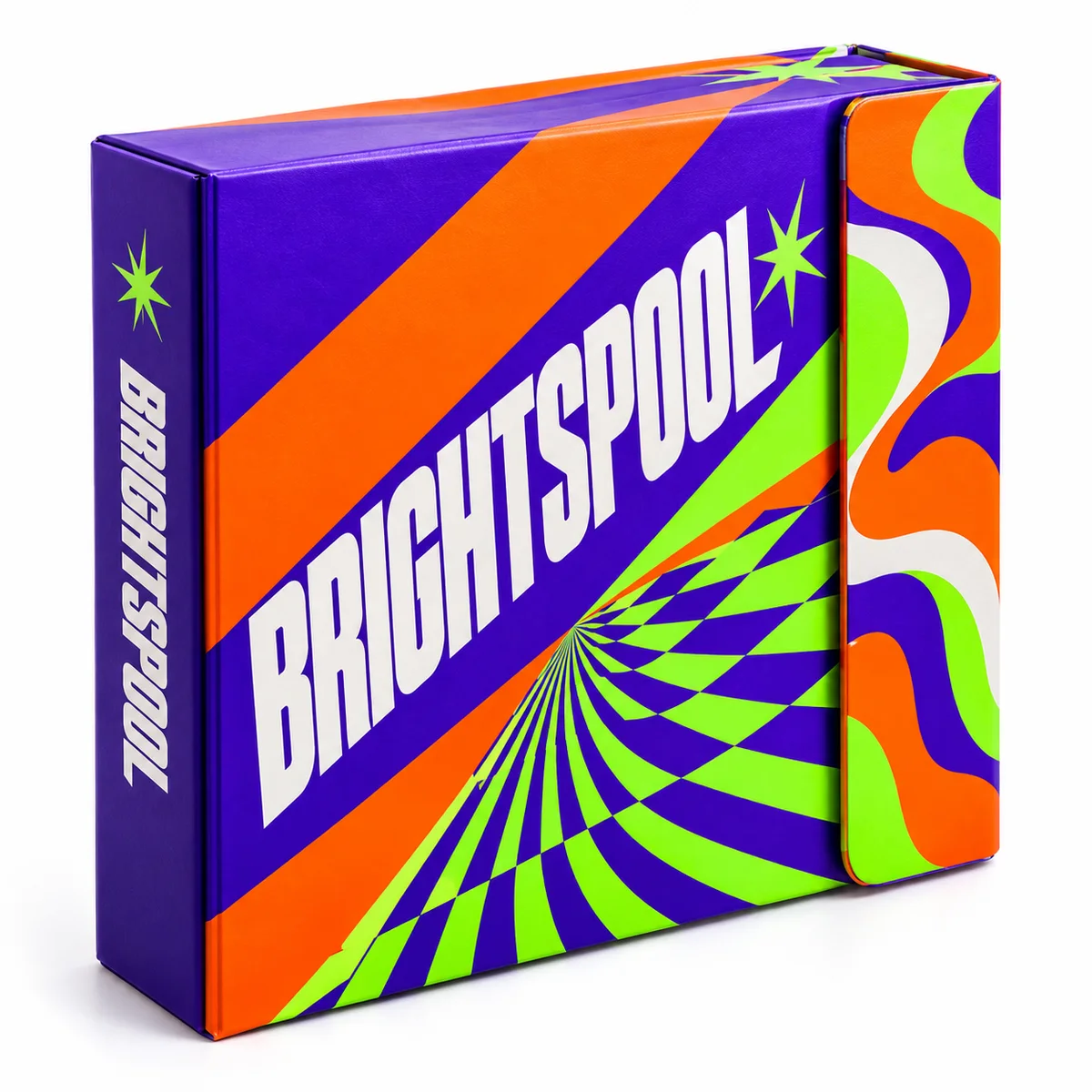
Printed Front Flap
Closed book-style box has a wraparound graphic cover and a broad printed flap at the edge.
Can't find the perfect style?
Create a completely custom box design tailored to your brand.
Designed for Various Industries
We design packaging that fits every industry
From small businesses to global brands, our custom packaging solutions are built to elevate your brand and leave a lasting impression.
Cosmetics & Beauty
Food & Beverages
E-commerce & Retail
Electronics
Apparel & Fashion
Health & Wellness
Pharmaceuticals
Cannabis & CBD
Pet Products
Baby & Kids
Jewelry & Accessories
Home & Lifestyle
Candles & Fragrance
Coffee & Tea
Confectionery
Cosmetics & Beauty
Food & Beverages
E-commerce & Retail
Electronics
Apparel & Fashion
Health & Wellness
Pharmaceuticals
Cannabis & CBD
Pet Products
Baby & Kids
Jewelry & Accessories
Home & Lifestyle
Candles & Fragrance
Coffee & Tea
Confectionery
Supplements
Skincare & Personal Care
Haircare
Automotive
Sports & Fitness
Toys & Games
Stationery & Gifts
Bakery & Desserts
Wine & Spirits
Tobacco & Vape
Medical Devices
Tech Accessories
Subscription Boxes
Organic & Natural
Luxury Retail
Supplements
Skincare & Personal Care
Haircare
Automotive
Sports & Fitness
Toys & Games
Stationery & Gifts
Bakery & Desserts
Wine & Spirits
Tobacco & Vape
Medical Devices
Tech Accessories
Subscription Boxes
Organic & Natural
Luxury Retail
Built for brands
that care about detail.
Premium packaging. Precise printing.
Fast turnaround. No hidden costs.
10K+
Happy Customers
98%
Satisfaction Rate
Trusted by Top Brands
We work with startups to enterprises. Our boxes make an impact.
Free Design Support
Get expert help in creating the perfect packaging for your brand.
Warehouse Across USA
Faster fulfilment with local production and warehouses.
Print & Design Lovers
Crafted with passion, just the way your brand deserves.
Custom Booklet Boxes for Branded Booklet & Product Presentations
Open the cover of a booklet box and the printed guide, sample, or welcome note has a place of its own. The pages stay aligned, the small items do not tumble across them, and the inside cover becomes part of the message. For a catalog launch or client kit, that order matters. Packopie’s custom booklet boxes are planned around the contents and how someone will open, read, and remove them.
Booklet Boxes That Open Like a Hardcover
A book-style box has a front cover connected to a spine and back panel. The cover swings to one side instead of lifting off. This gives buyers a familiar opening motion and gives brands a useful surface for artwork on both sides of the cover.
The outer case can be built from rigid chipboard, also called greyboard, with printed paper wrapped over it. Inside, a fixed tray holds a booklet, card stack, or small product. The cover guides the reveal; the tray keeps contents in position.
A magnetic flap can keep a loaded box closed, but magnets are not required. Ribbon ties, tabs, and other closures suit different weights and presentation styles. The closing method should never force the spine out of shape.
One Organized Place for Booklets, Cards, and Samples
A loose catalog beside a small sample can move each time the package is handled. A fitted layout gives each item a defined position. A shallow tray can hold the booklet flat, while a narrow side well keeps a pen, swatch, or sample away from its edges.
For mixed kits, inserts can be divided into cavities, raised platforms, or document pockets. A finger notch or ribbon pull makes a close-fitting booklet easier to lift without bending its corners. Printed instructions or a certificate can sit in a pocket on the inside cover, where they remain visible when the package opens.
Extra compartments reduce the space available for each piece. Start with the exact contents, not just a preferred outer box size. That prevents an attractive box from becoming difficult to pack or unpack.
Match the Spine and Tray to the Finished Booklet
Page count alone cannot tell you how deep a booklet box should be. Paper weight, cover stiffness, binding, and any folded inserts all affect the finished thickness. Measure the completed booklet, then allow clearance for the edges and a comfortable lift-out.
The spine must match that depth. If it is too narrow, the cover may strain when it closes; if the hinge gap is poorly planned, the paper wrap can crease or split after repeated openings. Portrait and landscape layouts also change where the spine sits and how the booklet is removed.
A prototype packed with the real items shows pressure points and tests lid alignment, closure feel, and tray fit. These fit decisions distinguish book-style boxes from many other custom rigid boxes.
Make the Cover, Spine, and Interior Work Together
A booklet box has more storytelling space than its front panel. The cover introduces a campaign or product; the spine gives the closed box a clear identity; and the inside cover can show setup steps, a message, or a short product story before the contents are removed.
Custom printed booklet boxes can use full-color CMYK artwork across the outer paper wrap. Where exact brand colors matter, a Pantone spot-color approach may be considered. Artwork should follow the approved dieline, which is the flat production drawing showing folds, trim, hinge gaps, and areas where paper wraps around the board.
Place small type and delicate graphics away from the hinge and wrapped corners. Matte or gloss lamination can change surface appearance, while foil stamping or embossing can add focused detail to a logo or title. The goal is readable artwork through the whole opening motion, not simply more decoration.
Choose Materials for the Way the Box Will Be Used
A rigid greyboard case feels solid in hand and supports a stable tray. Printed art paper offers a smooth wrap for detailed graphics. Textured papers can create a quieter, tactile finish. For lighter content or tighter storage needs, a folding paperboard structure may be worth discussing, although it will not feel or behave exactly like a rigid hardcover case.
The contents should guide the insert material as well. Die-cut paperboard suits many flat printed pieces and small accessories. A heavier or fragile sample may need a different support design to stop movement. If recycled-content board or paper-based inserts matter to your project, request the actual material specification rather than relying on a broad environmental claim.
For parcel delivery, presentation packaging is not automatically a shipping carton. A protective outer corrugated box and suitable cushioning may be needed, especially when the finished kit includes a fragile sample.
Built for Welcome Kits, Product Stories, and Printed Sets
A corporate welcome kit may pair a slim handbook with an ID card and small gift. A product launch might place a sample beside a printed use guide. A catalog handover can put a branded cover around several loose sheets that would otherwise arrive separately. Each layout uses the same book-style opening differently.
Booklet boxes belong alongside custom stationery boxes: printed pieces are a central part of the product experience. For brands selling a kit on a shelf, custom retail boxes address a wider range of display needs, while the booklet format puts the opening sequence first. Likewise, custom product boxes can hold many types of goods, but a booklet layout is especially useful when explanation and product belong together.
A press kit, training set, or invitation package can follow the same principle: make the first thing seen support the next thing taken out.
Turn Your Packaging Brief Into a Clear Custom Quote
A useful booklet box quote begins with the finished contents. Note the booklet’s length, width, thickness, and binding; add the size and weight of every sample or accessory. Then define the opening direction, likely closure, preferred board and wrap, number of compartments, artwork, and order quantity.
Those details shape the construction as well as price. A deeper tray changes the spine. A magnetic closure changes the edge design. Extra finishes influence how artwork is prepared, while quantity and packing method affect the overall project. A sample may help with complex inserts.
With those details in hand, Packopie can discuss a made-to-order construction and quote that reflect the actual presentation. The result is a booklet box that opens cleanly, keeps the contents in order, and gives the printed story the space it needs.
Frequently Asked Questions
Measure the finished catalog's length, width, and total thickness, including its cover and binding. The box also needs space around the edges so the booklet can be removed without scraping the corners. Any extra cards or samples must be included in the layout.
A fitted paperboard tray or insert can help stop the booklet from sliding against the box walls. For parcel delivery, an outer corrugated shipping box and suitable cushioning may also be needed. The finished packaging should be checked with the actual contents.
No. A booklet box can use a magnetic flap, ribbon fastening, tab closure, or another suitable opening design. The best choice depends on the weight inside, how often the box is opened, and the presentation you want to create.
Yes. Separate compartments can hold a printed guide alongside samples, cards, or small accessories. A divided tray keeps each item in its intended position, while the inside cover can carry supporting brand information.
The inside cover offers a useful area for printed instructions, campaign details, or a welcome message. An attached document pocket can also hold removable inserts. The layout should leave enough room for the cover to close properly.
A finger notch, ribbon pull, or shallow lifting recess helps customers take out the booklet without pulling directly on its edges. The removal feature should be planned alongside the insert depth and booklet thickness.
More Solutions
You May Also Like
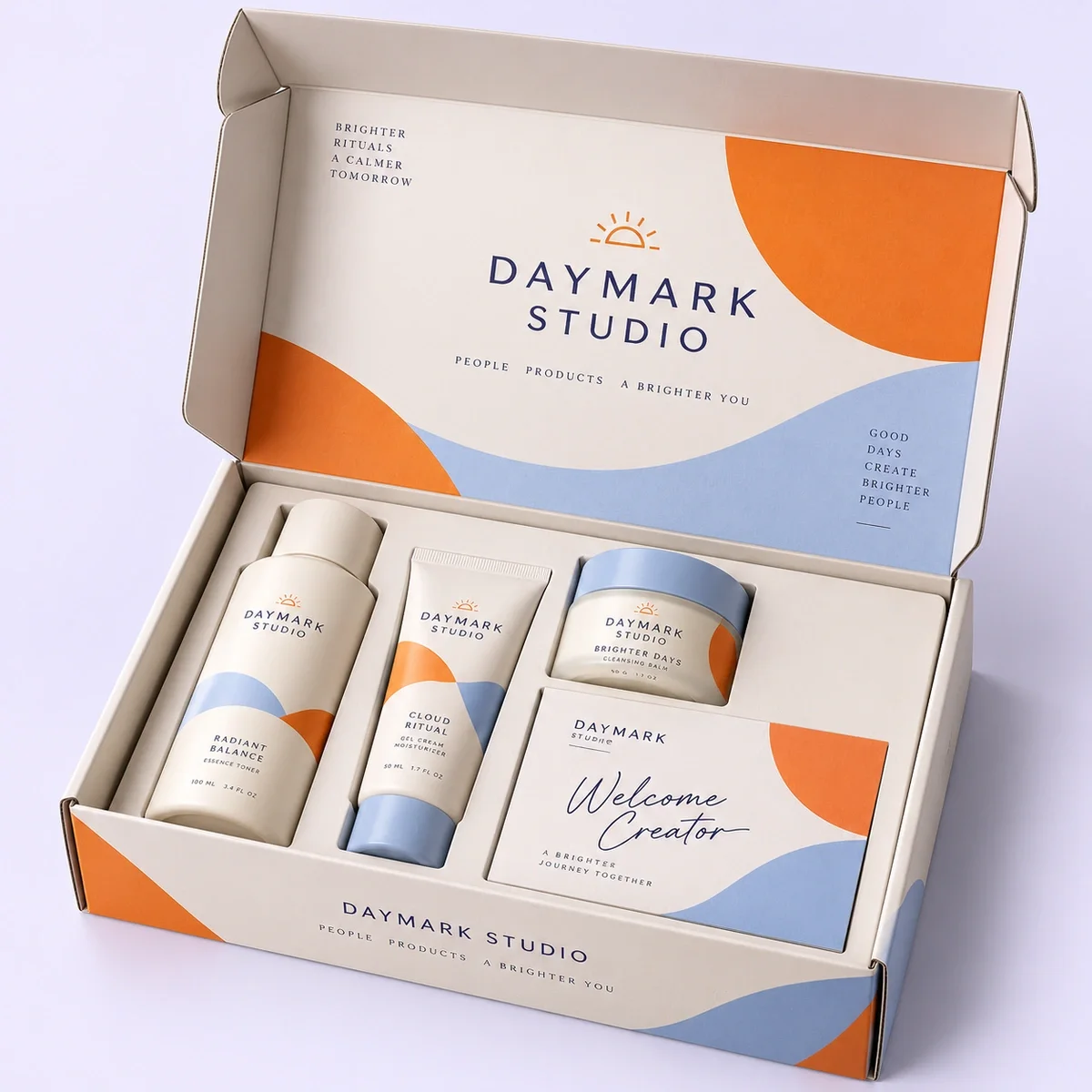
Custom Influencer Kit Packaging
For creator seeding and PR launches, made-to-order kit boxes keep mixed-size samples seated in fitted inserts and frame the brand story when opened.
View product →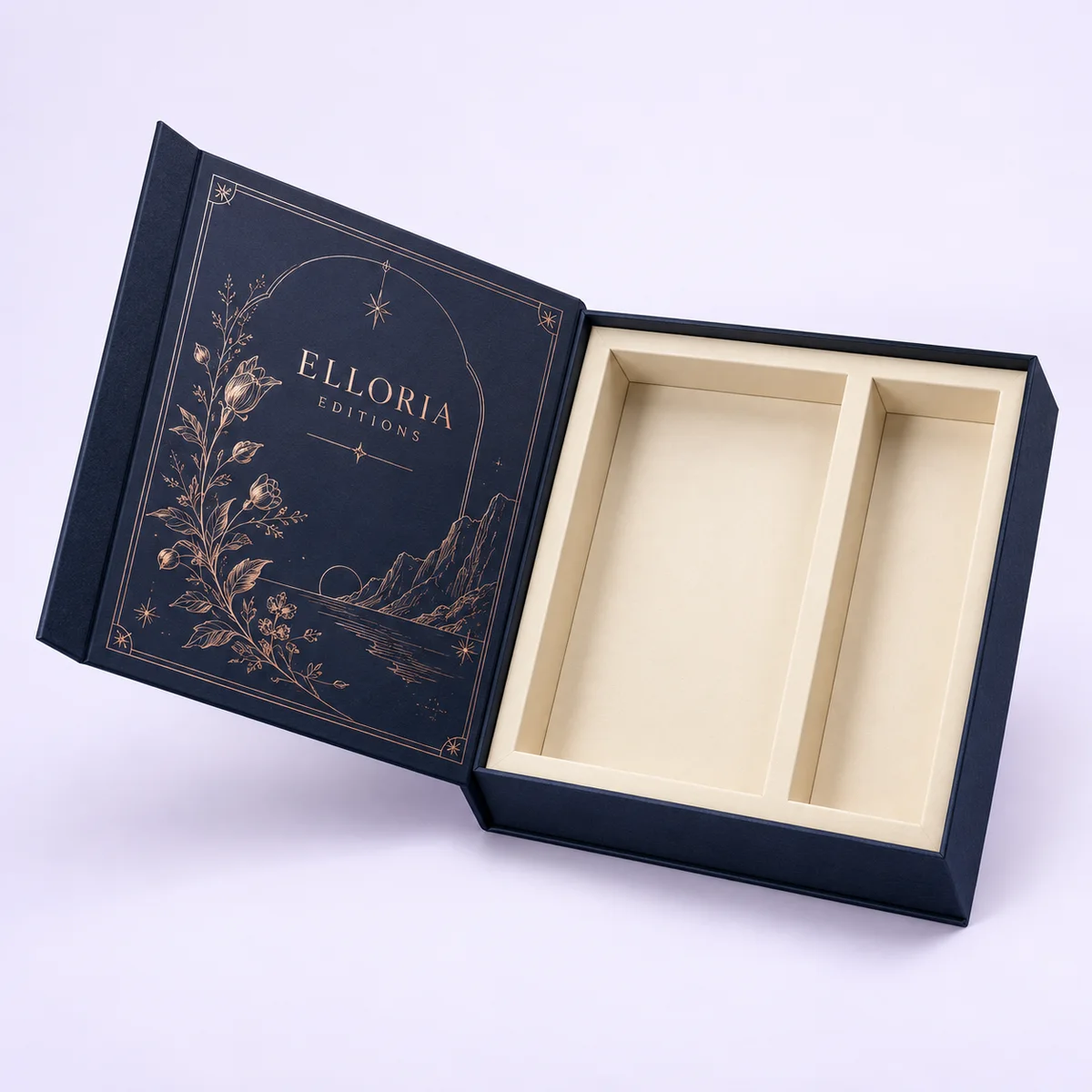
Custom Book Style Rigid Boxes
Turn luxury gift sets into a memorable reveal with a hinged book-cover lid, secure fitted tray, and space for thoughtful inside-cover branding.
View product →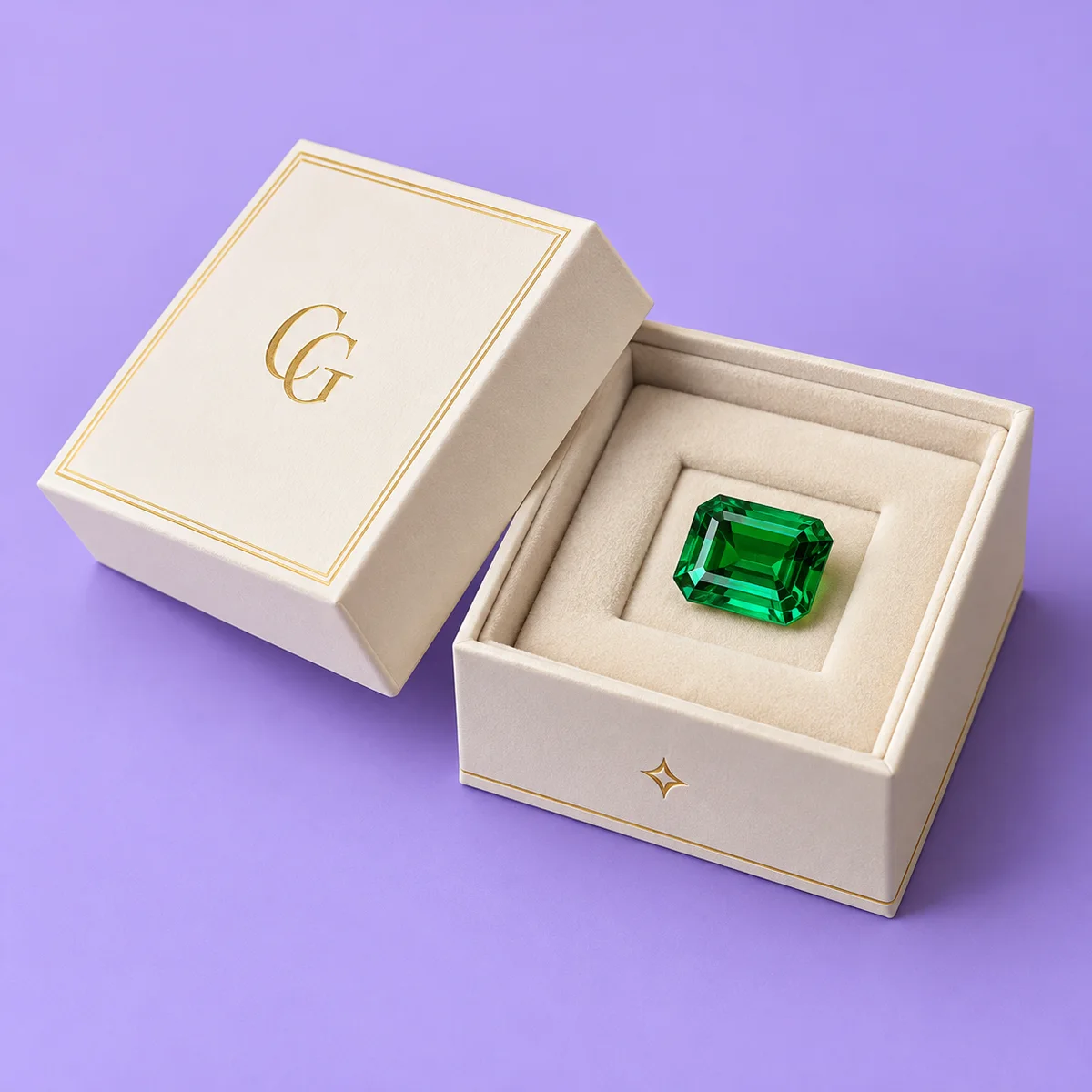
Custom Gemstone Packaging
A loose gemstone deserves a secure, shaped display. Choose a rigid presentation box with a padded cavity that keeps the cut visible and helps limit movement.
View product →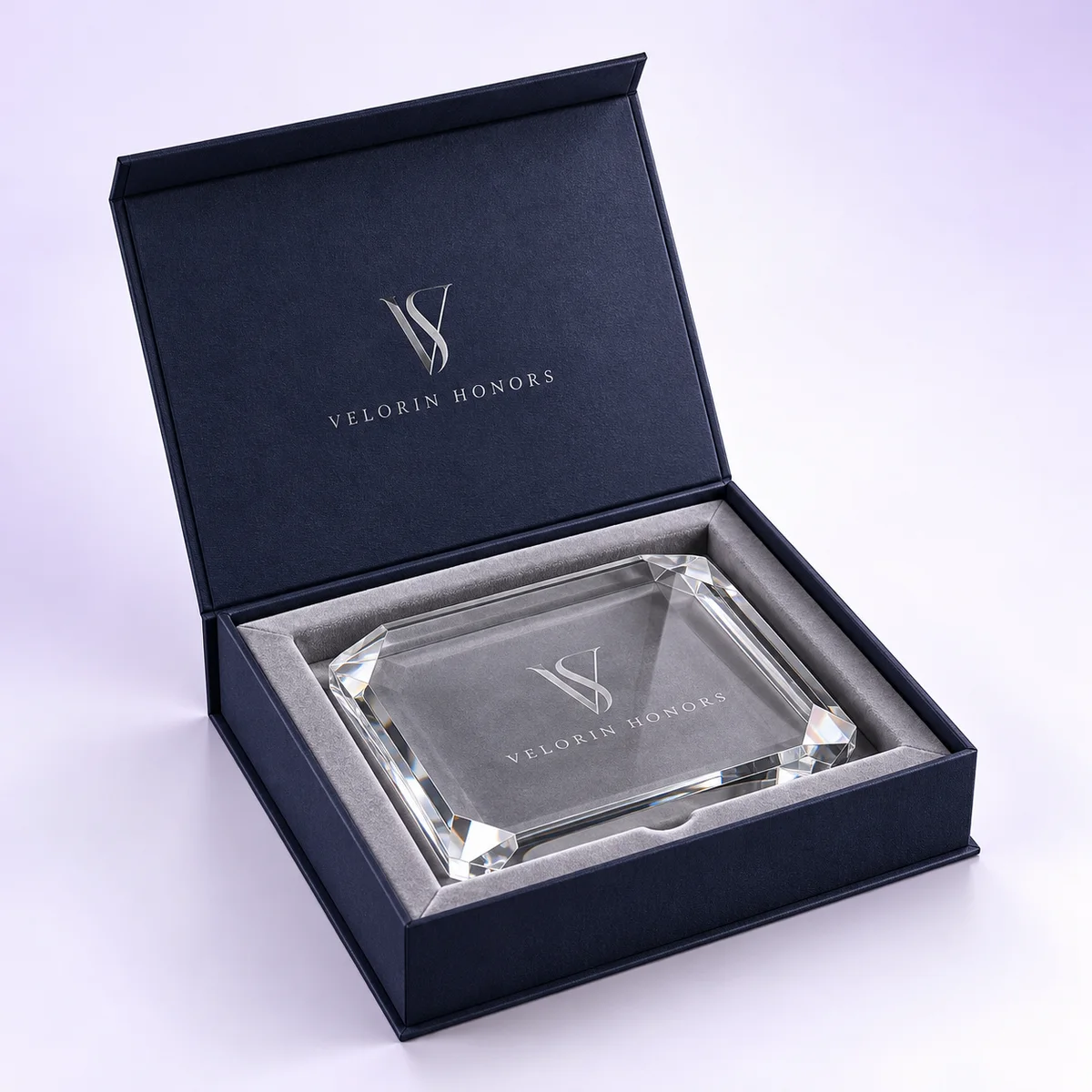
Custom Award Presentation Boxes
A crystal plaque that shifts in its case can spoil the handoff. Custom rigid boxes pair a fitted insert with a refined lid reveal for award ceremonies.
View product →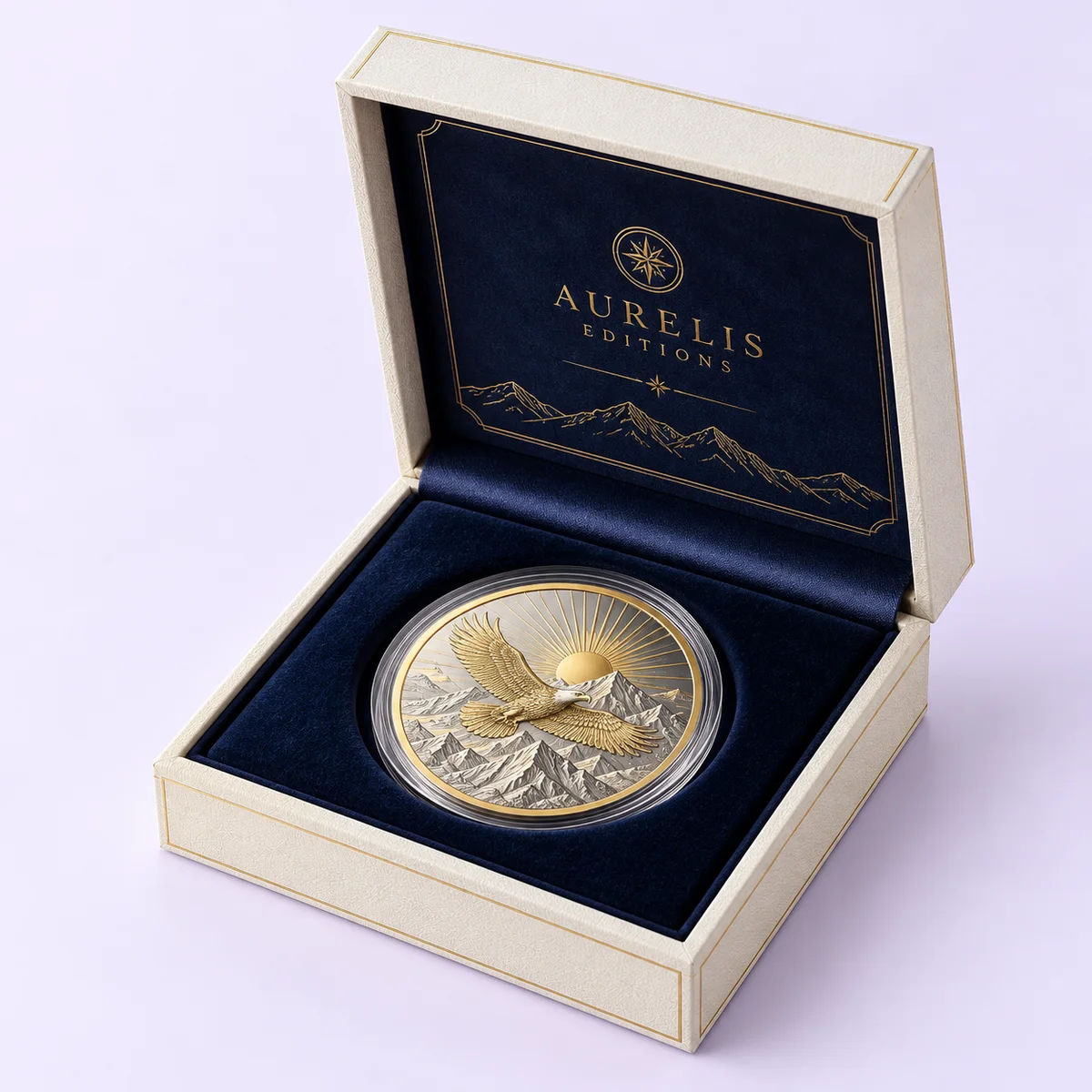
Custom Coin Boxes
Commemorative coins and challenge coin awards get a refined reveal in rigid presentation cases with capsule-fitted inserts, wrapped lids, and detailed finishes.
View product →Custom Influencer Kit Packaging
For creator seeding and PR launches, made-to-order kit boxes keep mixed-size samples seated in fitted inserts and frame the brand story when opened.
View product →Custom Book Style Rigid Boxes
Turn luxury gift sets into a memorable reveal with a hinged book-cover lid, secure fitted tray, and space for thoughtful inside-cover branding.
View product →Custom Gemstone Packaging
A loose gemstone deserves a secure, shaped display. Choose a rigid presentation box with a padded cavity that keeps the cut visible and helps limit movement.
View product →Custom Award Presentation Boxes
A crystal plaque that shifts in its case can spoil the handoff. Custom rigid boxes pair a fitted insert with a refined lid reveal for award ceremonies.
View product →Custom Coin Boxes
Commemorative coins and challenge coin awards get a refined reveal in rigid presentation cases with capsule-fitted inserts, wrapped lids, and detailed finishes.
View product →Custom Influencer Kit Packaging
For creator seeding and PR launches, made-to-order kit boxes keep mixed-size samples seated in fitted inserts and frame the brand story when opened.
View product →Custom Book Style Rigid Boxes
Turn luxury gift sets into a memorable reveal with a hinged book-cover lid, secure fitted tray, and space for thoughtful inside-cover branding.
View product →Custom Gemstone Packaging
A loose gemstone deserves a secure, shaped display. Choose a rigid presentation box with a padded cavity that keeps the cut visible and helps limit movement.
View product →Custom Award Presentation Boxes
A crystal plaque that shifts in its case can spoil the handoff. Custom rigid boxes pair a fitted insert with a refined lid reveal for award ceremonies.
View product →Custom Coin Boxes
Commemorative coins and challenge coin awards get a refined reveal in rigid presentation cases with capsule-fitted inserts, wrapped lids, and detailed finishes.
View product →Custom Influencer Kit Packaging
For creator seeding and PR launches, made-to-order kit boxes keep mixed-size samples seated in fitted inserts and frame the brand story when opened.
View product →Custom Book Style Rigid Boxes
Turn luxury gift sets into a memorable reveal with a hinged book-cover lid, secure fitted tray, and space for thoughtful inside-cover branding.
View product →Custom Gemstone Packaging
A loose gemstone deserves a secure, shaped display. Choose a rigid presentation box with a padded cavity that keeps the cut visible and helps limit movement.
View product →Custom Award Presentation Boxes
A crystal plaque that shifts in its case can spoil the handoff. Custom rigid boxes pair a fitted insert with a refined lid reveal for award ceremonies.
View product →Custom Coin Boxes
Commemorative coins and challenge coin awards get a refined reveal in rigid presentation cases with capsule-fitted inserts, wrapped lids, and detailed finishes.
View product →✦ Upgrade Today
Ready to Upgrade Your Brand Packaging?
Get custom templates matching your custom dimensions. Instant 3D digital proof samples returned in hours.