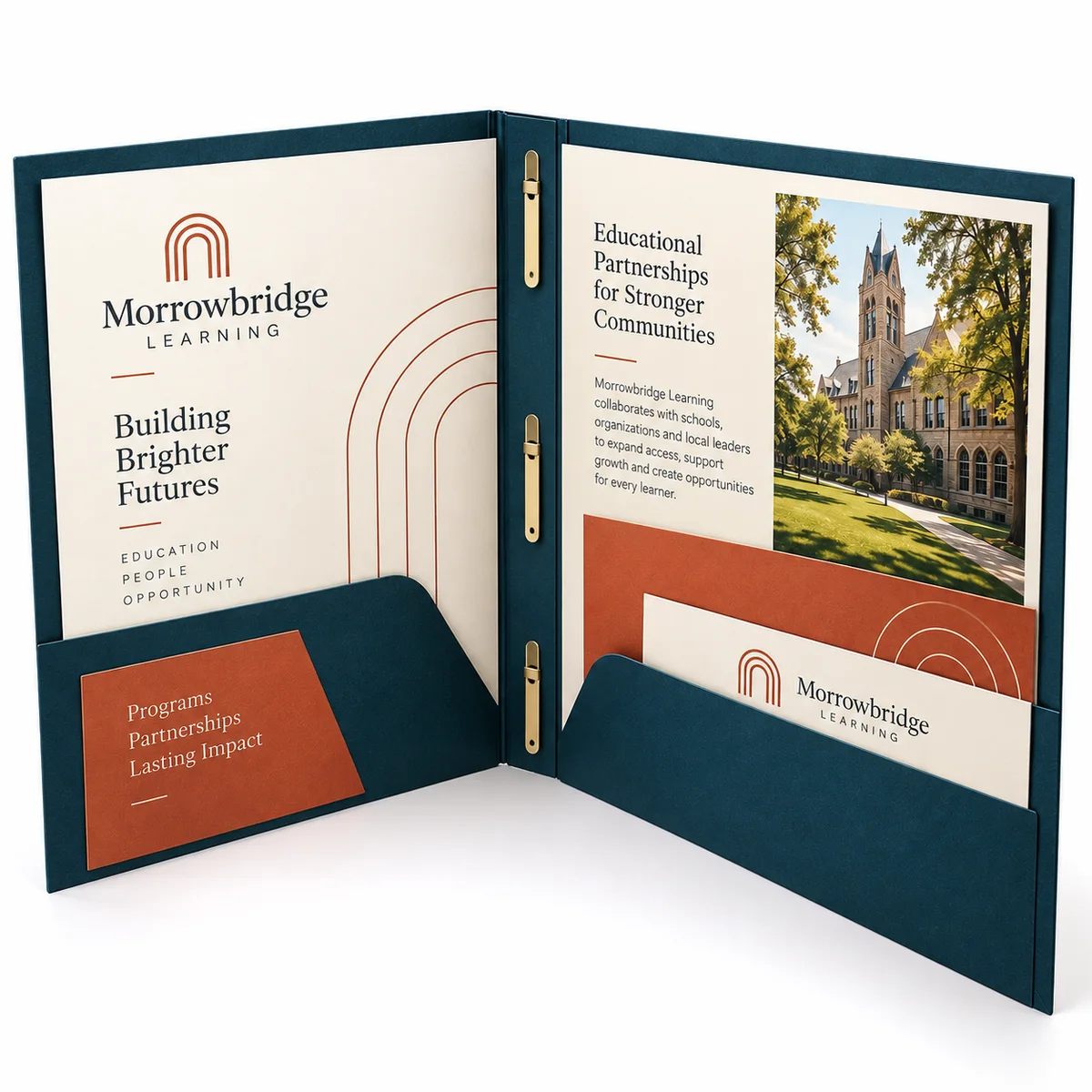
Organized Presentations
★★★★★
4.7/5.0Custom 3 Prong Pocket Folder
Keep punched reports secure on three center prongs while two inside pockets hold handouts, forms, and loose inserts in one branded folder.
Premium Quality
Fully Customizable
Low MOQ
Fast Turnaround
100% Eco-Friendly
Sustainable materials
Free Shipping
On every order
No Die & Plate Charges
Zero hidden costs
100% Satisfaction
Quality guaranteed
Expert Support
We're here to help
Custom 3 Prong Pocket Folder Quote Builder
Estimate your custom folder production cost. Shipping and final pricing are confirmed after specification review.
✓Response within30 minutes
✓Your info is privateSecure
✓No obligation100% free
Ready to Organize Your Documents?
Design Varieties
Folders Built Around Your Document Set
From employee onboarding packets to classroom projects, personalize the look and layout of your folders while keeping bound pages and loose inserts easy to find.
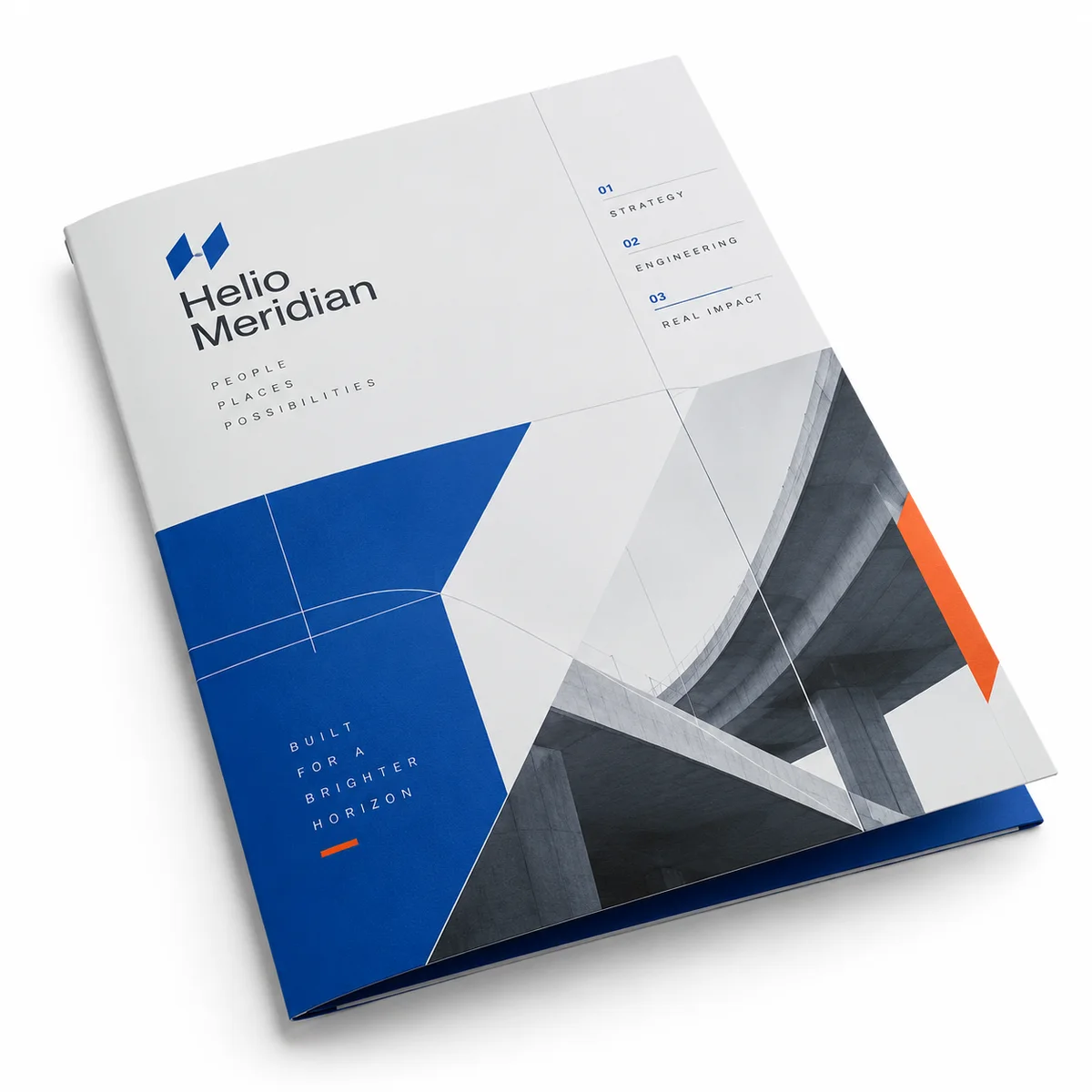
Grid Print Cover
Closed paperboard folder with scored spine and geometric grid print across the front cover.
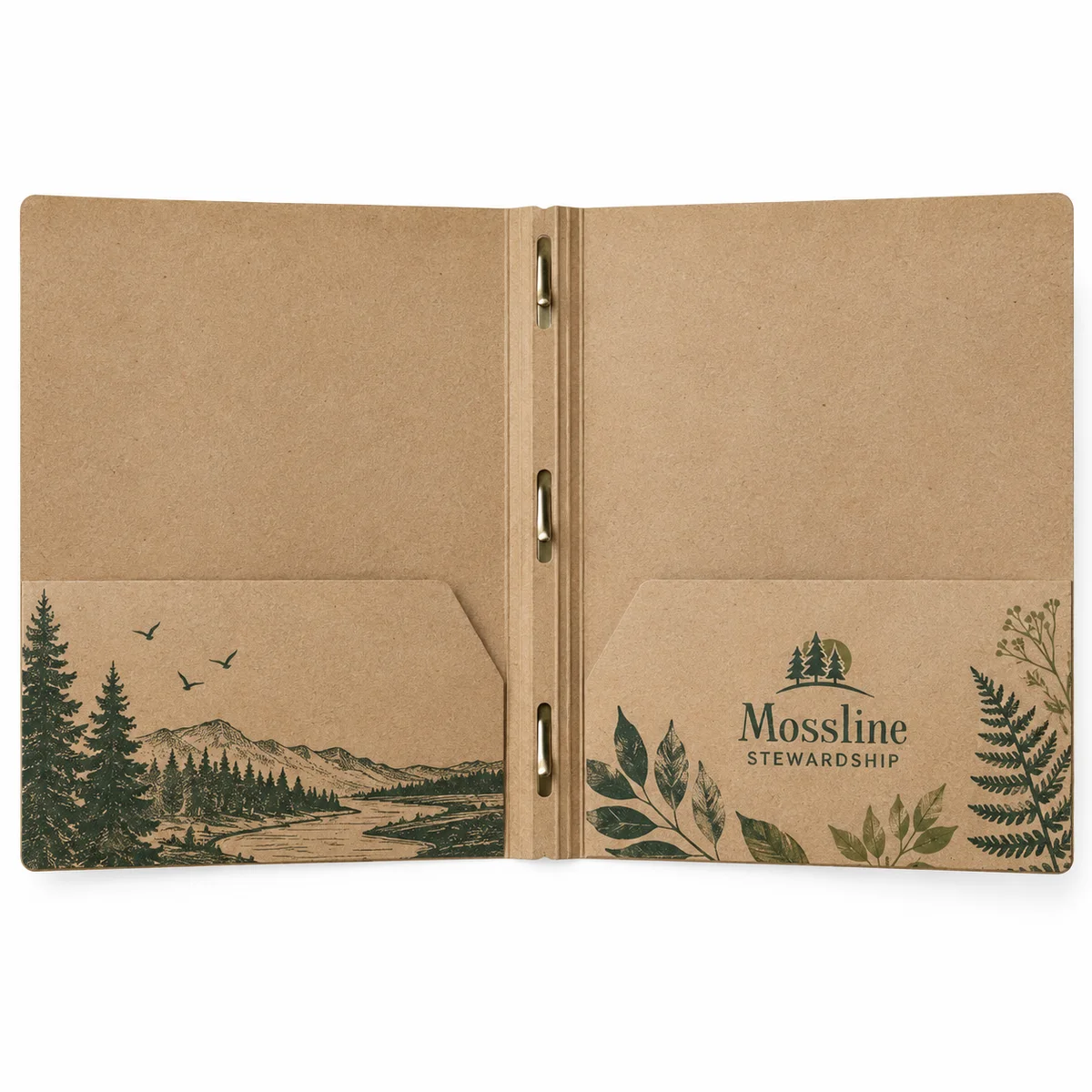
Kraft Twin Pockets
Open kraft folder with two angled interior pockets and three metal fasteners on its spine.
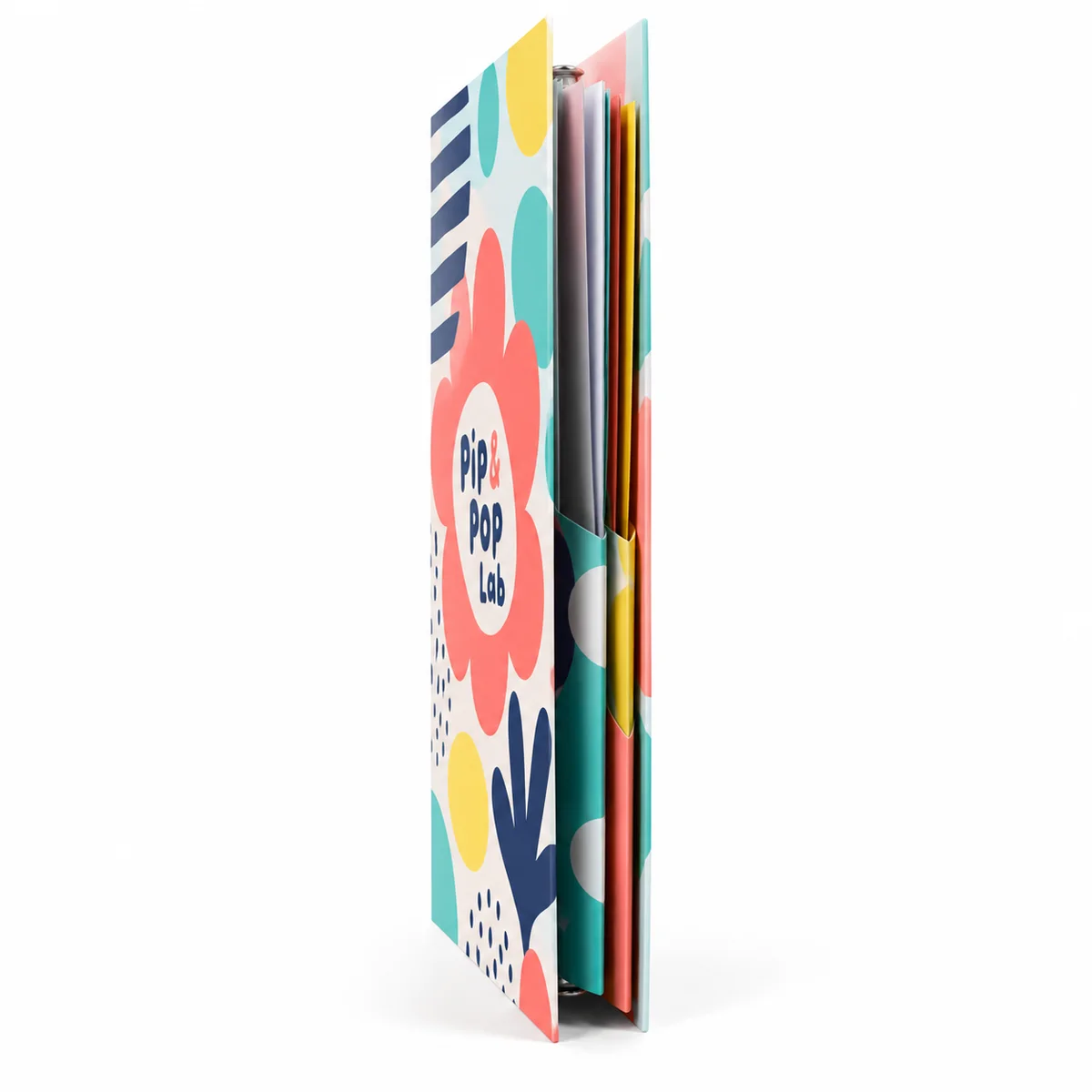
Layered Side Profile
Slim side profile shows folded covers, layered pocket inserts, and bright printed panels.
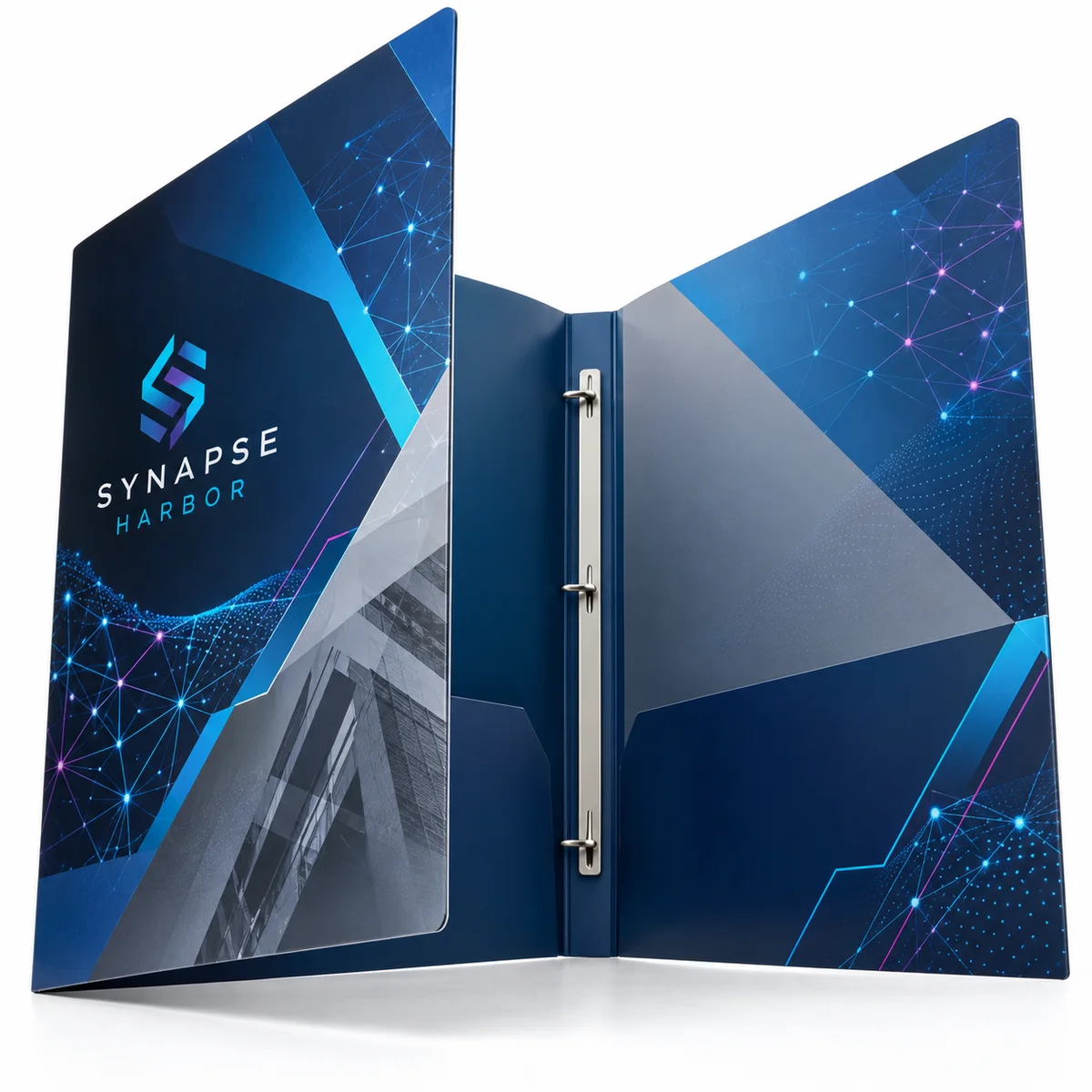
Geometric Prong Folder
Part-open folder shows two angled pockets and three center fasteners under geometric print.
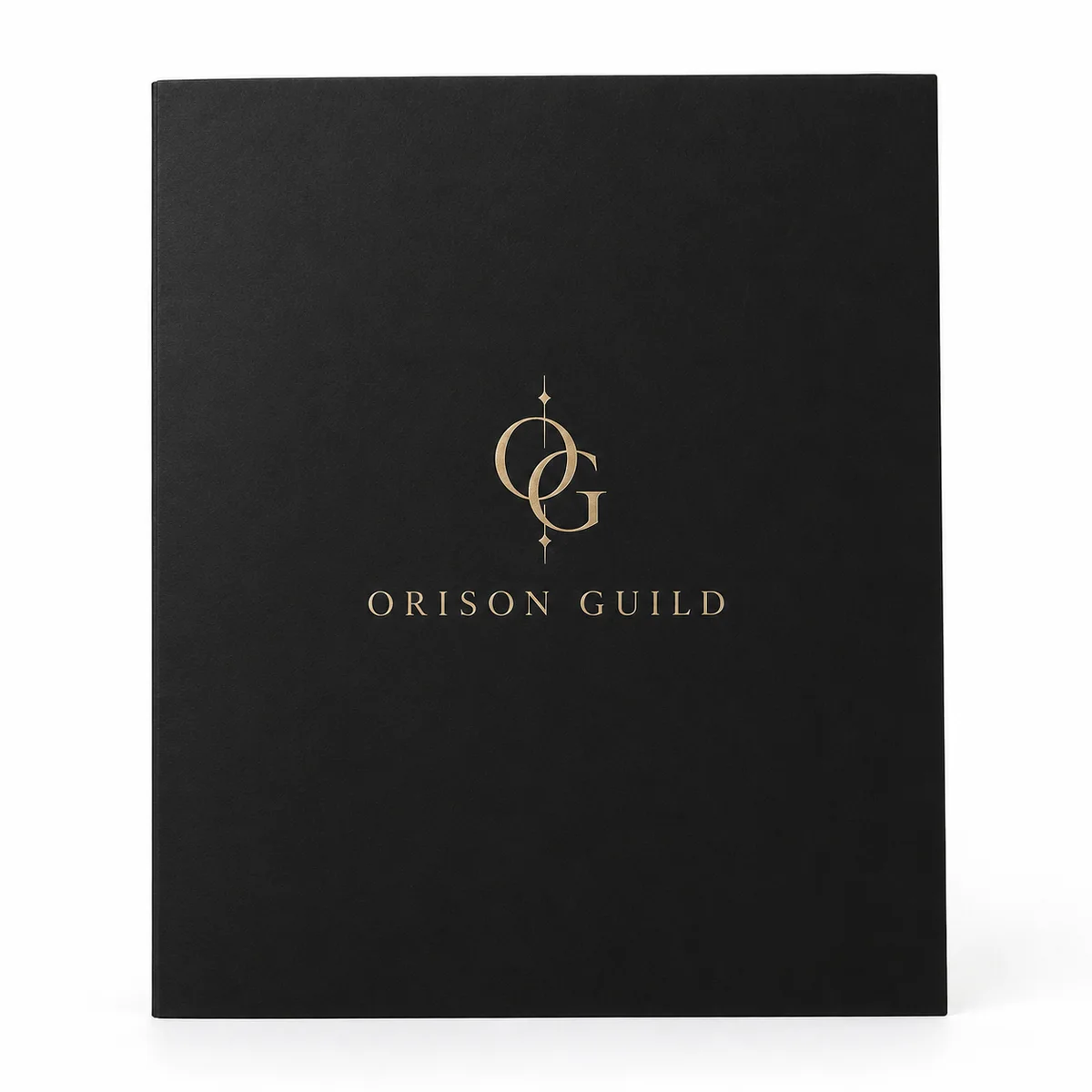
Minimal Front Cover
Closed black folder has a flat front panel, sharp edges, and a centered gold-tone wordmark.
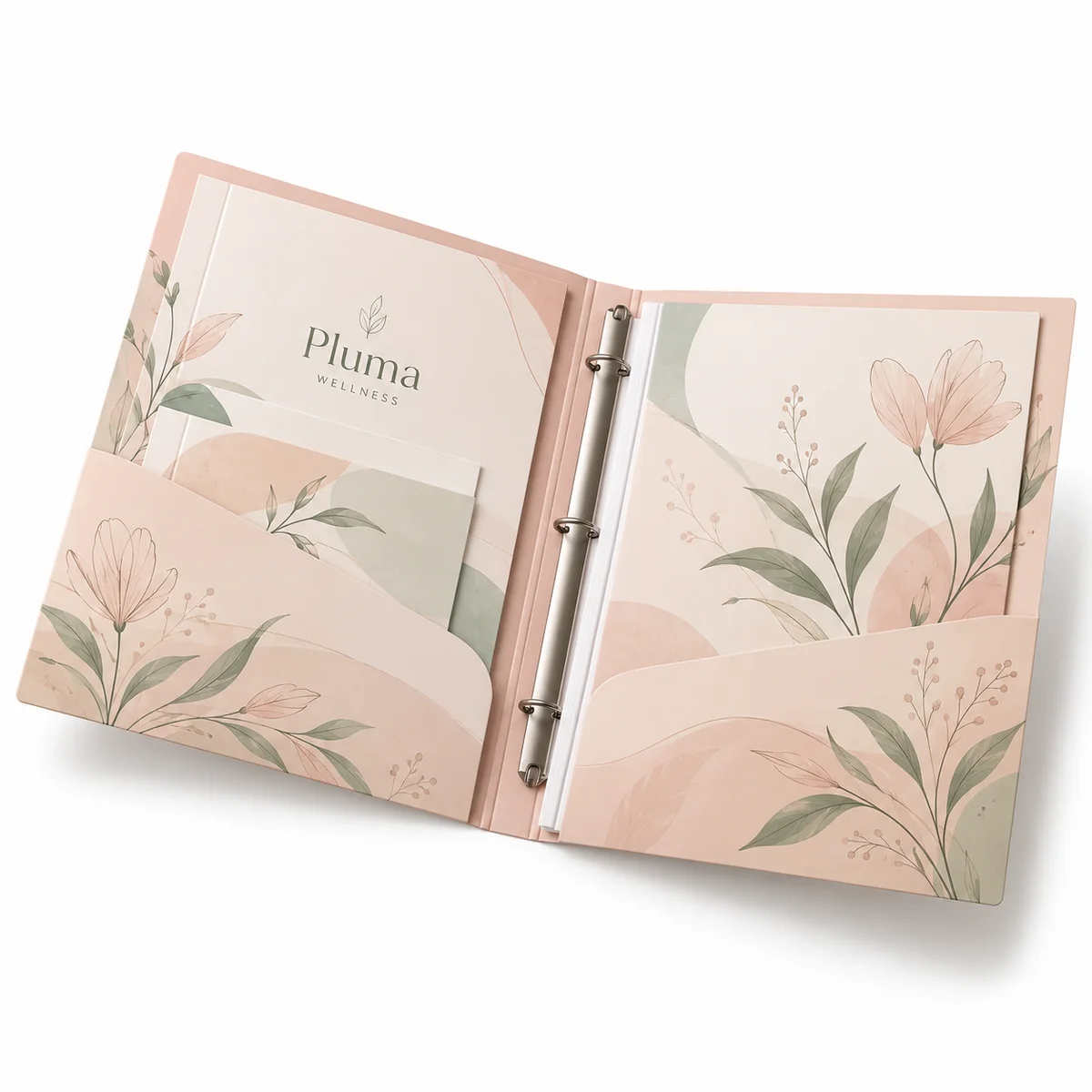
Botanical Interior Pockets
Open pastel folder features two curved pockets, printed inserts, and a metal fastener strip.
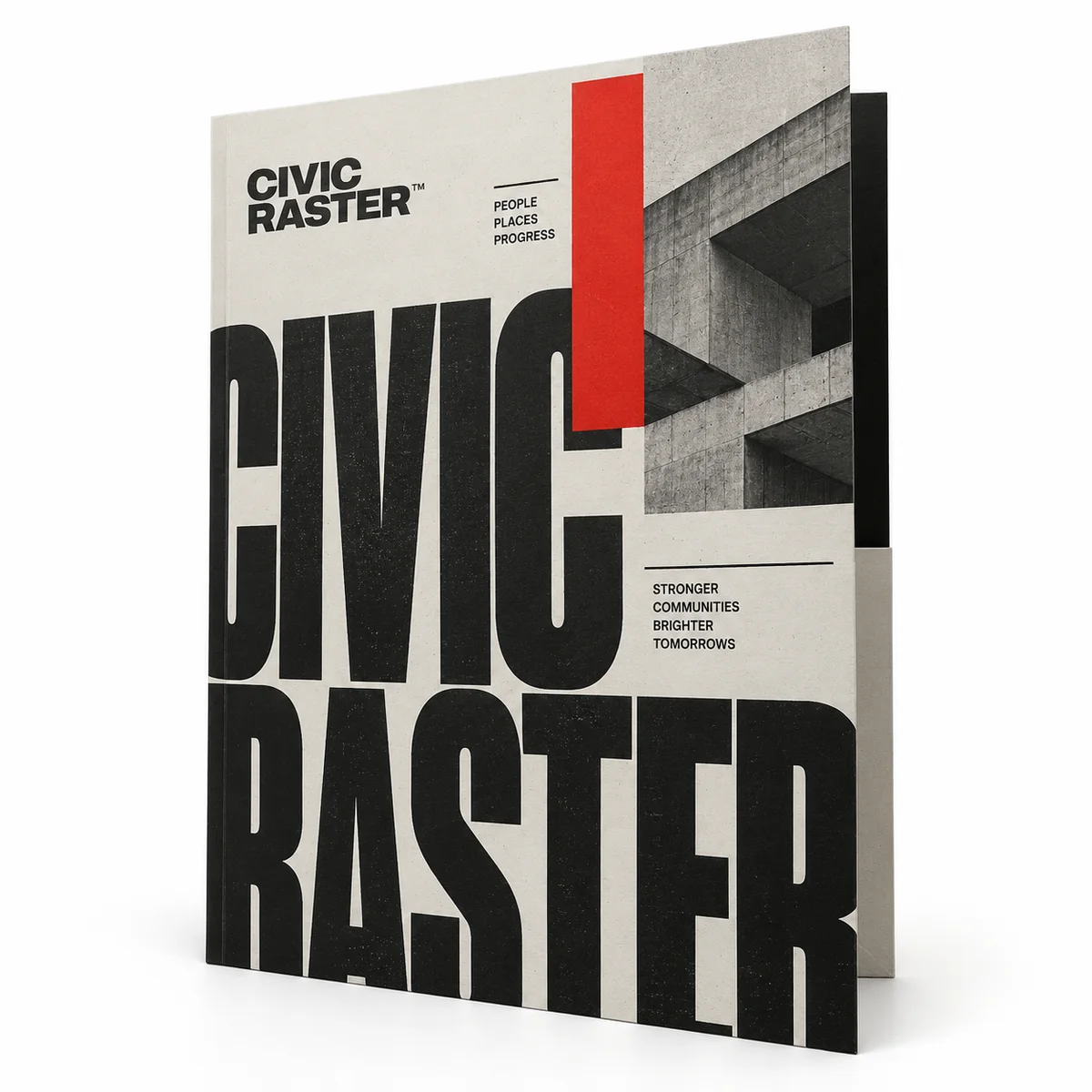
Oversized Type Cover
Upright folded cover shows a scored spine, wide front panel, and oversize printed lettering.
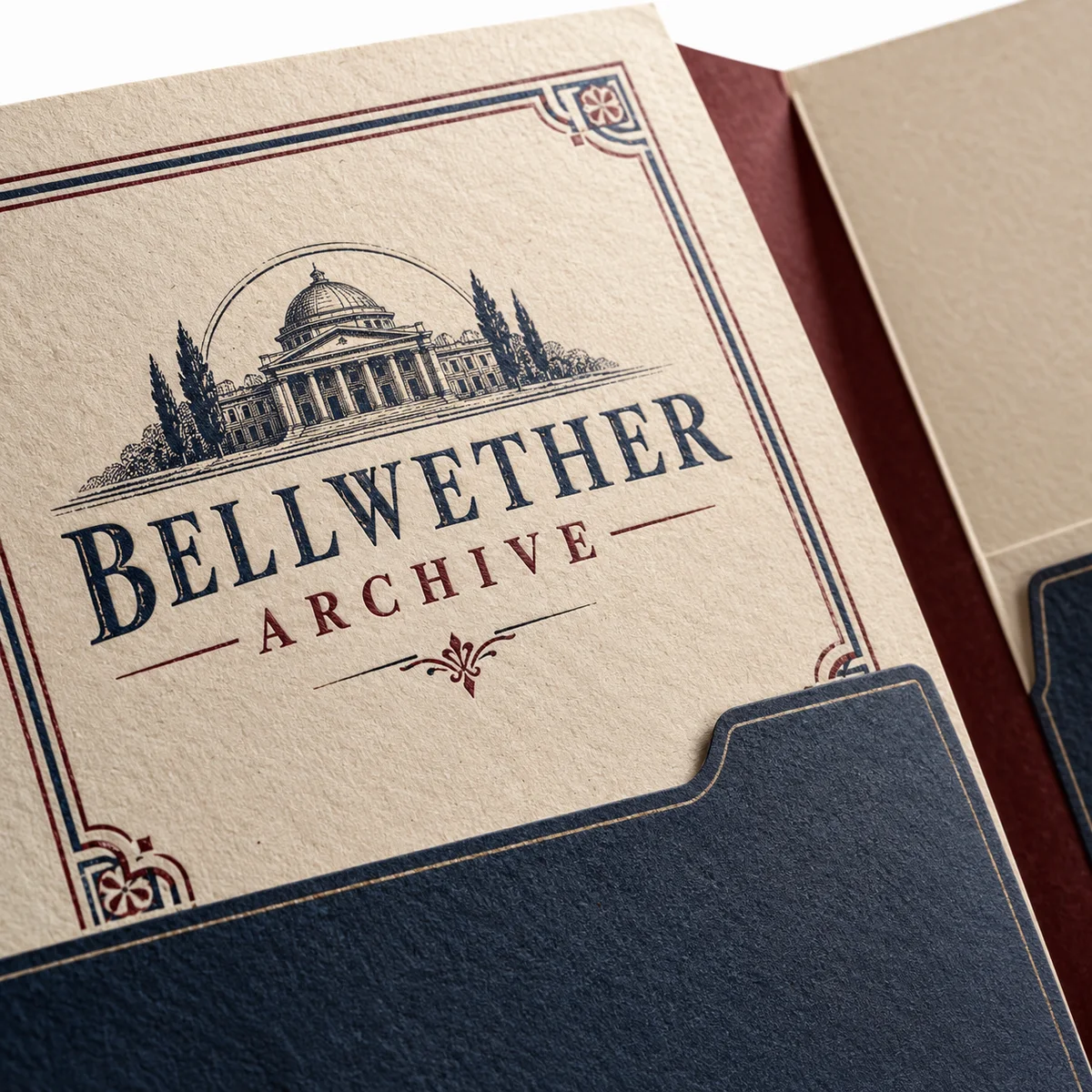
Textured Pocket Detail
Close-up shows a textured paper cover, engraved-style print, and a curved navy pocket edge.
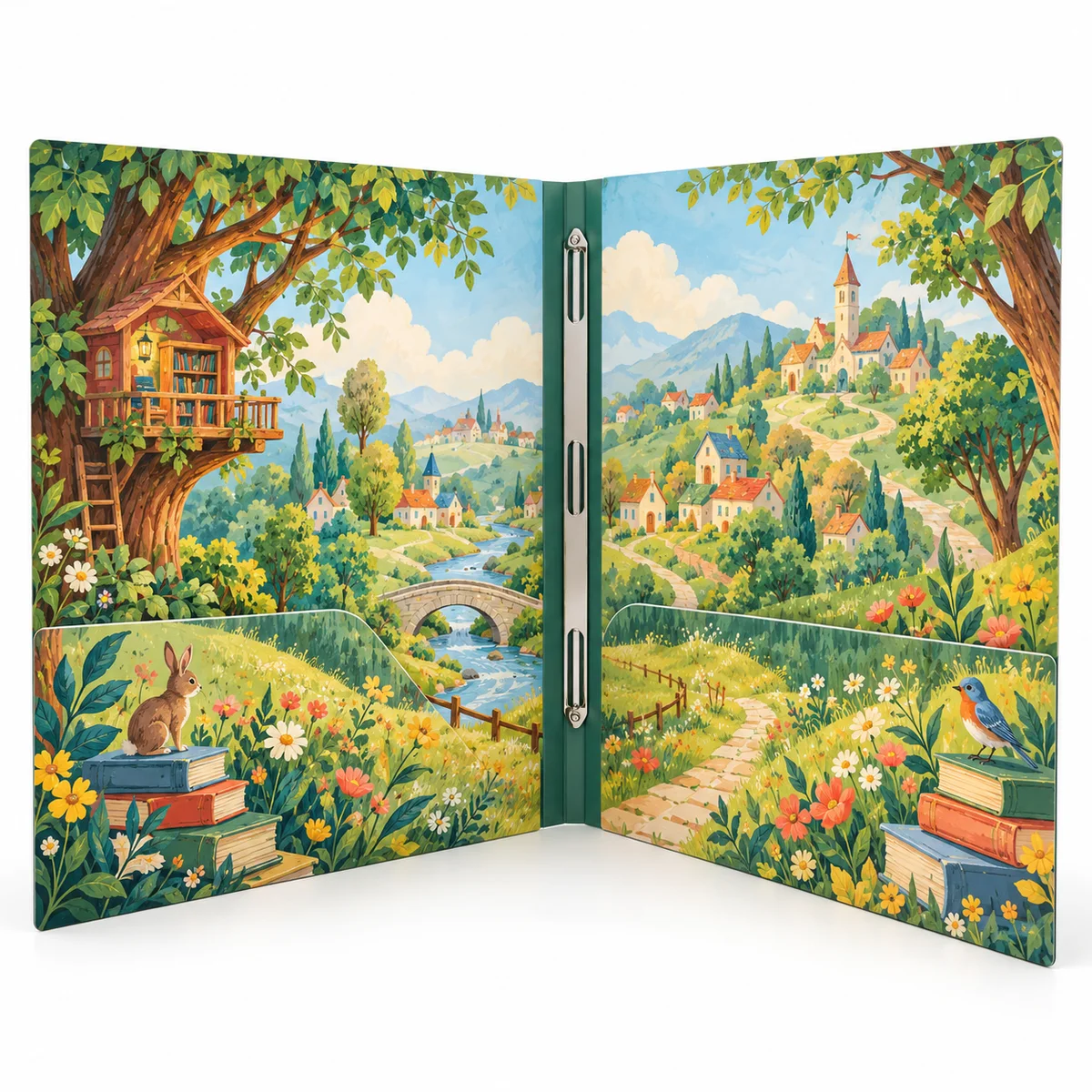
Illustrated Pocket Spread
Wide-open illustrated folder has two curved interior pockets and a central fastener strip.
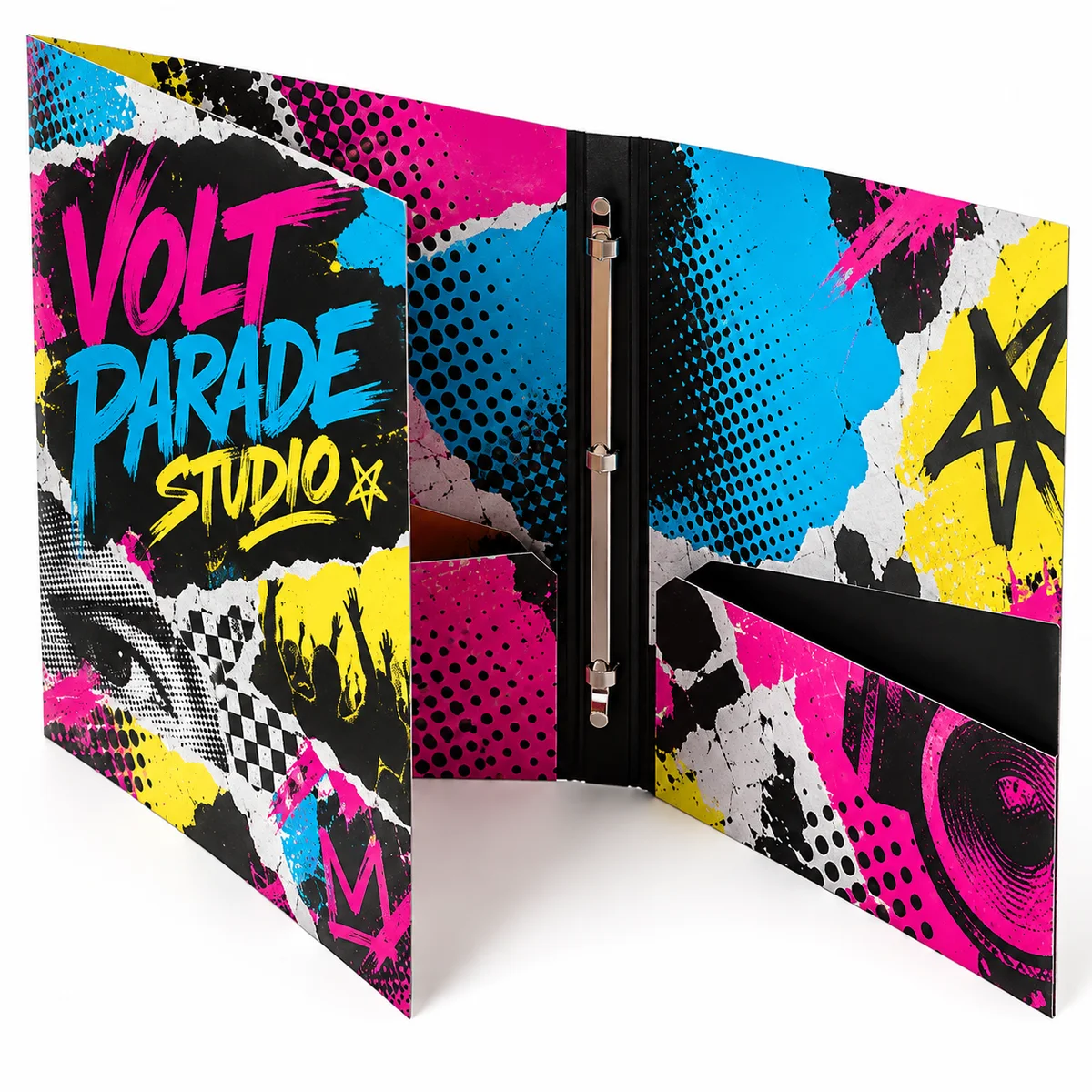
Collage Prong Folder
Angled open folder has two printed interior pockets and central three-prong fastener strip.
Can't find the perfect style?
Create a completely custom box design tailored to your brand.
Designed for Various Industries
We design packaging that fits every industry
From small businesses to global brands, our custom packaging solutions are built to elevate your brand and leave a lasting impression.
Cosmetics & Beauty
Food & Beverages
E-commerce & Retail
Electronics
Apparel & Fashion
Health & Wellness
Pharmaceuticals
Cannabis & CBD
Pet Products
Baby & Kids
Jewelry & Accessories
Home & Lifestyle
Candles & Fragrance
Coffee & Tea
Confectionery
Cosmetics & Beauty
Food & Beverages
E-commerce & Retail
Electronics
Apparel & Fashion
Health & Wellness
Pharmaceuticals
Cannabis & CBD
Pet Products
Baby & Kids
Jewelry & Accessories
Home & Lifestyle
Candles & Fragrance
Coffee & Tea
Confectionery
Supplements
Skincare & Personal Care
Haircare
Automotive
Sports & Fitness
Toys & Games
Stationery & Gifts
Bakery & Desserts
Wine & Spirits
Tobacco & Vape
Medical Devices
Tech Accessories
Subscription Boxes
Organic & Natural
Luxury Retail
Supplements
Skincare & Personal Care
Haircare
Automotive
Sports & Fitness
Toys & Games
Stationery & Gifts
Bakery & Desserts
Wine & Spirits
Tobacco & Vape
Medical Devices
Tech Accessories
Subscription Boxes
Organic & Natural
Luxury Retail
Built for brands
that care about detail.
Premium packaging. Precise printing.
Fast turnaround. No hidden costs.
10K+
Happy Customers
98%
Satisfaction Rate
Trusted by Top Brands
We work with startups to enterprises. Our boxes make an impact.
Free Design Support
Get expert help in creating the perfect packaging for your brand.
Warehouse Across USA
Faster fulfilment with local production and warehouses.
Print & Design Lovers
Crafted with passion, just the way your brand deserves.
Custom 3 Prong Pocket Folders That Keep Reports Secure and Handouts Separate
A welcome packet can look tidy on the outside and become a mess the moment someone opens it. Loose schedules slide behind forms, while a multi-page guide loses its reading order. A custom 3 prong pocket folder gives each part of the packet a place: punched pages stay together at the center, and loose handouts sit in two separate pockets.
Three-Prong Fasteners Keep Reports in Order
The three fasteners along the center of a 3-prong folder are designed to hold three-hole-punched sheets in sequence. That matters for training instructions, student assignments, procedure guides, and reports that people need to read from first page to last. Pages stay attached as the folder opens and closes, rather than being moved from one pocket to another.
A regular two-pocket folder is useful for carrying loose sheets. A folder with prongs adds a way to keep one document set bound while leaving both pockets available. Fastener placement must match the punched sheets, so the hole pattern should be part of the design brief instead of an assumption.
Two Inside Pockets Make Room for Loose Handouts
Not everything in a document kit belongs on the prongs. Forms that need signatures, detachable worksheets, business cards, and brochures are easier to access when they can be removed without opening a fastener. Two interior pockets let you divide these items by purpose.
For employee onboarding, the center can hold a punched handbook. One pocket can carry payroll or policy forms, and the other can hold an orientation schedule or contact sheet. Pocket depth also matters. A shallow pocket may suit a few flat inserts; a deeper pocket may better support a thicker bundle, subject to the folder's final structure. Business card slits can be considered when cards are part of the kit, with placement checked against pocket seams and the central fold.
Letter-Size Fit Depends on More Than the Cover
US letter-size paper measures 8.5 × 11 inches, but those are the sheet dimensions, not automatically the outside dimensions of a closed folder. The finished cover needs clearance around the page edges, plus enough room for the pockets and fastening mechanism. A commonly used presentation-folder format is approximately 9 × 12 inches; the correct size still depends on your inserts.
A ten-page guide, a stack of training worksheets, and a thick handout bundle do not place the same demands on the prongs or pockets. Paper thickness, fastener length, fold allowance, and pocket height all affect handling.
For a custom order, identify the sheet size, three-hole spacing, number of punched pages, and the quantity of loose inserts. These details also help avoid paper edges peeking out or a folder that strains when closed.
Folder Materials Matched to Handling and Presentation
Material choice changes the way a three-prong pocket folder feels and performs. Cardstock or paperboard offers a printable surface for business graphics and a structured presentation. Heavier cover stocks may help a folder hold its shape when it moves between meetings, classrooms, and storage shelves.
Polypropylene is another material used for this product type. It offers flexibility and moisture resistance, which can be useful where a folder receives frequent handling. The material choice depends on use, artwork, and the available construction.
Finishing belongs in the same decision. Matte and gloss treatments create different surface appearances on compatible printed stocks. Special finishes such as foil or embossing may be worth exploring for a presentation kit, but compatibility should be confirmed with the material, folds, and fastener assembly. A polished cover should not come at the cost of an awkward opening or crowded pocket.
Custom Logo Printing That Works Around Every Fold
A branded 3 prong pocket folder is seen before the first page is read. The front panel can carry a school name, company logo, program title, or event theme. The back panel may suit contact details or a short message. Interior printing can help label the pockets so recipients know where to find the items they need.
Full-color CMYK printing supports detailed artwork on suitable paper-based materials. A different print process may be needed for a poly construction. Whatever the material, the dieline—the flat cutting and folding layout—matters as much as the graphic itself.
Keep small text away from folds, pocket glue areas, fastener attachments, and trim edges. A print-ready PDF with appropriate bleed and safe margins helps prevent important artwork from being cut or hidden. Reviewing a proof with the pockets and prongs shown in position is especially helpful for folders that carry information inside as well as outside.
Useful for Training, Schools, and Client Presentation Kits
Different organizations often need the same simple outcome: one ordered document and several easy-to-remove inserts. HR teams can use custom printed 3 prong folders to organize employee onboarding packets. Training providers can secure lesson materials while keeping evaluation forms separate. Schools can use them for project instructions and worksheets. Sales teams can keep a proposal attached while leaving reference sheets accessible.
For a polished client handover, custom presentation folders are another format when a secured page order is not essential. The three-prong version earns its place when the reading sequence matters.
Some programs include more than paper. Where kits also contain branded cards, writing supplies, or other stationery items, custom stationery boxes can complement the folders as part of a coordinated packaging plan. The folder itself remains the document organizer; the companion packaging serves the extra items.
Bulk Custom 3 Prong Pocket Folders Planned Around Your Project
A useful bulk order begins with what goes inside the folder, not just the number of covers. Define whether the center fasteners will hold a short welcome guide or a long training manual. Identify pocket contents, cover artwork, preferred material, and how often the packet will be handled. The answers shape a more accurate specification.
Packopie approaches custom 3 prong pocket folders as made-to-order projects. Production options, print methods, finishing choices, minimum quantities, and lead times are confirmed against the selected construction rather than assumed in advance. Whether the project serves one department or a larger rollout, a clear brief makes it easier to review the structure and prepare pricing. With your sheet measurements, expected page count, design files, and order quantity in hand, Packopie can discuss the folder details and develop a custom quote around the actual document set.
Frequently Asked Questions
The folder can be specified with three center fasteners aligned for standard US three-hole-punched letter-size sheets. Confirm the fastener spacing and finished folder dimensions in the production proof to ensure the pages fit correctly.
The center fasteners hold punched pages in a fixed order, while the two pockets keep loose items separate. For example, a training folder can hold a punched instruction guide between its covers, with forms in one pocket and reference handouts in the other.
Choose a three-prong design when the order of your pages matters. It keeps multi-page reports, training guides, and course materials together while leaving pocket space for items that recipients may need to remove.
Sheet capacity depends on fastener length, paper thickness, and folder construction. A thin training booklet and a thick stack of reports require different specifications. Share the expected page count when requesting a quote so the folder can be designed for the document load.
Business card slots can be included in a suitable pocket layout. Their location depends on pocket dimensions, glue areas, and the space occupied by the center fasteners. The final dieline establishes a usable position for the card.
The front cover is a strong location for the main logo. Interior panels can also carry contact details, program names, or supporting graphics. Keep important text away from fold lines, pocket edges, and fastener attachment areas to prevent artwork from being covered.
More Solutions
You May Also Like
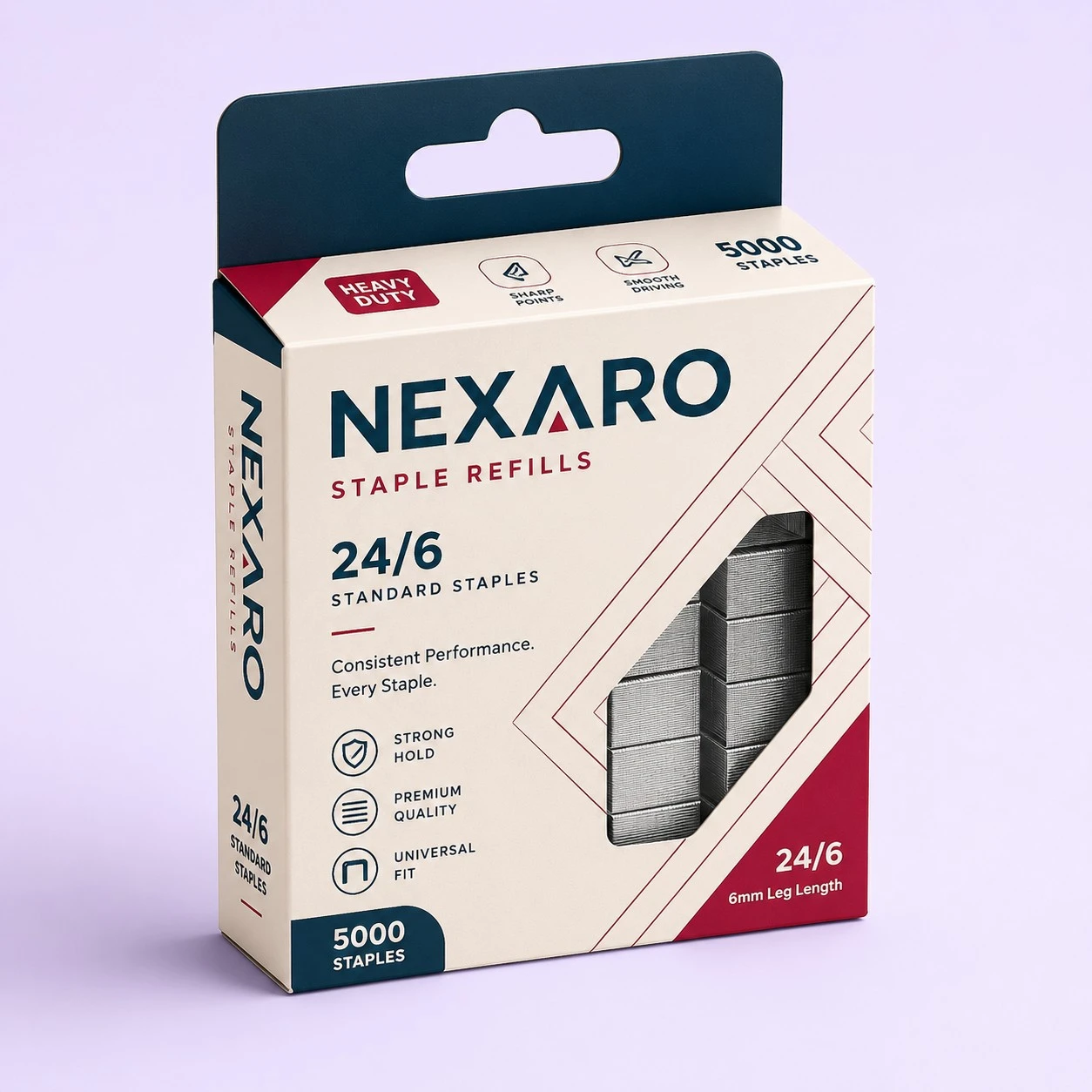
Custom Staple Boxes
Custom staple boxes built to fit staple refill packs, with custom sizes, print, windows, hang tabs, and board options for retail-ready presentation.
View product →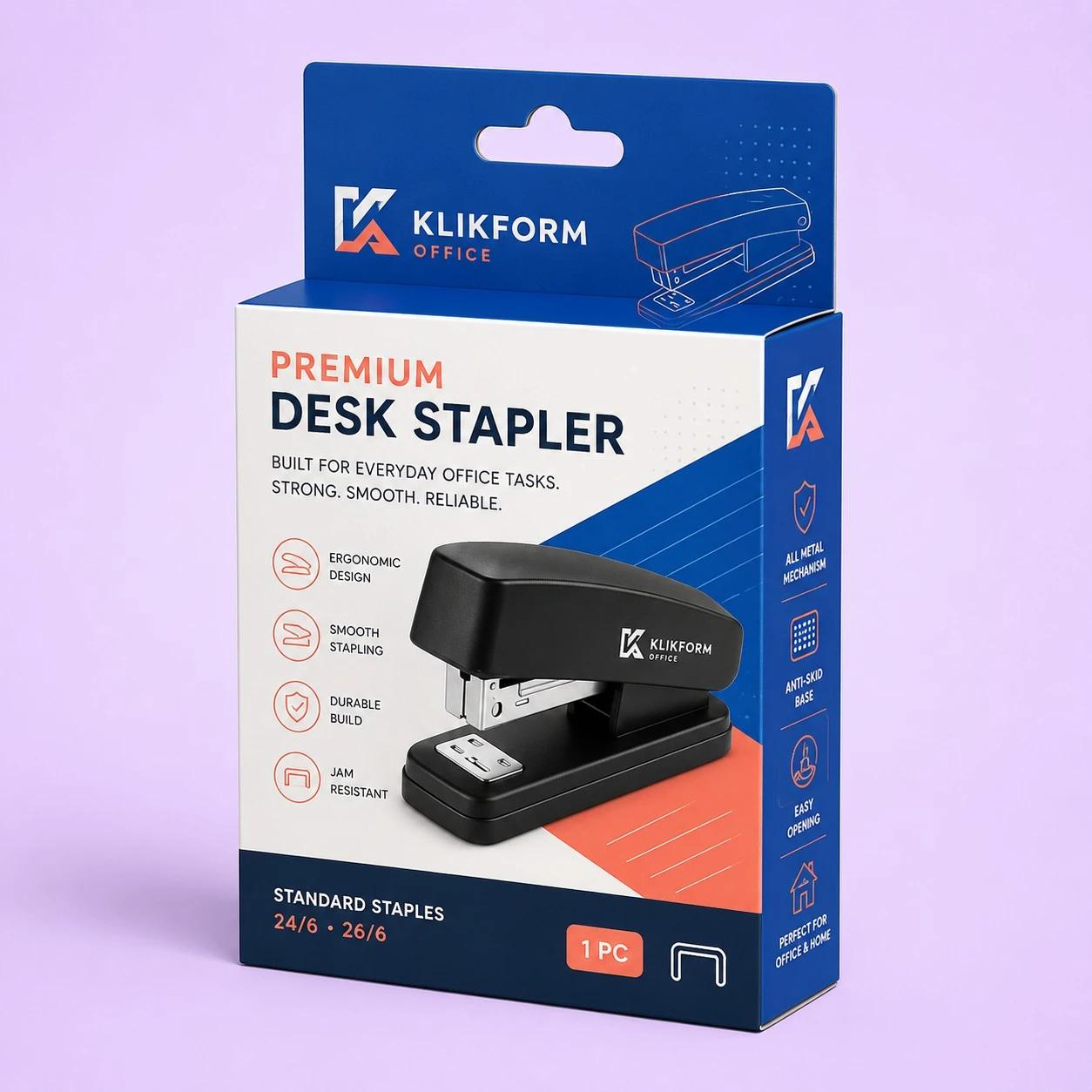
Custom Stapler Boxes
Custom stapler boxes made to fit your product, artwork, and retail needs, with tailored sizes, print, finishes, windows, and inserts.
View product →Custom Staple Boxes
Custom staple boxes built to fit staple refill packs, with custom sizes, print, windows, hang tabs, and board options for retail-ready presentation.
View product →Custom Stapler Boxes
Custom stapler boxes made to fit your product, artwork, and retail needs, with tailored sizes, print, finishes, windows, and inserts.
View product →Custom Staple Boxes
Custom staple boxes built to fit staple refill packs, with custom sizes, print, windows, hang tabs, and board options for retail-ready presentation.
View product →Custom Stapler Boxes
Custom stapler boxes made to fit your product, artwork, and retail needs, with tailored sizes, print, finishes, windows, and inserts.
View product →Custom Staple Boxes
Custom staple boxes built to fit staple refill packs, with custom sizes, print, windows, hang tabs, and board options for retail-ready presentation.
View product →Custom Stapler Boxes
Custom stapler boxes made to fit your product, artwork, and retail needs, with tailored sizes, print, finishes, windows, and inserts.
View product →Custom Staple Boxes
Custom staple boxes built to fit staple refill packs, with custom sizes, print, windows, hang tabs, and board options for retail-ready presentation.
View product →Custom Stapler Boxes
Custom stapler boxes made to fit your product, artwork, and retail needs, with tailored sizes, print, finishes, windows, and inserts.
View product →Custom Staple Boxes
Custom staple boxes built to fit staple refill packs, with custom sizes, print, windows, hang tabs, and board options for retail-ready presentation.
View product →Custom Stapler Boxes
Custom stapler boxes made to fit your product, artwork, and retail needs, with tailored sizes, print, finishes, windows, and inserts.
View product →Custom Staple Boxes
Custom staple boxes built to fit staple refill packs, with custom sizes, print, windows, hang tabs, and board options for retail-ready presentation.
View product →Custom Stapler Boxes
Custom stapler boxes made to fit your product, artwork, and retail needs, with tailored sizes, print, finishes, windows, and inserts.
View product →Custom Staple Boxes
Custom staple boxes built to fit staple refill packs, with custom sizes, print, windows, hang tabs, and board options for retail-ready presentation.
View product →Custom Stapler Boxes
Custom stapler boxes made to fit your product, artwork, and retail needs, with tailored sizes, print, finishes, windows, and inserts.
View product →✦ Upgrade Today
Ready to Upgrade Your Brand Packaging?
Get custom templates matching your custom dimensions. Instant 3D digital proof samples returned in hours.