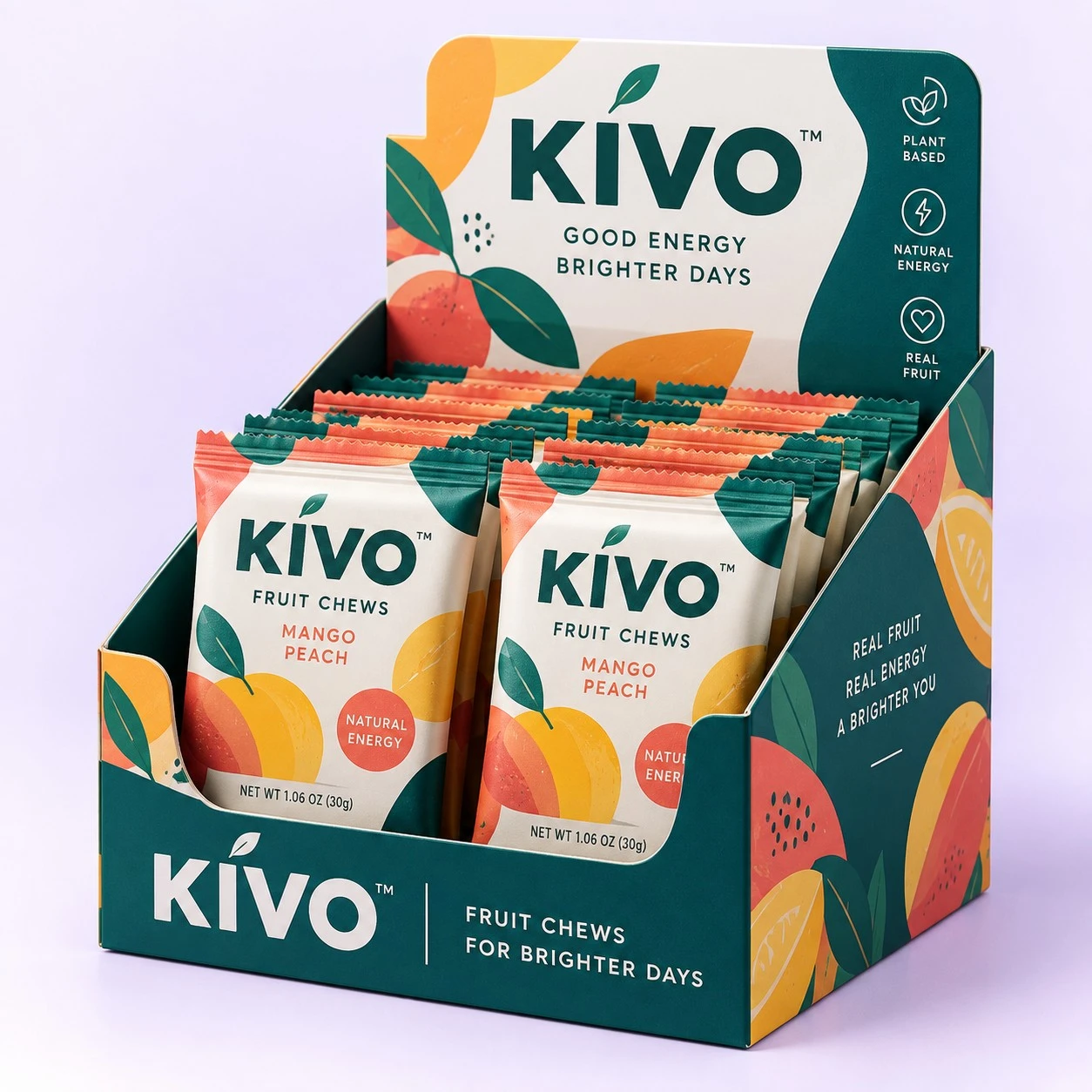
Counter Ready
★★★★★
4.5/5.0Custom Flat Tuck Display Boxes
Give snacks, beauty products, and small retail packs a clear place at checkout. A fold-flat tuck tray combines easy front access with a raised branding header.
Premium Quality
Fully Customizable
Low MOQ
Fast Turnaround
100% Eco-Friendly
Sustainable materials
Free Shipping
On every order
No Die & Plate Charges
Zero hidden costs
100% Satisfaction
Quality guaranteed
Expert Support
We're here to help
Build Your Flat Tuck Display Box Quote
Choose size, paperboard, print, finish, and quantity for a suggested custom estimate.
✓Response within30 minutes
✓Your info is privateSecure
✓No obligation100% free
Ready to price your custom flat tuck display boxes?
Design Varieties
Flat Tuck Display Designs for Different Retail Products
See how the same fold-flat display concept adapts to different products through header height, tray depth, open-front access, and custom dividers.
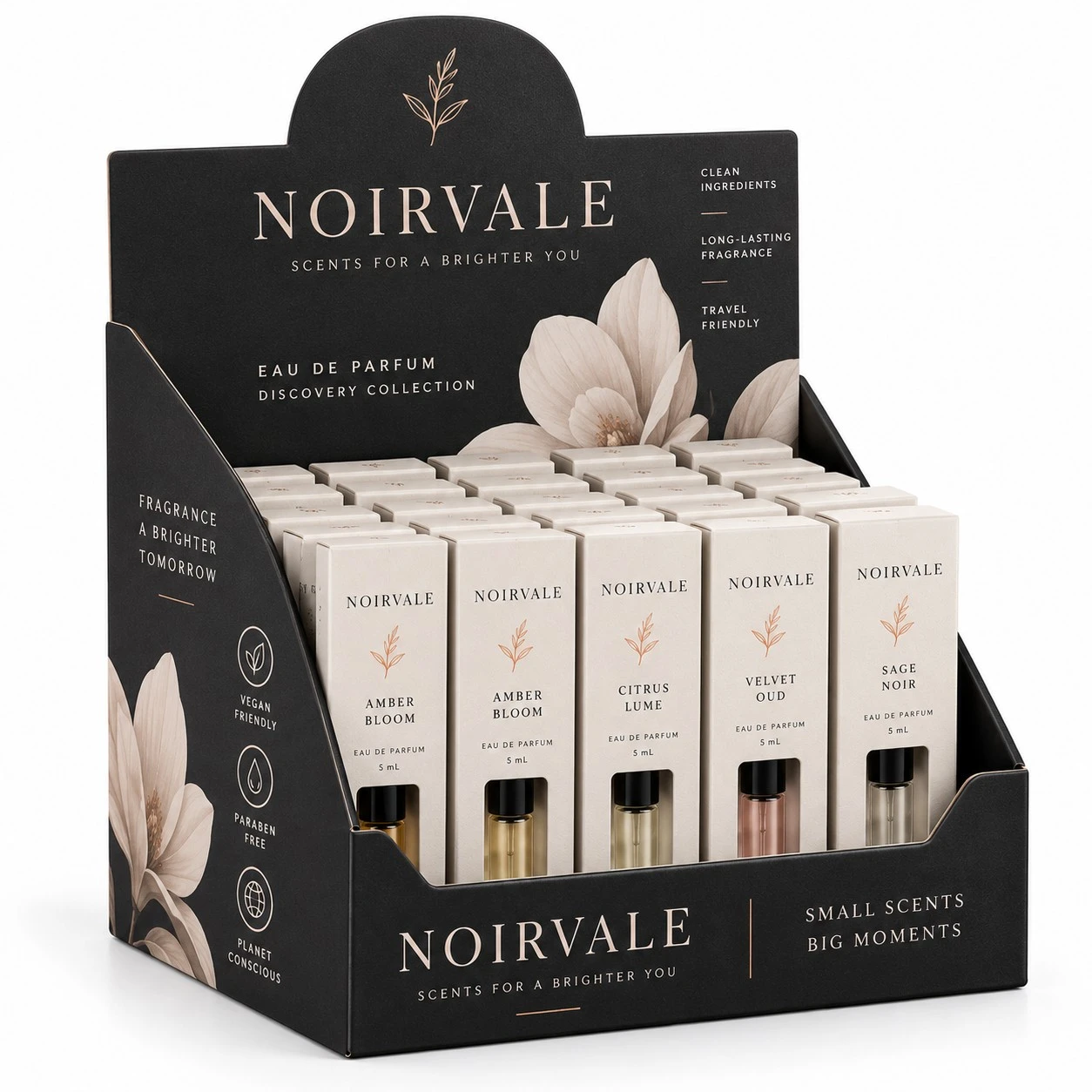
Raised Vial Display
Raised header and open tray hold vial cartons upright with low front access and support.
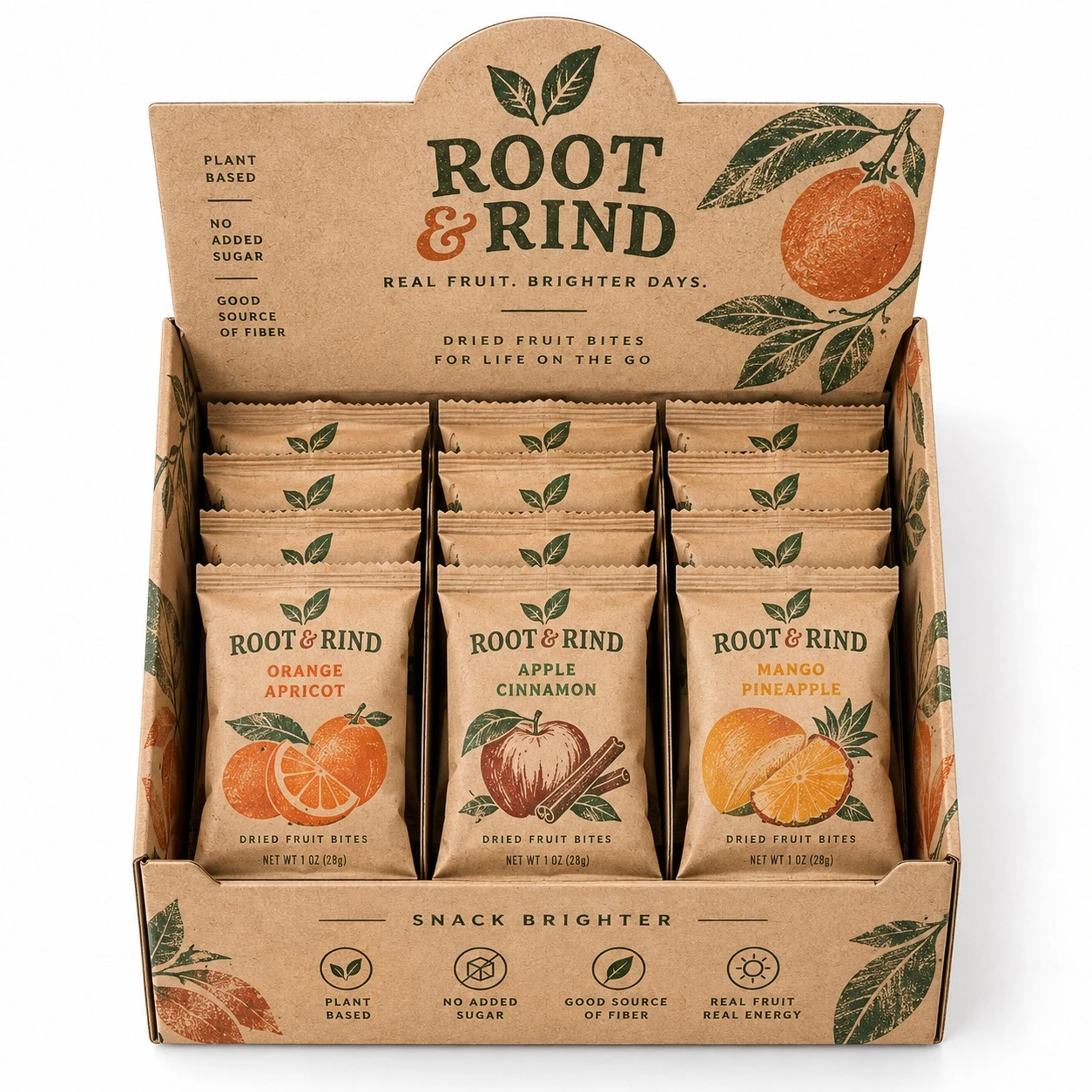
Kraft Divider Tray
Open kraft tray uses a tall header and divided rows to organize snack sachets for display.
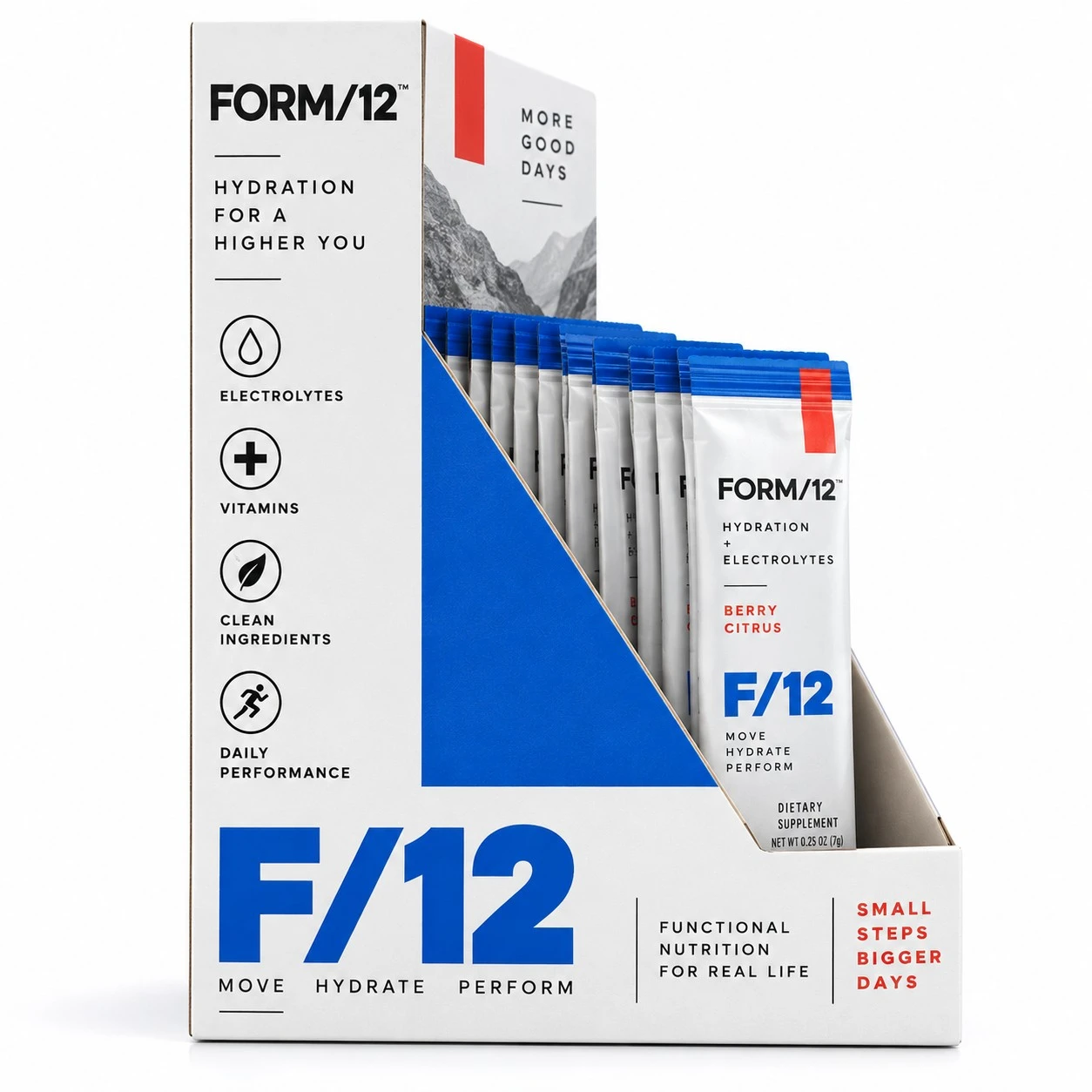
Stepped Stick Display
Side-profile carton uses a raised back panel and stepped tray to keep stick packs upright.
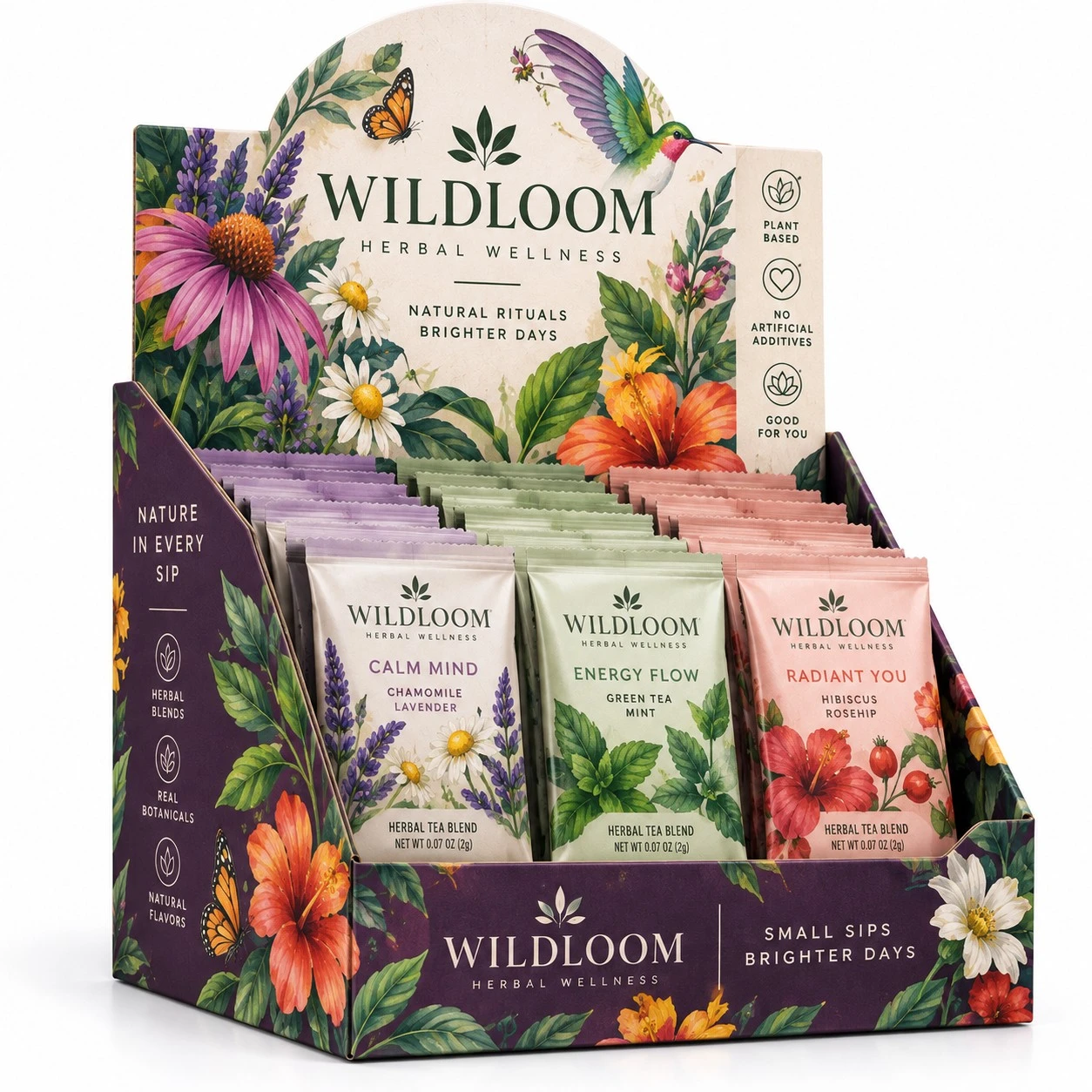
Curved Header Tray
Illustrated display tray pairs a tall curved header with angled sides and open front access.

Slim Lane Display
Front-facing tray uses a curved header and divided lanes to present slim lip balm cartons.
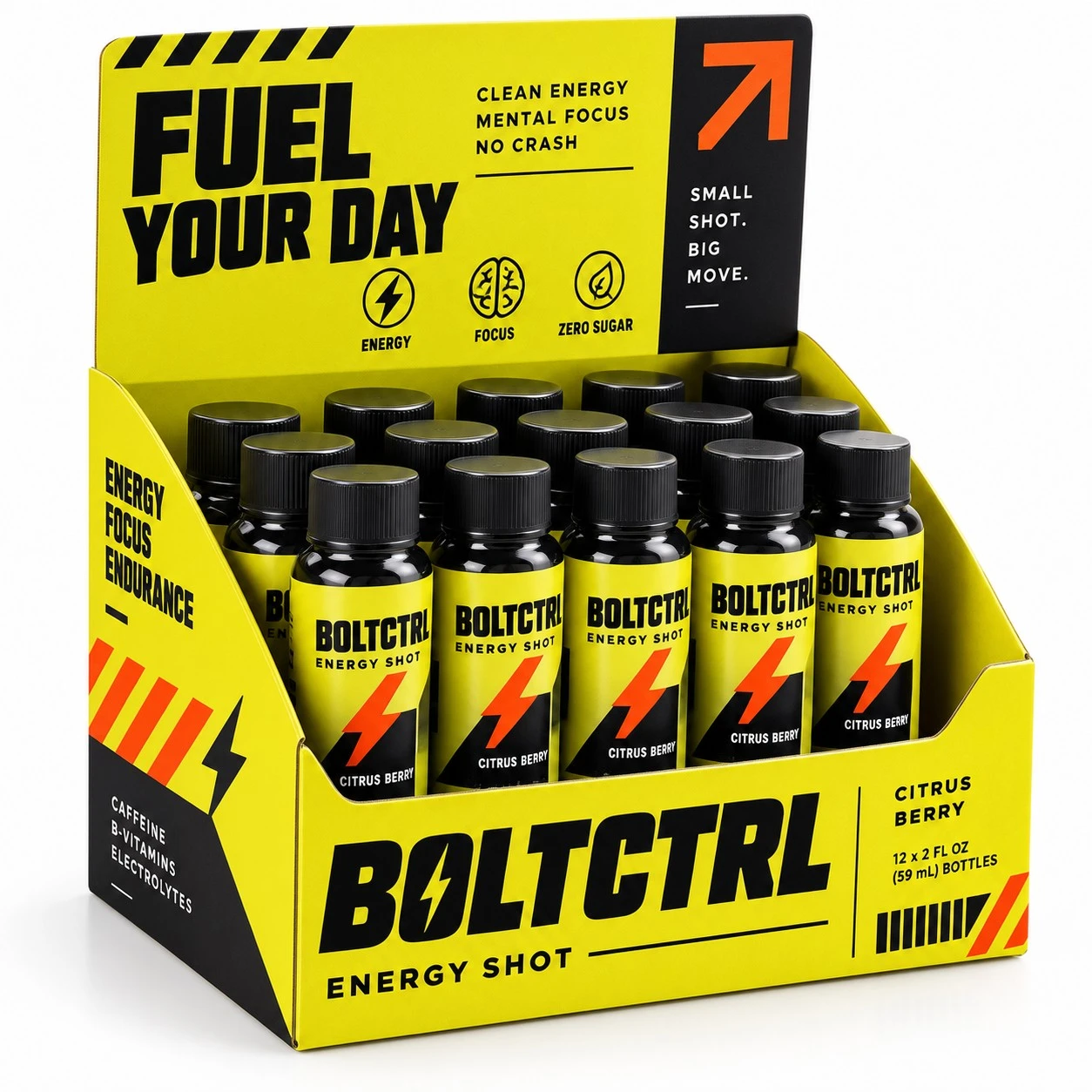
Deep Bottle Tray
Open-top display uses a tall back panel and deep tray to secure upright energy shot bottles.
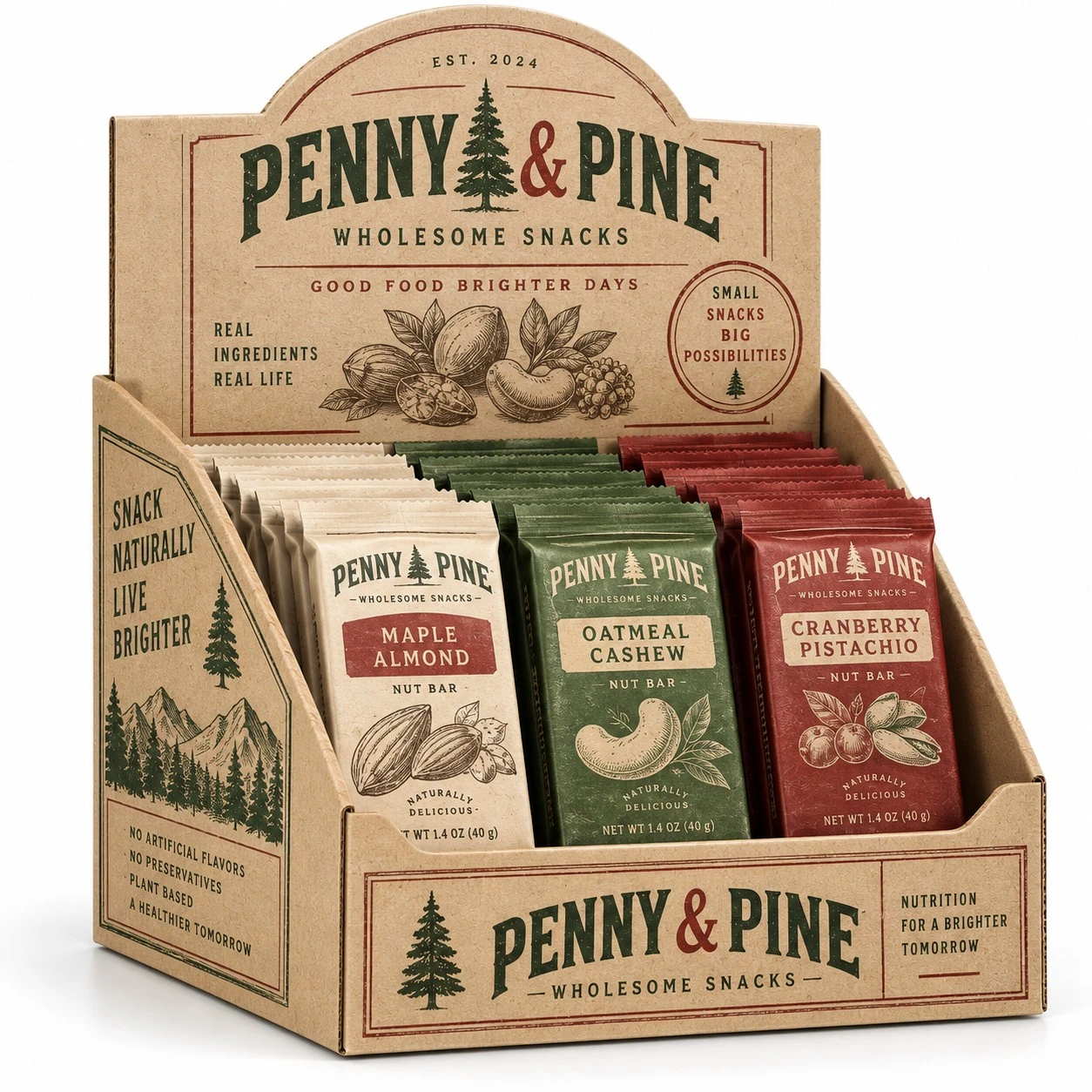
Front Cutout Tray
Kraft counter tray has a raised header, angled side walls, and front cutout for snack bars.
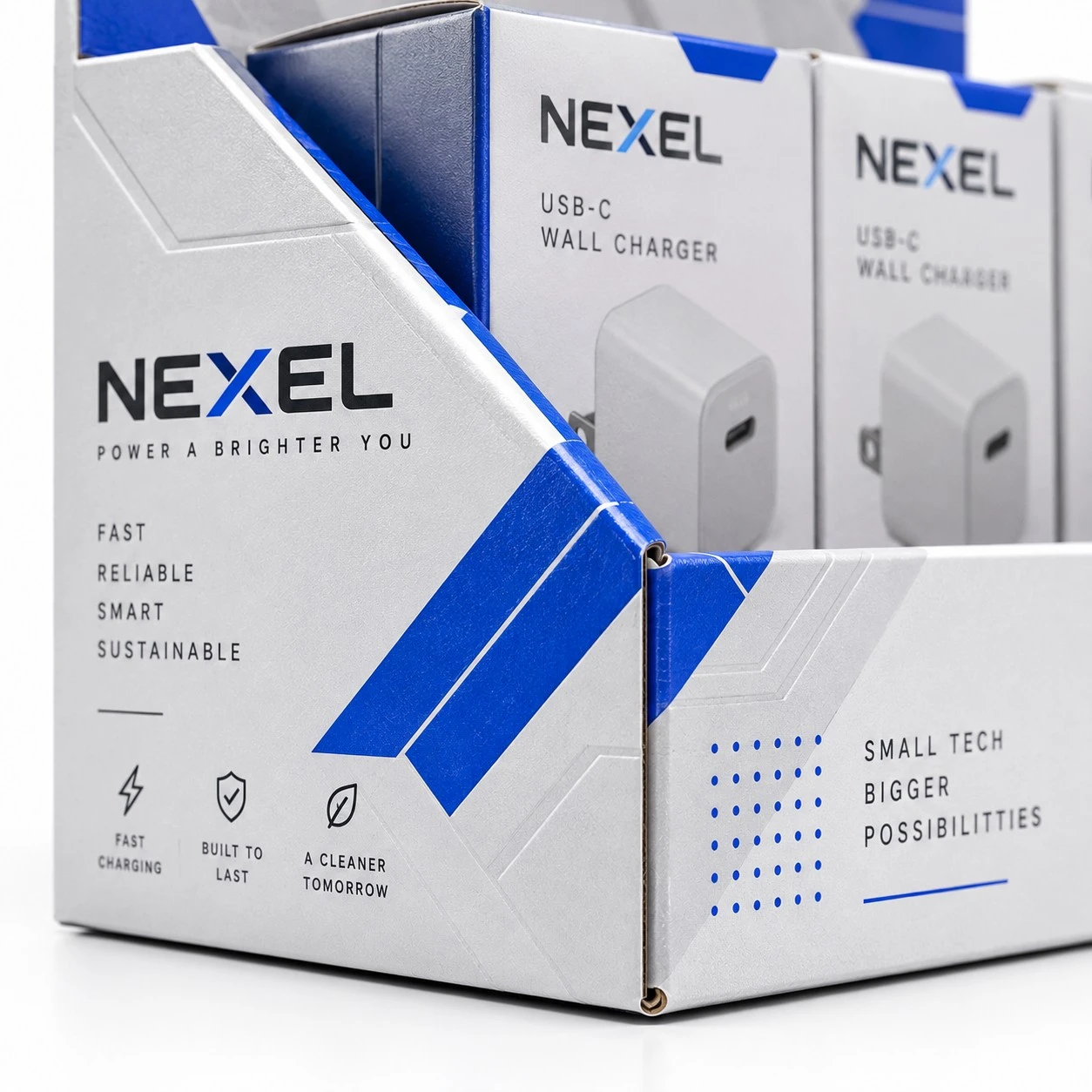
Die-Cut Access Tray
Compact tech display uses folded side walls, die-cut access, and a raised printed header.
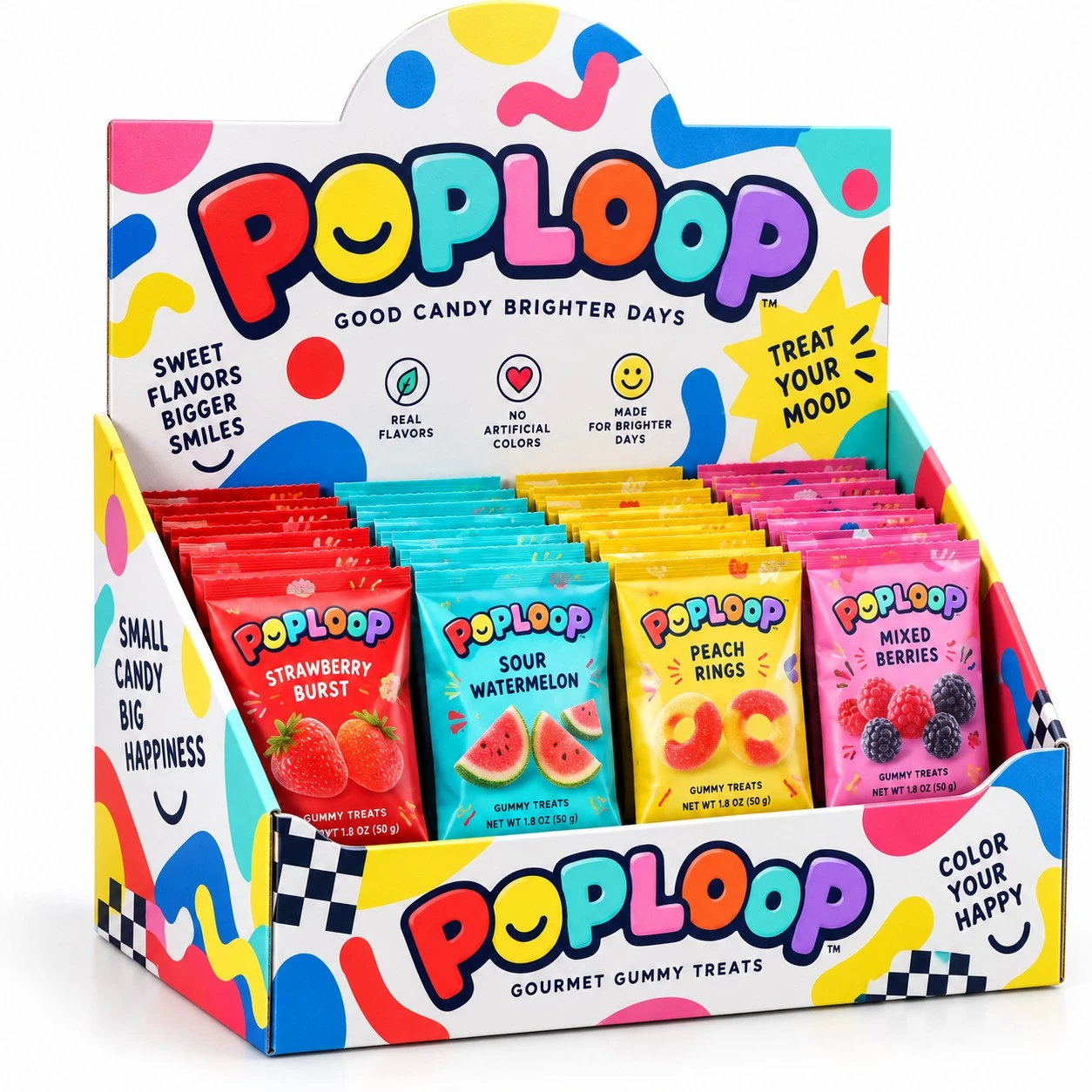
Wide Pouch Display
Open candy display uses a tall back panel, wide tray, and angled sides for pouch visibility.
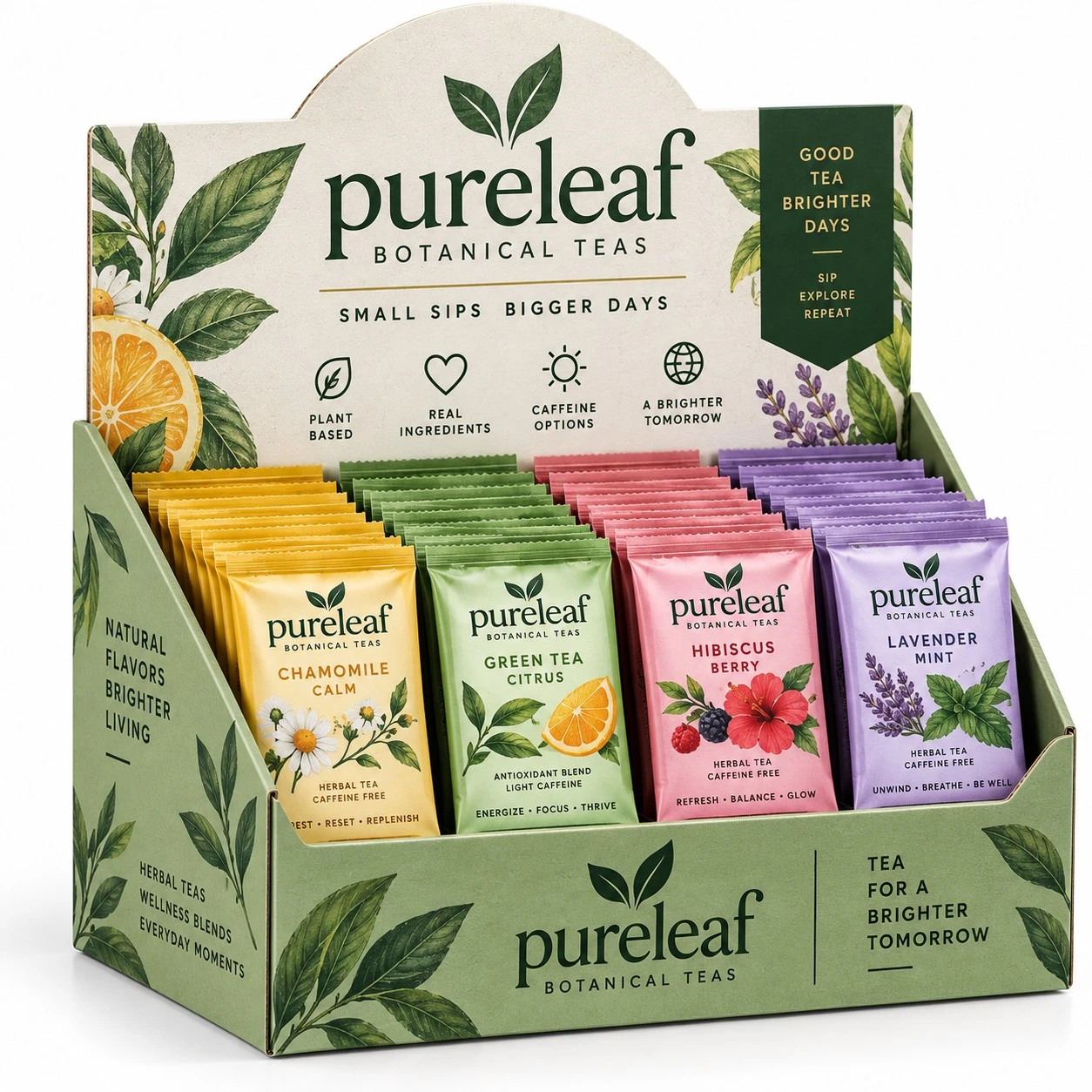
Divided Sachet Tray
Botanical tea display uses a curved header, divided rows, and low front product access area.
Can't find the perfect style?
Create a completely custom box design tailored to your brand.
Designed for Various Industries
We design packaging that fits every industry
From small businesses to global brands, our custom packaging solutions are built to elevate your brand and leave a lasting impression.
Cosmetics & Beauty
Food & Beverages
E-commerce & Retail
Electronics
Apparel & Fashion
Health & Wellness
Pharmaceuticals
Cannabis & CBD
Pet Products
Baby & Kids
Jewelry & Accessories
Home & Lifestyle
Candles & Fragrance
Coffee & Tea
Confectionery
Cosmetics & Beauty
Food & Beverages
E-commerce & Retail
Electronics
Apparel & Fashion
Health & Wellness
Pharmaceuticals
Cannabis & CBD
Pet Products
Baby & Kids
Jewelry & Accessories
Home & Lifestyle
Candles & Fragrance
Coffee & Tea
Confectionery
Supplements
Skincare & Personal Care
Haircare
Automotive
Sports & Fitness
Toys & Games
Stationery & Gifts
Bakery & Desserts
Wine & Spirits
Tobacco & Vape
Medical Devices
Tech Accessories
Subscription Boxes
Organic & Natural
Luxury Retail
Supplements
Skincare & Personal Care
Haircare
Automotive
Sports & Fitness
Toys & Games
Stationery & Gifts
Bakery & Desserts
Wine & Spirits
Tobacco & Vape
Medical Devices
Tech Accessories
Subscription Boxes
Organic & Natural
Luxury Retail
Built for brands
that care about detail.
Premium packaging. Precise printing.
Fast turnaround. No hidden costs.
10K+
Happy Customers
98%
Satisfaction Rate
Trusted by Top Brands
We work with startups to enterprises. Our boxes make an impact.
Free Design Support
Get expert help in creating the perfect packaging for your brand.
Warehouse Across USA
Faster fulfilment with local production and warehouses.
Print & Design Lovers
Crafted with passion, just the way your brand deserves.
Custom Flat Tuck Display Boxes for Easy-to-Shop Countertop Merchandising
The checkout counter has little room for a product that is easy to overlook. Slim tea sachets, wrapped snack bars, and small beauty cartons can blend into a crowded shelf. A custom flat tuck display box gives those items their own organized space: an open tray for quick pickup and a raised header that remains visible behind the merchandise. Packopie builds each display to the product, not just to a generic carton size, so the final shape supports the way customers shop and staff refill it.
Keep Small Retail Products Visible at Checkout
A useful countertop display shows what is for sale before shoppers reach for it. The low front lip holds the first row in place while leaving flavor names, shades, or product labels exposed. Angled side walls can open the view from the aisle. Above the products, the back header carries the brand name or a short campaign message.
These choices matter most where several products compete for a small counter footprint. Instead of spreading individual packs across a surface, the tray gives them a clear boundary and keeps the range together. Within Packopie's Custom Display Boxes category, this fold-flat format is suited to smaller items presented in several upright rows, rather than a large floor display.
Fold-Flat Tuck Construction Makes Store Setup Simple
A flat tuck display begins as a scored paperboard or corrugated blank. Staff fold the base and side panels, engage the tuck sections, and raise the printed header to form an open-top counter tray. The exact sequence depends on the approved dieline and any glued parts. A simple assembly plan helps staff set up displays consistently across many locations.
Flat-packed displays take less storage space before setup, which helps with seasonal promotions and multi-store launches.
Related Custom Tuck Boxes enclose individual items; a flat tuck display presents several units together. A tear-away display box requires a perforated panel to be removed and is a separate structure.
Size the Tray for Product Facings and Sell-Down Stability
The correct display size starts with a filled layout, not an empty box measurement. Packopie can plan the inside length, width, and tray depth around each unit's dimensions, weight, and intended count. The number of visible product fronts, often called facings, helps define how wide the tray must be.
A three-flavor tea assortment might use three fitted lanes, while slim lip balm cartons may need narrow dividers to stay upright. The front lip has to be tall enough to retain the first row but low enough to let shoppers grip a unit easily. Header height matters too: a message hidden by tall merchandise will not do its job.
A tray that feels secure when full may shift as shoppers remove products. Testing full, half, and low fill levels can expose leaning packs or weak support. These checks guide divider spacing and tray geometry.
Match Board Strength to the Filled Display
White SBS paperboard has a smooth print surface that suits fine illustrations, small text, and bright retail graphics. Kraft paperboard offers a brown base for designs that use fewer colors or want a natural-looking surface. Recycled-content paperboard may be considered when the specific board grade and sourcing can be verified.
The heavier the merchandise and the wider the tray, the more important stiffness becomes. E-flute corrugated board can add support for larger displays or rows of small bottles. Board caliper, or thickness, is only part of the decision. Fold positions, tray span, base construction, and the way products sit inside all affect performance.
No board grade guarantees a safe load in every design. A physical sample filled with representative merchandise helps confirm stability.
Give the Header, Lip, and Side Panels a Clear Print Job
A raised header can be seen above the products, even when the front row is full. It is a natural place for the logo, product family, or launch message. The front lip works better for short supporting text, and angled side panels can carry artwork visible from nearby shopping positions. Each printed surface has a different job.
Full-color CMYK printing supports botanical illustrations, product images, and gradients. Pantone spot colors may be useful when a brand needs a specific color match. Matte or gloss coatings change glare and contrast; spot UV, foil, or embossing can add a small accent if the board and artwork allow it.
A reviewed dieline keeps logos and key text clear of folds and die-cut edges. Matching Custom Retail Boxes can share the same artwork without crowding the display header.
Adapt the Display to Snacks, Beauty, and Small Accessories
Different products call for different access and support. Wrapped bars and candy pouches need front visibility and enough room for quick removal. Tea sachets and hydration sticks may benefit from separate lanes that keep flavors organized. Slim cosmetic cartons can stand in tight rows, while small fragrance packs may need inserts that limit movement.
One printed header can group several shades or scents. Chargers, cables, and stationery also suit this format when their packed weight and shape are appropriate.
For products that benefit from a covered viewing opening, Custom Window Display Boxes offer a different presentation choice. Flat tuck trays favor direct access to multiple units. Teams supplying individually boxed items can also coordinate their Custom Product Boxes with the display color and branding.
Turn a Retail Layout Into an Accurate Custom Quote
A useful packaging brief starts with the items that will sit inside the tray. Include each product's packed dimensions and weight, the number of units per display, and any mix of flavors, colors, or other SKUs. A photo of the planned counter or shelf can help communicate the available footprint. If stores need a specific setup method, that belongs in the brief too.
Packopie can then review tray layout, tuck design, board, header, print, and dividers. Digital proofs check artwork placement; a physical sample can help confirm assembly and product stability.
Quantity, material, tooling, printing, finishes, destination, and scheduling shape pricing. Wholesale orders may lower unit cost, but final terms depend on the approved project.
When the product measurements and retail plan are clear, a custom quote can reflect the actual display buyers need: a compact flat tuck tray that stays organized, carries the brand, and makes each unit easy to shop.
Frequently Asked Questions
They can lean or slip when too much space remains between the products. Narrow lanes, fitted dividers, and a suitable front lip help keep the remaining packs upright. A sample filled to different levels is useful for testing stability.
No. A permanent open-front tray works for displays assembled before products are loaded. A perforated panel is an optional feature when a more enclosed carton must be converted into a retail display.
The front lip must support the first row without hiding important product graphics or blocking a shopper's grip. Its height depends on the product shape, orientation, and intended removal method. Testing with the actual product gives the best result.
It depends on the combined bottle weight, tray dimensions, and handling conditions. Heavier or taller products may require thicker board, reinforced folds, or E-flute corrugated construction. Final support capacity needs to be checked against a filled sample.
The raised header usually holds the main logo and brand message. The front lip and side panels can carry short product details, while a suitable flat area can be reserved for retail labels or barcodes. Artwork placement must account for folds and any display opening.
Both fulfillment approaches are possible, depending on the approved structure and packing plan. Flat delivery reduces the storage space required for empty displays. Prefilled displays need additional checks for product retention, outer shipping protection, and safe handling.
More Solutions
You May Also Like
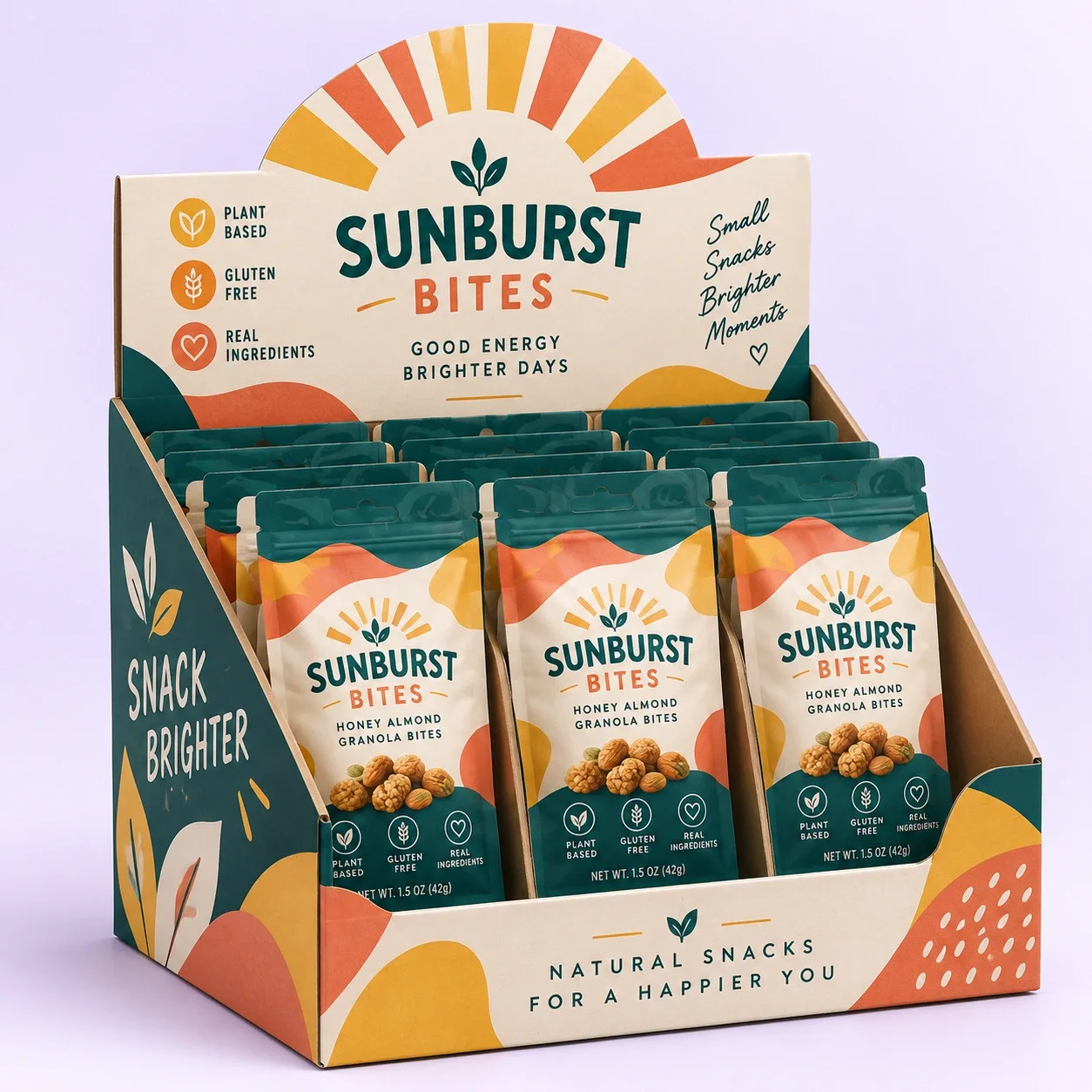
Custom Cardboard Display Boxes
Custom cardboard display boxes built to fit your products, support retail presentation, and showcase your brand with custom print, inserts, and finishes.
View product →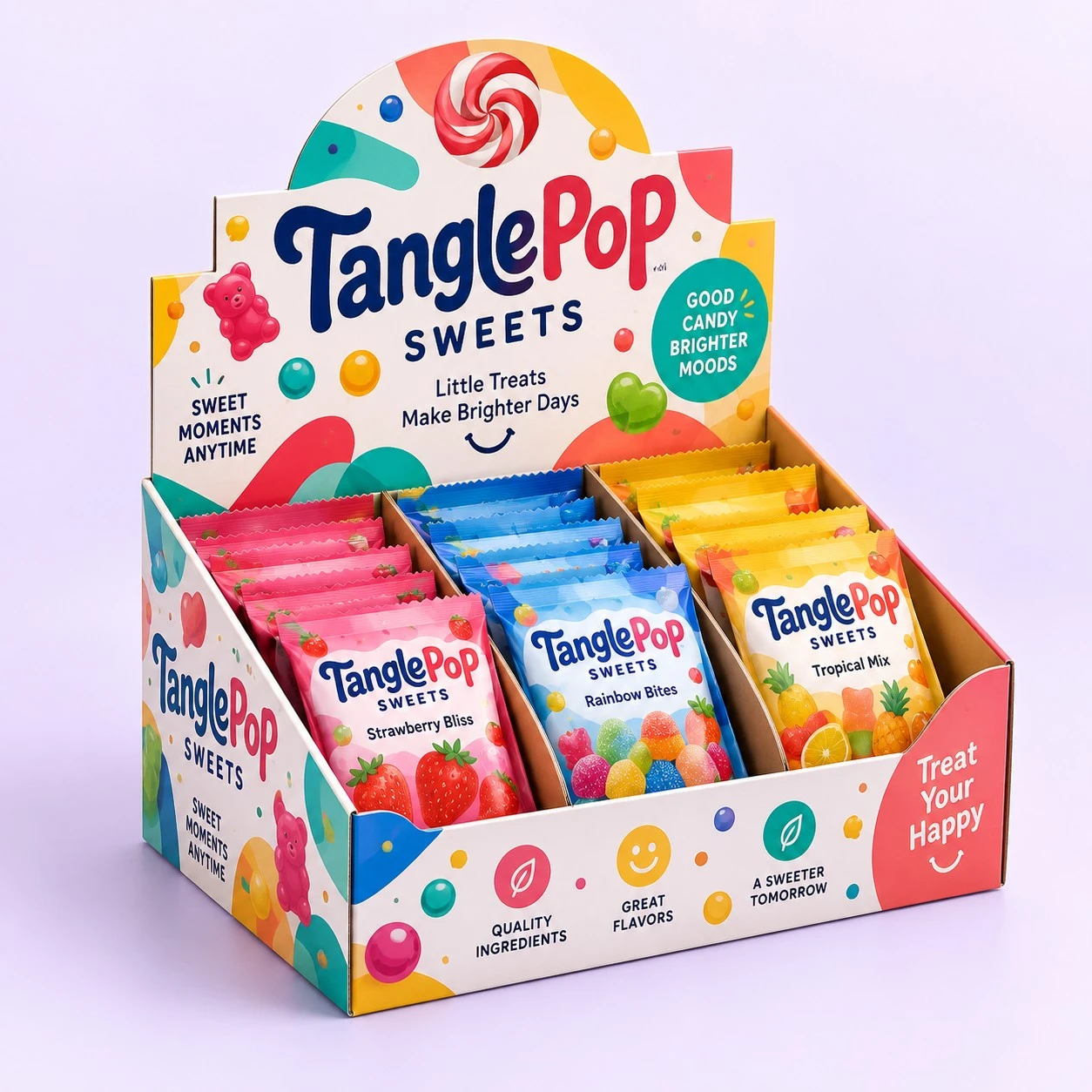
Custom Candy Display Boxes
Custom candy display boxes built to fit your sweets, brand artwork, and retail setup, with flexible sizes, print, dividers, and finishes.
View product →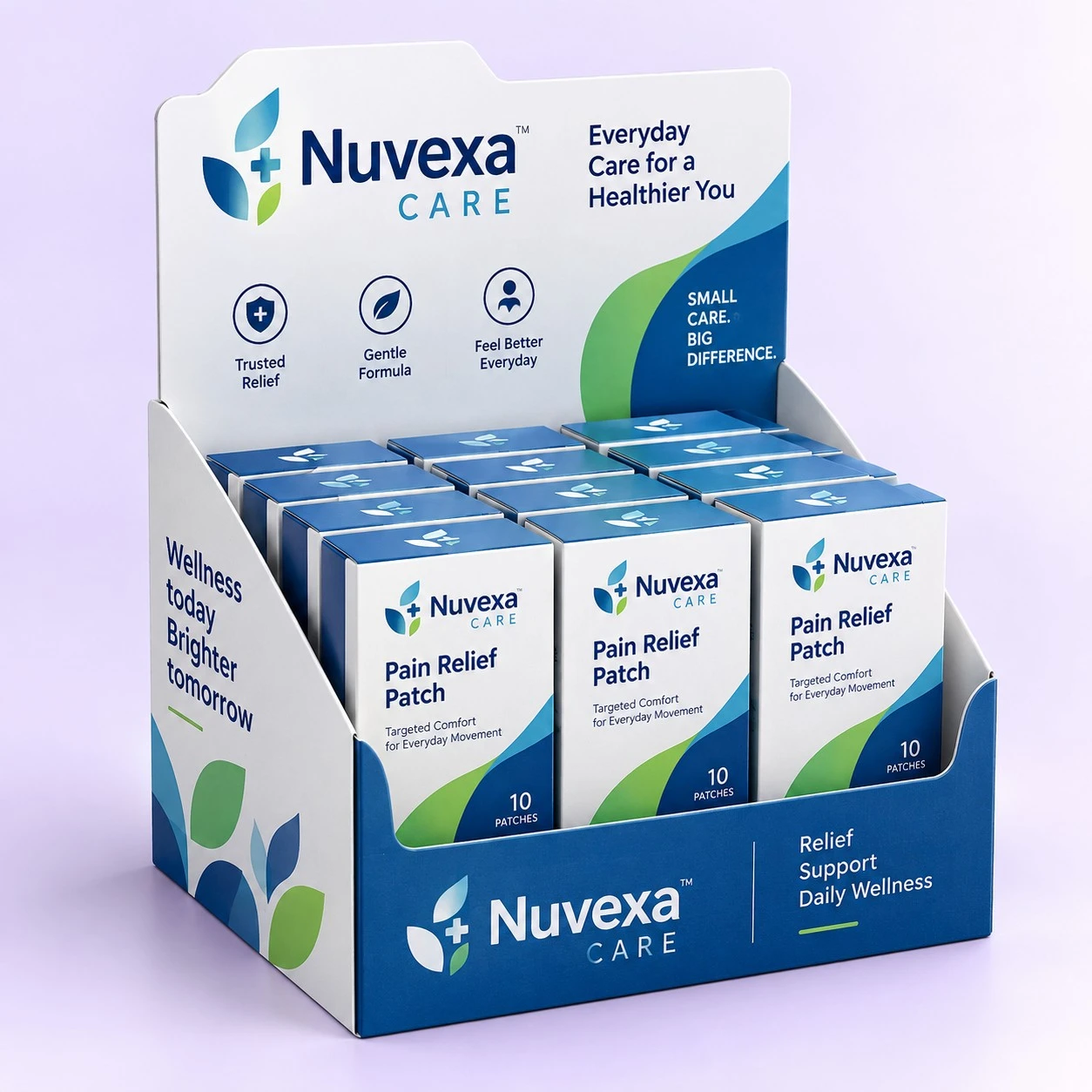
Custom Pharmaceutical Display Boxes
Custom pharmaceutical display boxes built for pharmacy counters and retail shelves with tailored sizes, inserts, print, and display-ready structures.
View product →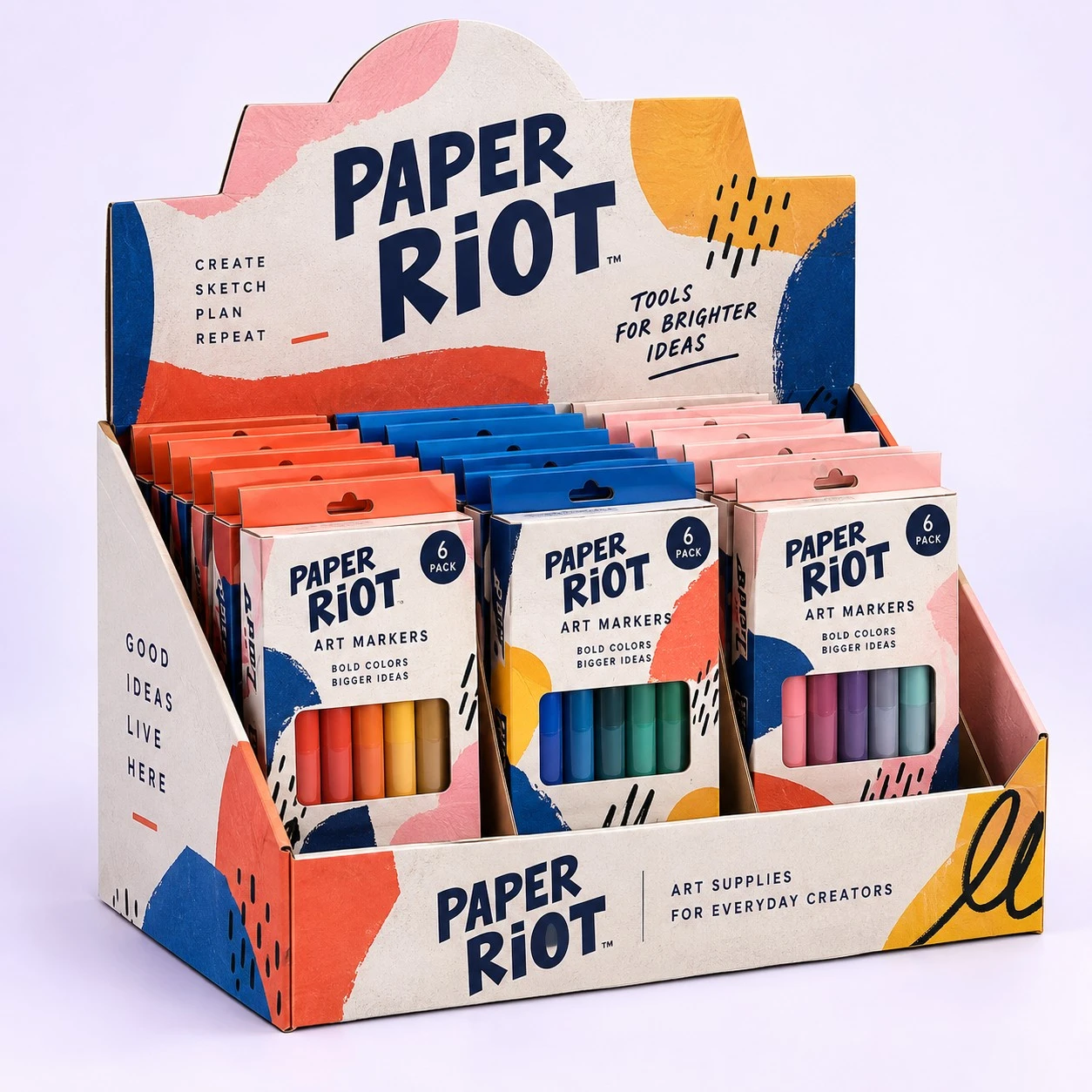
Custom PDQ Boxes
Custom PDQ boxes built to fit your products, retail footprint, print needs, and display layout for a clean, shelf-ready presentation.
View product →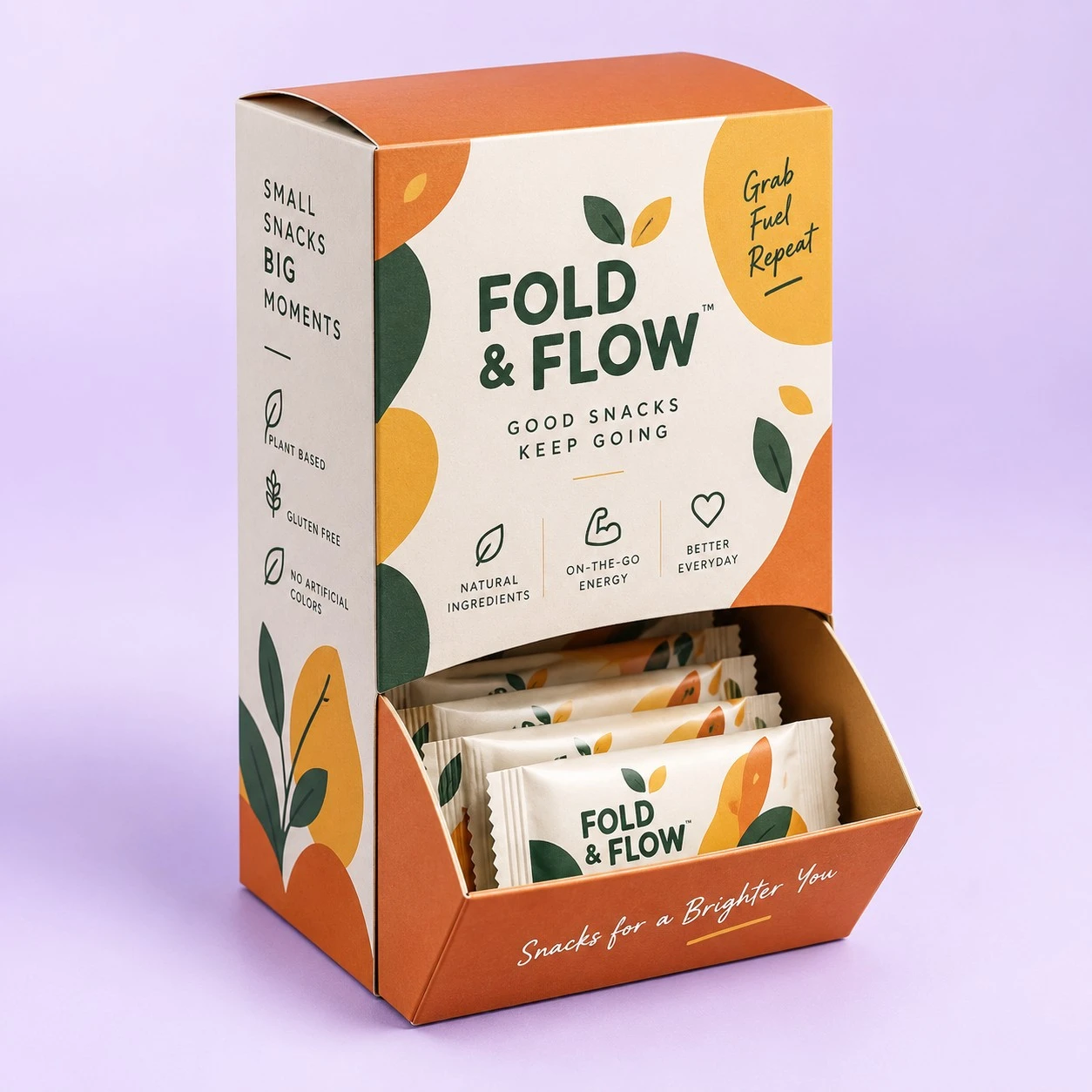
Custom Gravity Dispenser Boxes
Custom gravity dispenser boxes keep small retail products organized, visible, and easy to access in packaging built around your product.
View product →Custom Cardboard Display Boxes
Custom cardboard display boxes built to fit your products, support retail presentation, and showcase your brand with custom print, inserts, and finishes.
View product →Custom Candy Display Boxes
Custom candy display boxes built to fit your sweets, brand artwork, and retail setup, with flexible sizes, print, dividers, and finishes.
View product →Custom Pharmaceutical Display Boxes
Custom pharmaceutical display boxes built for pharmacy counters and retail shelves with tailored sizes, inserts, print, and display-ready structures.
View product →Custom PDQ Boxes
Custom PDQ boxes built to fit your products, retail footprint, print needs, and display layout for a clean, shelf-ready presentation.
View product →Custom Gravity Dispenser Boxes
Custom gravity dispenser boxes keep small retail products organized, visible, and easy to access in packaging built around your product.
View product →Custom Cardboard Display Boxes
Custom cardboard display boxes built to fit your products, support retail presentation, and showcase your brand with custom print, inserts, and finishes.
View product →Custom Candy Display Boxes
Custom candy display boxes built to fit your sweets, brand artwork, and retail setup, with flexible sizes, print, dividers, and finishes.
View product →Custom Pharmaceutical Display Boxes
Custom pharmaceutical display boxes built for pharmacy counters and retail shelves with tailored sizes, inserts, print, and display-ready structures.
View product →Custom PDQ Boxes
Custom PDQ boxes built to fit your products, retail footprint, print needs, and display layout for a clean, shelf-ready presentation.
View product →Custom Gravity Dispenser Boxes
Custom gravity dispenser boxes keep small retail products organized, visible, and easy to access in packaging built around your product.
View product →Custom Cardboard Display Boxes
Custom cardboard display boxes built to fit your products, support retail presentation, and showcase your brand with custom print, inserts, and finishes.
View product →Custom Candy Display Boxes
Custom candy display boxes built to fit your sweets, brand artwork, and retail setup, with flexible sizes, print, dividers, and finishes.
View product →Custom Pharmaceutical Display Boxes
Custom pharmaceutical display boxes built for pharmacy counters and retail shelves with tailored sizes, inserts, print, and display-ready structures.
View product →Custom PDQ Boxes
Custom PDQ boxes built to fit your products, retail footprint, print needs, and display layout for a clean, shelf-ready presentation.
View product →Custom Gravity Dispenser Boxes
Custom gravity dispenser boxes keep small retail products organized, visible, and easy to access in packaging built around your product.
View product →✦ Upgrade Today
Ready to Upgrade Your Brand Packaging?
Get custom templates matching your custom dimensions. Instant 3D digital proof samples returned in hours.